


It can be crowded, none too fragrant and noisy. It dives underground and sails majestically across a high bridge over the River Seine near the Eiffel Tower. It is (relatively) cheap, reliable, frequent and beloved of tourists and locals alike. It is the Paris metro, underground or subway.
And yet there is a feeling that the metro network, born with the 20th century and subject to recent modernization, has somehow lost its soul.
Long gone are the days when the seats were made of wooden slats and the odor of garlic-flavored pate engulfed the platform as the doors sprang open at the click of a metal latch. First class carriages are now just a memory.
Gone are the ticket punchers, the public face of the metro, immortalized by the late singer Serge Gainsbourg with his elegy to the "ticket puncher at the Lilas station."
These days the travelers validate their purple tickets or season ticket coupons at automatic turnstiles. There is not even necessarily a driver: the latest line -- which speeds passengers from the St. Lazare railway terminus to the Francois Mitterrand library -- is entirely automatic.
The metro has been the inspiration for filmmakers, is itself sometimes a little treasure trove of art nouveau artefacts or mini-exhibitions and is part of the fabric of the lives and affections of generations of Parisians.
Yet rapid modernization has had a price. People no longer feel entirely safe, especially late at night. Because the homeless use the metro to avoid the cold in winter the number of seats in the stations and in the carriages has been cut, thereby disadvantaging older passengers.
Smoking is prohibited: and the ban is respected in the trains. What happens on the platforms is a different matter altogether.
It is true that there are things happening in the network. Fruit and vegetable sellers set up their stalls in the long corridors at some interchange stations.
Travelers may come across a harpist, or a small orchestra, or a choir as they head for their platforms. Less welcome are those who board the carriages: musicians, puppeteers and an evergrowing number of beggars with a near-identical pitch, which begins with an apology for disturbing the passengers and ends with a request for cash or a restaurant voucher.
Some 30,000 staff, 366 stations, 16 lines, a spider's web of interlinking routes. Seven million passengers a day, most of them coming from the suburbs into the traffic-choked capital. New stations in the city's outskirts and new equipment: the Regie Autonome des Transports Parisiens (RATP) is a major state enterprise.
And one seeking to soften its image, as it has quietened its trains with the introduction on some lines of rubber wheels, abolishing the characteristic screech of the arriving service.
Stations are being closed for renovation: indicator boards tell when the next train is due: on one line little flashing lights on a map show where the train now is. Staff are more visible.
There are even reports that the staff at ticket offices have been told to be more friendly. But some things on the Paris metro will never change.

In late October of 1873 the government of Japan decided against sending a military expedition to Korea to force that nation to open trade relations. Across the government supporters of the expedition resigned immediately. The spectacle of revolt by disaffected samurai began to loom over Japanese politics. In January of 1874 disaffected samurai attacked a senior minister in Tokyo. A month later, a group of pro-Korea expedition and anti-foreign elements from Saga prefecture in Kyushu revolted, driven in part by high food prices stemming from poor harvests. Their leader, according to Edward Drea’s classic Japan’s Imperial Army, was a samurai

The following three paragraphs are just some of what the local Chinese-language press is reporting on breathlessly and following every twist and turn with the eagerness of a soap opera fan. For many English-language readers, it probably comes across as incomprehensibly opaque, so bear with me briefly dear reader: To the surprise of many, former pop singer and Democratic Progressive Party (DPP) ex-lawmaker Yu Tien (余天) of the Taiwan Normal Country Promotion Association (TNCPA) at the last minute dropped out of the running for committee chair of the DPP’s New Taipei City chapter, paving the way for DPP legislator Su
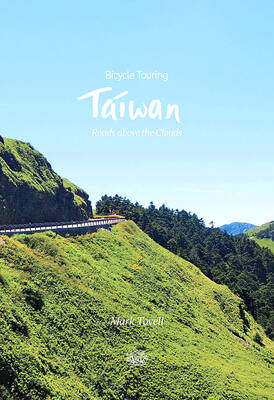
It’s hard to know where to begin with Mark Tovell’s Taiwan: Roads Above the Clouds. Having published a travelogue myself, as well as having contributed to several guidebooks, at first glance Tovell’s book appears to inhabit a middle ground — the kind of hard-to-sell nowheresville publishers detest. Leaf through the pages and you’ll find them suffuse with the purple prose best associated with travel literature: “When the sun is low on a warm, clear morning, and with the heat already rising, we stand at the riverside bike path leading south from Sanxia’s old cobble streets.” Hardly the stuff of your
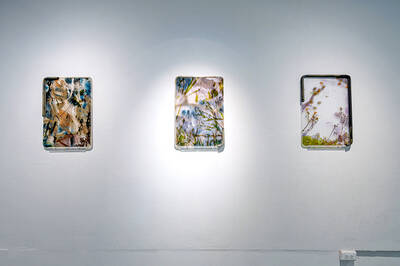
Located down a sideroad in old Wanhua District (萬華區), Waley Art (水谷藝術) has an established reputation for curating some of the more provocative indie art exhibitions in Taipei. And this month is no exception. Beyond the innocuous facade of a shophouse, the full three stories of the gallery space (including the basement) have been taken over by photographs, installation videos and abstract images courtesy of two creatives who hail from the opposite ends of the earth, Taiwan’s Hsu Yi-ting (許懿婷) and Germany’s Benjamin Janzen. “In 2019, I had an art residency in Europe,” Hsu says. “I met Benjamin in the lobby


 RSS
RSS