


Just when you thought the summer was coming to a close and you couldn't stomach another beach party, APA Music planned another at Paishawan called "Summer Splash 2004."
The typhoon this week, however, was an unforseen damper on their plans and the party which was to include a number of well-known bands from Taiwan and abroad, 45 DJs and nearly 80 members from award-winning dance troupes has been postponed for a week and renamed "The Last Outdoor Party of the Summer."

PHOTO: TAIPEI TIMES
The rescheduled party will include most of the previously booked acts, with some minor changes and for just NT$1,500 you will still be able to stay for three sweltering days and two inebriated nights, ocean side.
The organizers boast a venue rivaled by none and said activities will include rock, hip-hop, trance and techno music and lots of dancing-- beach party fanatics will just have to cool their jets for a week.
"We had all the stages set up by Tuesday and were expecting 2,000 to 3,000 people to attend. We cancelled the party this week, but we are determined to make this happen." Said APA representative, party coordinator and Smol band member David Chien (簡立明).
There will still be the promised variety of bands and DJ acts and the three techno, hip hop and acoustic stages, but logistical alterations will continue through next week.
For aspiring artists that have been waiting to make their explosive debut, there is a DJ competition. Ten performers will be invited to perform for one hour, after which judges will choose first, second and third place, based on appearance, sound, stage presence, decor, mood control, ambience, and song choice -- awarding NT$30,000, NT$15,000, and NT$10,000 respectively. To take part in this make-you-or-break-you event e-mail summersplash2004@yahoo.com.tw, without delay.
The band line-up is long and local and the festival will host Machi (麻吉) and a number of other acts including Limp Bizkit-inspired bands Out of Control and Chairman (董事長), 88 Guava Seeds (88顆芭樂仔), Groupie (骨肉皮) and Monkey Insane (潑猴).
Because the party was only recently postponed the band line-up will remain similar to the schedule posted on the party Web site (from Friday until Sunday), organizers said. To find the show times of your favorite local bands, or those you've heard are good, check www.summersplash.com.tw.

Taiwan’s English education system is being pulled apart by three opposing forces. Bilingual Nation 2030 pulls students toward English and global communication. Artificial Intelligence (AI) readiness pulls them toward digital judgment, verification and AI-mediated work. But Taiwan’s old exam culture pulls them back toward memorization, grammar drills, timed reading and correct answers. If the education system keeps using old exams to define success, it risks producing graduates who are neither genuinely bilingual nor genuinely AI-ready, but trained for tasks machines can already perform. The first force is Bilingual Nation 2030. Launched in 2018, the policy aimed to “help Taiwan’s workforce connect

“Taiwan’s Opposition Leader Comes to US With a Message Straight Out of Beijing” read a May 31 headline in the Wall Street Journal. Top US administration officials and members of Congress almost certainly read the WSJ, and if there was a bullet point takeaway that people in Washington should absorb ahead of Chinese Nationalist Party (KMT) Chair Cheng Li-wun’s (鄭麗文) arrival in DC on June 9, that headline is it. The last few columns have discussed this very topic, and the timing is not coincidental. While those top officials likely do not read the Taipei Times, judging by the number

With weighty, anxiety-inducing geopolitical topics dominating the headlines, checking in on the wild and weird state of local politics can take some of the edge off. This November’s elections will determine who will be in charge of fixing potholes in your neighborhood, not the potholes in Taiwan’s complicated geopolitical space. Recently, after an online interview with a Taipei-based journalist, I commented that Taipei journalists never go further than the MRT can take them. He laughed and agreed. Naturally, the Taipei mayoral race is eating up much of the press attention. TAIPEI CITY Democratic Progressive Party (DPP) candidate Puma Shen (沈伯洋) has
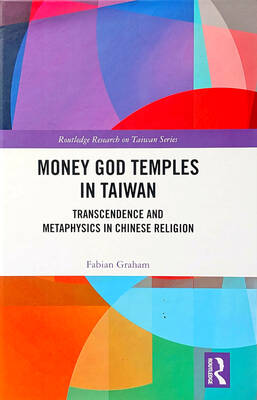
As someone who normally steers clear of books with “transcendence” or “metaphysics” in their subtitles, this reviewer — a casual observer of local belief systems since the 1990s — found Fabian Graham’s Money God Temples in Taiwan a challenging read. Those who’ve only dipped their toes into temple culture will likely need to parse several sections with special care if they’re to keep up with the author, a British ethnographic researcher whose previous books have investigated religious practices among ethnic Chinese in Southeast Asia. This scholarly volume examines a facet of Taiwan’s religious landscape that didn’t exist a century ago, and


 RSS
RSS