


All these recent rock festivals must have given the beautiful people of Mando-pop worry lines. Not long ago, they shared the limelight with no one. Now festivals that were once considered "alternative" are drawing mainstream-sized audiences. Time, then, for the pantheon of pop stars to get off the gossip pages and get on stage to do their thing.
Jointly sponsored by MTV and the Taipei City Government, the Taipei Music Festival will let local pop stars shine their brightest alongside entertainers from Japan, South Korea, Singapore and Hong Kong. Jay Chou (
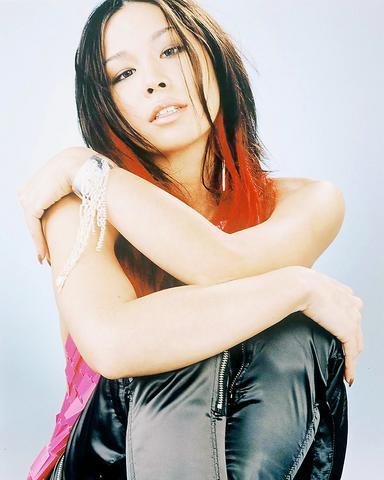
PHOTO COURTESY OF MTV
Just 19 years-old, the Napanee, Ontario native has enjoyed a meteoric rise to fame since the release of her debut album, Let Go in 2002. On the back of two singles from that release, Complicated and Sk8r Boi, the album has sold 14 million copies worldwide to date. It's sales have slowed only because of the recent release of her second album, Under My Skin, which debuted in the No. 1 slot on a host of charts in the US, Canada and the UK. It's hardly a sophomore effort and displays a song-writing ability not just beyond her years, but improved upon from her debut release.

PHOTO COURTESY OF MTV
Contrast her success to that of many stars in the Mando-pop pantheon, who sing lyrics written for them that are put to recycled Christmas jingles, and you realize why so many Mandarin-language album covers picture the artist staring sorrowfully at their shoes.
Lavigne, by contrast, has gained popularity as much for her unaffected, in-your-face attitude as for her catchy tunes. Her appearance at the Taipei Music Festival is a special treat for local audiences, as it's a sneak-preview of her upcoming tour to promote Under My Skin. Keen not to suffer their own "Michael Jordan moment," the folks at MTV have said up front that Lavigne will play only a 30-minute set.

PHOTO COURTESY OF MTV
Another special treat is the reappearance of Sun Yanzi (
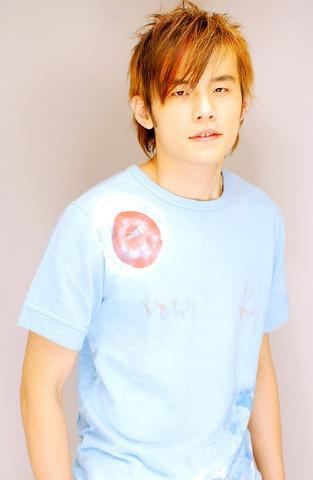
PHOTO COURTESY OF MTV
Other Asian acts to watch for will be Naohito Fujiki (
South Korean boy-toy Rain will also make an appearance, as will Hong Kong boy-toy Dylan Kwok (
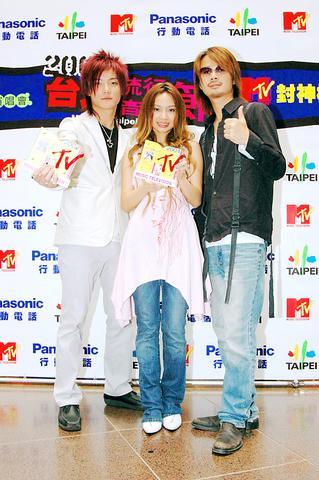
PHOTO COURTESY OF MTV
Filling out the roster of local acts are the pop-rock combo F.I.R., K One, Landy (
Stanley Huang (
The only other star likely to take the stage will be Taipei City Mayor Ma Ying-jeou (
The catch involved with going to the Taipei Music Festival is that, while it' s a free concert, you have to have a ticket to get in. MTV publicist Bess Lin says not to worry if you don't have a ticket, though, as "audiences can watch the concert outside the central zone." In other words, bring something to stand on.
Should you opt against wading into the estimated 60,000-strong crowd, you can instead enjoy it from your living room. The concert will be broadcast on MTV tomorrow night starting at 10pm and rebroadcast again on Sunday at 2pm.
The Taipei Music Festival will take place at Taipei City Square, adjacent Taipei City Hall at 7pm tomorrow night.

Taiwan’s English education system is being pulled apart by three opposing forces. Bilingual Nation 2030 pulls students toward English and global communication. Artificial Intelligence (AI) readiness pulls them toward digital judgment, verification and AI-mediated work. But Taiwan’s old exam culture pulls them back toward memorization, grammar drills, timed reading and correct answers. If the education system keeps using old exams to define success, it risks producing graduates who are neither genuinely bilingual nor genuinely AI-ready, but trained for tasks machines can already perform. The first force is Bilingual Nation 2030. Launched in 2018, the policy aimed to “help Taiwan’s workforce connect

“Taiwan’s Opposition Leader Comes to US With a Message Straight Out of Beijing” read a May 31 headline in the Wall Street Journal. Top US administration officials and members of Congress almost certainly read the WSJ, and if there was a bullet point takeaway that people in Washington should absorb ahead of Chinese Nationalist Party (KMT) Chair Cheng Li-wun’s (鄭麗文) arrival in DC on June 9, that headline is it. The last few columns have discussed this very topic, and the timing is not coincidental. While those top officials likely do not read the Taipei Times, judging by the number

With weighty, anxiety-inducing geopolitical topics dominating the headlines, checking in on the wild and weird state of local politics can take some of the edge off. This November’s elections will determine who will be in charge of fixing potholes in your neighborhood, not the potholes in Taiwan’s complicated geopolitical space. Recently, after an online interview with a Taipei-based journalist, I commented that Taipei journalists never go further than the MRT can take them. He laughed and agreed. Naturally, the Taipei mayoral race is eating up much of the press attention. TAIPEI CITY Democratic Progressive Party (DPP) candidate Puma Shen (沈伯洋) has
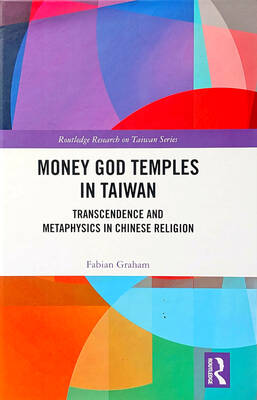
As someone who normally steers clear of books with “transcendence” or “metaphysics” in their subtitles, this reviewer — a casual observer of local belief systems since the 1990s — found Fabian Graham’s Money God Temples in Taiwan a challenging read. Those who’ve only dipped their toes into temple culture will likely need to parse several sections with special care if they’re to keep up with the author, a British ethnographic researcher whose previous books have investigated religious practices among ethnic Chinese in Southeast Asia. This scholarly volume examines a facet of Taiwan’s religious landscape that didn’t exist a century ago, and


 RSS
RSS