


Cities are judged on such criteria as infrastructure, income and education levels. But how about whether or not you can get a lox and cream cheese bagel at 4am? In opening a second shop on Renai Road, that is 24-hour, NY Bagels Cafe has given Taipei a new place for nocturnal noshing and helped the city fit into its international-sized shoes.
Located a block from the 24-hour Eslite Bookstore and a short walk from the late-night lounges lining Anhe Road, the new bagel shop is already filling tables after having been open for only two weeks.
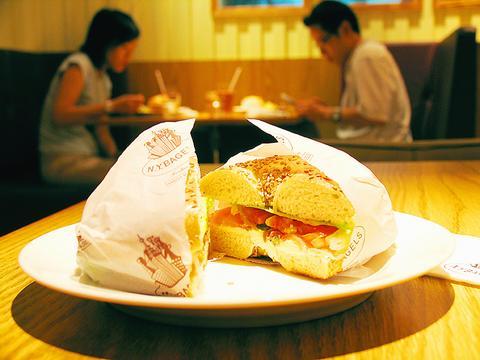
PHOTO: DAVID MOMPHARD, TAIPEI TIMES
It's no surprise. There is a lot more on offer in the 20-page menu than just bagels. Notably, a section of gigantic sandwiches, including a delicious sirloin steak sandwich on sourdough and a "homemade" hamburger, that will likely find favor even among those who aren't bagel fans.
Other non-bagel items unique to the new store are a selection of pastas, Jack's lasagna (NT$190) or a choice of chicken, bacon or seafood spaghetti in a creamy tomato sauce (each NT$170). Here, too, you can ante-up for an optional drink and fries.
The menu is a bit annoying. Rather than simply list what's on offer, it's unnecessarily promotional and filled with newspaper clippings and ads for cream cheese and olive oil. There's even a section titled "What's a bagel?" for locals that think bread should be steamed. If they want to get creative, they would do well to look at Japanese grill Kan Pai's menu, which doubles as a monthly newsletter, with articles on everything from proper grilling techniques to local alt-rock bands. Last month's menu had illustrated instructions on how to change an electrical switch -- quirky, but it moves the conversation away from the work day.
Other suggestions: First, tack up some no smoking signs. Nothing messes with your mish more than the cigarette smoke from the guy next to you. Next, add a couple of fondues to the menu.

Taiwan’s English education system is being pulled apart by three opposing forces. Bilingual Nation 2030 pulls students toward English and global communication. Artificial Intelligence (AI) readiness pulls them toward digital judgment, verification and AI-mediated work. But Taiwan’s old exam culture pulls them back toward memorization, grammar drills, timed reading and correct answers. If the education system keeps using old exams to define success, it risks producing graduates who are neither genuinely bilingual nor genuinely AI-ready, but trained for tasks machines can already perform. The first force is Bilingual Nation 2030. Launched in 2018, the policy aimed to “help Taiwan’s workforce connect

It seems every few days one bumps into one of those “real man” comments in which Taiwan is urged to “face reality” or similar, and “make a deal,” with the speaker implying that soon it will be too late. “Deal” advocates always present themselves as having a superior grip on reality, and the manly ability to make the “hard choice.” Their testosterone-laden language often echoes that of Taiwan sellout advocates. Note that such commentary always specifies a process (“make a deal, work with, make progress”), never the end state of what occupation by a violent authoritarian colonialist state will entail. In

“Taiwan’s Opposition Leader Comes to US With a Message Straight Out of Beijing” read a May 31 headline in the Wall Street Journal. Top US administration officials and members of Congress almost certainly read the WSJ, and if there was a bullet point takeaway that people in Washington should absorb ahead of Chinese Nationalist Party (KMT) Chair Cheng Li-wun’s (鄭麗文) arrival in DC on June 9, that headline is it. The last few columns have discussed this very topic, and the timing is not coincidental. While those top officials likely do not read the Taipei Times, judging by the number
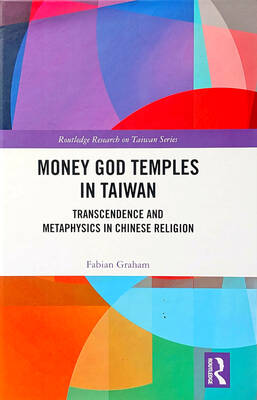
As someone who normally steers clear of books with “transcendence” or “metaphysics” in their subtitles, this reviewer — a casual observer of local belief systems since the 1990s — found Fabian Graham’s Money God Temples in Taiwan a challenging read. Those who’ve only dipped their toes into temple culture will likely need to parse several sections with special care if they’re to keep up with the author, a British ethnographic researcher whose previous books have investigated religious practices among ethnic Chinese in Southeast Asia. This scholarly volume examines a facet of Taiwan’s religious landscape that didn’t exist a century ago, and


 RSS
RSS