


One of the effects of the 911 attacks was to wake up the distracted Western public to the horror of Taliban rule in Afghanistan. Now, with the Taliban out of power, Osama, the first film produced in Afghanistan since they took over in 1996, arrives to nudge us back into a state of alertness, and also, as remnants of the ousted regime continue to menace that nation's peace and stability, to trouble our sleep and our consciences as well.
Written and directed by Siddiq Barmak, an Afghan filmmaker trained in Moscow in the 1980s and clearly influenced by the Iranian humanist cinema of the 1990s, Osama begins with an apt epigraph from Nelson Mandela: "I can forgive, but I cannot forget."
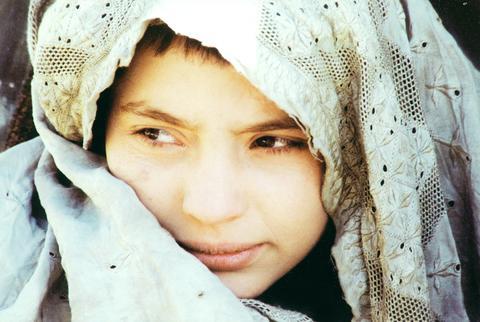
Barmak is unsparing in his anatomy of the Taliban's cruelty, especially as it was directed against women, but there is very little feeling of vengefulness or hatred in the film, which makes it all the more devastating in the end.
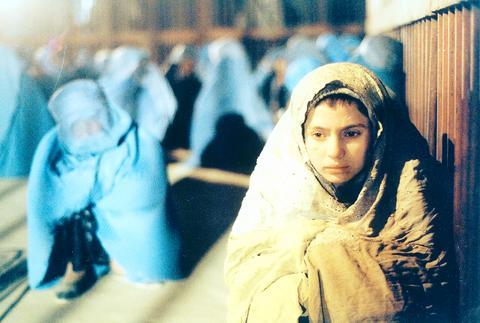
PHOTOS COURTESY OF CROWN FILMS
The opening scenes, a kind of trompe l'oeil documentary within the movie whose meaning becomes clear only much later, capture the violent suppression of a women's-rights demonstration in the sandy, war-blasted streets of Kabul. A scared young girl (Marina Golbahari) watches from a doorway as Taliban soldiers, using water hoses, live ammunition and grenade launchers, scatter a crowd of women in blue and ocher burkhas.
This is only the most brutal and public manifestation of the pervasive terror under which women in Kabul must live. The hospital where the girl's mother works is raided, and the mother (Zubaida Sahar) is saved from arrest only when a man whose father is in her care says he is her husband. There is an almost absurd sadism to the Taliban's regulations of women's behavior. Even when a household includes no men -- hardly uncommon after so many years of war -- the women still may not be seen in public or earn a living. An uncovered foot or an unwelcome word can lead to harassment, or even severe
punishment.
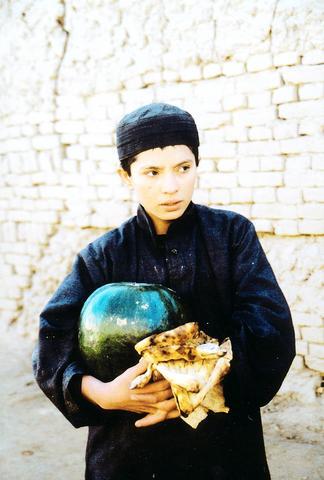
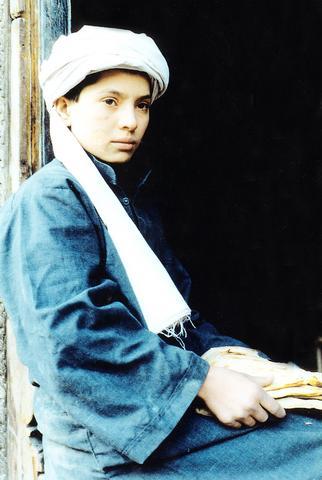
Despite all this injustice, the girl's kindly grandmother insists that the sufferings of men and women are equal because the sexes themselves are equal. This leads her to conclude that they may also be interchangeable, and so her granddaughter, with a short haircut and a dark skullcap, is sent out to work for a sympathetic shopkeeper. (She is later given the name Osama by a young beggar who knows the secret of her identity.) A similar masquerade was at the heart of Majid Majidi's film Baran, about an Afghan refugee in Tehran who disguised herself as a boy to work at a construction site.
Like Majidi, Barmak has a gently poetic visual sense: after her metamorphosis, one of the girl's severed braids is planted in a flower pot and watered by an intravenous drip her mother rescued from the shut-down hospital. He is also able to find moments of tenderness and humor in his bleak story. One sequence that stands out is a lesson in intimate hygiene taught to madrasa students by an elderly mullah -- a glimpse at the radical Islamist approach to sex education.
Barmak's patron was the Iranian director Mohsen Makhmalbaf, whose Kandahar is set in Taliban-era Afghanistan and whose daughter Samira's At Five O'Clock in the Afternoon takes place in Kabul after the American-led rout of the Taliban. Some of the surrealist touches in Osama -- gorgeous, haunting images that call for an adjective like Makhmalbafian -- may be a result of this association, and the orange glow that suffuses the landscape in all three movies may owe something to the fact that they share the gifted cinematographer Ebrahim Ghafuri. This is not to take anything away from Barmak, who had the self-confidence to embark on this project with donated equipment, a tiny budget and a cast of nonprofessionals recruited from the streets of Kabul.
The mere existence of the movie, which received the Camera d'Or special mention for best first feature in Cannes last year and the Golden Globe for best foreign film last month, would be impressive enough. But the movie's power and coherence are such that you forget completely about the hard circumstances of its making, which is nothing short of astonishing.
There is not much overt or explicit violence in Osama, which opens today in Taiwan, but an unshakable dread shadows the bright alleyways of Kabul and seeps through the heavy wooden doors of the houses. Like The Pianist, Roman Polanski's tour of Nazi-occupied Warsaw, Osama is a meticulous and beautifully made inquiry into the ways that ideological evil can infect, and ultimately destroy, the intimacies and small pleasures of daily life.
Osama has no special resiliency or survival skills; her face is, at every moment, a study in suppressed panic and worried passivity. Her unvarnished vulnerability, along with the director's combination of tough-mindedness and lyricism, prevents the movie from becoming at all sentimental; instead, it is beautiful, thoughtful and almost unbearably sad.


Taiwan’s English education system is being pulled apart by three opposing forces. Bilingual Nation 2030 pulls students toward English and global communication. Artificial Intelligence (AI) readiness pulls them toward digital judgment, verification and AI-mediated work. But Taiwan’s old exam culture pulls them back toward memorization, grammar drills, timed reading and correct answers. If the education system keeps using old exams to define success, it risks producing graduates who are neither genuinely bilingual nor genuinely AI-ready, but trained for tasks machines can already perform. The first force is Bilingual Nation 2030. Launched in 2018, the policy aimed to “help Taiwan’s workforce connect

“Taiwan’s Opposition Leader Comes to US With a Message Straight Out of Beijing” read a May 31 headline in the Wall Street Journal. Top US administration officials and members of Congress almost certainly read the WSJ, and if there was a bullet point takeaway that people in Washington should absorb ahead of Chinese Nationalist Party (KMT) Chair Cheng Li-wun’s (鄭麗文) arrival in DC on June 9, that headline is it. The last few columns have discussed this very topic, and the timing is not coincidental. While those top officials likely do not read the Taipei Times, judging by the number

With weighty, anxiety-inducing geopolitical topics dominating the headlines, checking in on the wild and weird state of local politics can take some of the edge off. This November’s elections will determine who will be in charge of fixing potholes in your neighborhood, not the potholes in Taiwan’s complicated geopolitical space. Recently, after an online interview with a Taipei-based journalist, I commented that Taipei journalists never go further than the MRT can take them. He laughed and agreed. Naturally, the Taipei mayoral race is eating up much of the press attention. TAIPEI CITY Democratic Progressive Party (DPP) candidate Puma Shen (沈伯洋) has
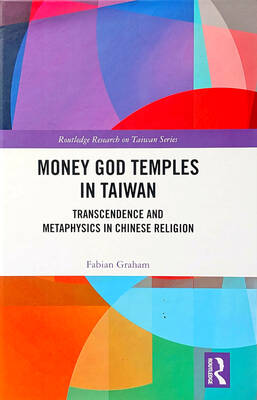
As someone who normally steers clear of books with “transcendence” or “metaphysics” in their subtitles, this reviewer — a casual observer of local belief systems since the 1990s — found Fabian Graham’s Money God Temples in Taiwan a challenging read. Those who’ve only dipped their toes into temple culture will likely need to parse several sections with special care if they’re to keep up with the author, a British ethnographic researcher whose previous books have investigated religious practices among ethnic Chinese in Southeast Asia. This scholarly volume examines a facet of Taiwan’s religious landscape that didn’t exist a century ago, and


 RSS
RSS