


One of the better restaurants in town, Shintori (Cuisine Japonaise) has an ornamental bamboo grove outside and oozes class inside, with its attention to design and stripped-down neo-industrial look. The ambience of the place, fortunately, is matched by the service and food.
Comprising a main seating area -- which is set off from the sashimi bar by a large etched plate-glass window -- there is an open kitchen, tunnel-like corridors and faux bridges or water-themed decorative elements. The restaurant also has many private booths that cater to groups of friends, families or a romantic tete-a-tete, that are set up like small sitting rooms, with simple wooden tables, a decorative highlight or freshly cut flowers.
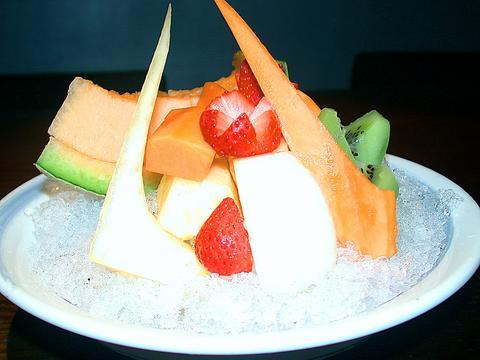
PHOTO: JULES QUARTLY, TAIPEI TIMES
Dinner began with tea and not just any old cha -- a light and fragrant oolong, or clean-tasting green tea -- before moving on to starters that were inventive and genuinely appetizing. "Cubic appetizers" was a nine-box assortment of sushi and sashimi in little black-and-white colored boxes. Rock 'n' roll salad sounded intriguing but I plumped for the rice and salmon flakes in tea soup, which was tasty and powerfully fishy with the addition of small, orange globes of roe.
Main course choices included a sashimi salad with an amazing confection of varied green leaves and hearts of lettuces, along with radishes, baby corns and raw fish, sprinkled with in an elegant dressing. I chose the grilled XXL chicken on a skewer, which arrived with dried chili and cracked pepper, over the promising beef hot pot, grilled black bass filet with buckwheat, and assorted tempura platter. The chicken was good, with extra points for the subtle lemon grass flavoring.
The owners have clearly gone for "zen-style cooking," which they claim has evolved from food served in temples and "the simple diet of Buddhist priests ... into a creative and interesting cuisine." It works, I think, because of good management. There are four Shintori company restaurants in Taipei (which include the People bar and fusion restaurant further down Anhe Road that has become popular with media and business types), with three more in Shanghai. Attention to detail makes the restaurant chain stand out.
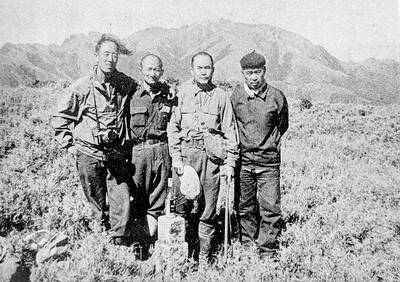
May 18 to May 24 Gathered on Yangtou Mountain (羊頭山) on Dec. 5, 1972, Taiwan’s hiking enthusiasts formally declared the formation of the “100 Peaks Club” (百岳俱樂部) and unveiled the final list of mountains. Famed mountaineer Lin Wen-an (林文安) led this effort for the Chinese Alpine Association (中華山岳協會). Working with other experienced climbers, he chose 100 peaks above 10,000 feet (3,048m) that featured triangulation points and varied in difficulty and character. The list sparked an alpine hiking craze, inspiring many to take up mountaineering and competing to “conquer” the summits. A common misconception is that the 100 Peaks represent Taiwan’s 100 tallest

Yesterday, the Democratic Progressive Party (DPP) nominated legislator Puma Shen (沈伯洋) as their Taipei mayoral candidate, the Chinese Nationalist Party (KMT) put their stamp of approval on Wei Ping-cheng (魏平政) as their candidate for Changhua County commissioner and former legislator Tsai Pi-ru (蔡壁如) of the Taiwan People’s Party (TPP) has begun the process to also run in Changhua, though she has not yet been formally nominated. All three news items are bizarre. The DPP has struggled with settling on a Taipei nominee. The only candidate who declared interest was Enoch Wu (吳怡農), but the party seemed determined to nominate anyone
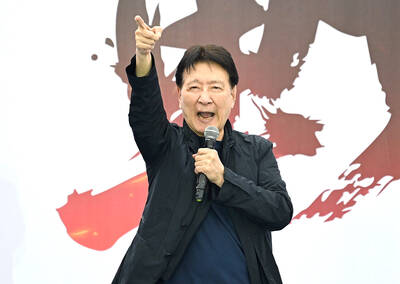
In a sudden move last week, opposition lawmakers of the Chinese Nationalist Party (KMT) and Taiwan People’s Party (TPP) passed a NT$780 billion special defense budget as a preemptive measure to stop either Chinese leader Xi Jinping (習近平) or US President Donald Trump from blocking US arms sales to Taiwan at their summit in Beijing, said KMT heavyweight Jaw Shaw-kong (趙少康), speaking to the Taipei Foreign Correspondents Club on Wednesday night in Taipei. The 76-year-old Jaw, a political talk show host who ran as the KMT’s vice presidential candidate in 2024, says that he personally brokered the deal to resolve
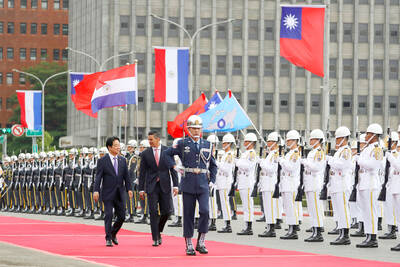
“China wants to unify with Taiwan at the lowest possible cost, and it currently believes that unification will become easier and less costly as time passes,” wrote Amanda Hsiao (蕭嫣然) and Bonnie Glaser in Foreign Affairs (“Why China Waits”) this month, describing how the People’s Republic of China (PRC) is playing the long game in its quest to seize Taiwan. This has been a favorite claim of many writers over the years, easy to argue because it is so trite. Very obviously, if the PRC isn’t attacking Taiwan, it is waiting. But for what? Hsiao and Glaser’s main point is trivial,


 RSS
RSS