


Gatherings: Aboriginal Art from the Collection of the Winnipeg Art Gallery (原生與創生--加拿大原住民藝術家作品展) currently on show at the National Museum of History (國立歷史博物館) showcases three generations of Aboriginal art in Canada from the 1960s to the present with works raging from photography, sculpture, painting and video installation.
Organized by the Canadian Trade Office in Taipei, the National Museum of History and Winnipeg Art Gallery, and sponsored by Taipei City's Council of Aboriginal Affairs, Gatherings is a small yet well presented show of vibrant Aboriginal art in a country that has systematically encouraged its indigenous talents since the 1970s.
All from central Canada, the artists in the exhibition have gained wide recognition both in the Aboriginal community and beyond. "The Indian Group of Seven," the first section of the show, includes professional artists such as Norval Morrisseau, Daphne Odjig and Jackson Beardy, who, in the 1970s, started a new wave of cultural identification. Using Western techniques, they transcribed their tribal history, told by their elders, onto the canvas, in an effort to express their declining tribal culture.

"The New Generation," of works from the 1980s, is probably the most interesting section. Artists at this time, were mostly college trained and eager to experiment with styles and media. This characteristic prevented the art establishments from recognizing their work as Aboriginal art, even when they deal with issues of the blending of Aboriginal and mainstream Canadian cultures.
Buffalo Bone China, a video installation by Dana Claxton, is a touching work from the "Responding to the Times" section, of works from the 1990s. The slaughtering of buffaloes, held sacred by Lakota Aborigines, whose bones were made into fine china, is lamented in a sarcastic way. Arthur Renwick's My Grandfather's Shoes tries to warn viewers of the deteriorating natural environment of his hometown in British Columbia, with a haunting photography series.
Rosalie Favell, whose Untitled (My First Day of Assimilation) is on show, described the social milieu in her formative years.

PHOTOS COURTESY OF WINNIPEG ART GALLERY
"In the 1960s, when I went to kindergarten, I noticed that my skin was darker and naturally I gravitated toward children of Asian and Aboriginal origins. Even though I never went to boarding school, where Aboriginal kids were encouraged to behave like Canadians, the social atmosphere to repress my origin was there," Favell said at the opening of the exhibition on Friday.
It was not until the 1990s, when she made Untitled, that she society encouraged Aboriginal cultural expression and being an Aborigine even become "cool." Looking back on the situation in her childhood in a humorous light, Favell wrote "My First Day of Assimilation" over the snapshot her mother took of her on her first day at kindergarten.
"Gatherings: Aboriginal Art from the Collection of the Winnipeg Art Gallery" will run until Oct. 26 at National Museum of History, 49 Nanhai Rd, Taipei. (

In late October of 1873 the government of Japan decided against sending a military expedition to Korea to force that nation to open trade relations. Across the government supporters of the expedition resigned immediately. The spectacle of revolt by disaffected samurai began to loom over Japanese politics. In January of 1874 disaffected samurai attacked a senior minister in Tokyo. A month later, a group of pro-Korea expedition and anti-foreign elements from Saga prefecture in Kyushu revolted, driven in part by high food prices stemming from poor harvests. Their leader, according to Edward Drea’s classic Japan’s Imperial Army, was a samurai

The following three paragraphs are just some of what the local Chinese-language press is reporting on breathlessly and following every twist and turn with the eagerness of a soap opera fan. For many English-language readers, it probably comes across as incomprehensibly opaque, so bear with me briefly dear reader: To the surprise of many, former pop singer and Democratic Progressive Party (DPP) ex-lawmaker Yu Tien (余天) of the Taiwan Normal Country Promotion Association (TNCPA) at the last minute dropped out of the running for committee chair of the DPP’s New Taipei City chapter, paving the way for DPP legislator Su
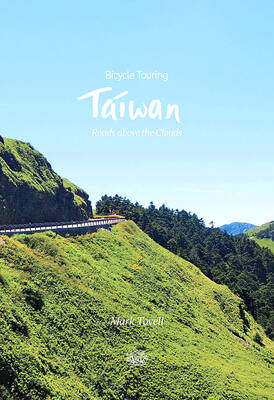
It’s hard to know where to begin with Mark Tovell’s Taiwan: Roads Above the Clouds. Having published a travelogue myself, as well as having contributed to several guidebooks, at first glance Tovell’s book appears to inhabit a middle ground — the kind of hard-to-sell nowheresville publishers detest. Leaf through the pages and you’ll find them suffuse with the purple prose best associated with travel literature: “When the sun is low on a warm, clear morning, and with the heat already rising, we stand at the riverside bike path leading south from Sanxia’s old cobble streets.” Hardly the stuff of your
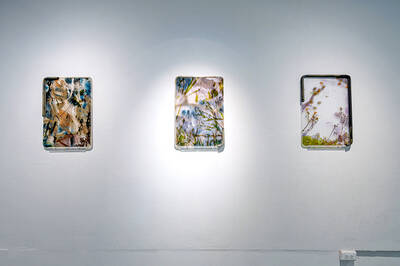
Located down a sideroad in old Wanhua District (萬華區), Waley Art (水谷藝術) has an established reputation for curating some of the more provocative indie art exhibitions in Taipei. And this month is no exception. Beyond the innocuous facade of a shophouse, the full three stories of the gallery space (including the basement) have been taken over by photographs, installation videos and abstract images courtesy of two creatives who hail from the opposite ends of the earth, Taiwan’s Hsu Yi-ting (許懿婷) and Germany’s Benjamin Janzen. “In 2019, I had an art residency in Europe,” Hsu says. “I met Benjamin in the lobby


 RSS
RSS