


Since it was established in 1973, Cloud Gate Dance Theatre (雲
Cloud Gate is the creation of Lin Huai-min (林
Lin's background is unusual for a dancer. First making his name as a writer of short fiction, he went on to study politics and creative writing before finally finding his career in dance. Now aged 54, he remains quintessentially a dancer. His voice is gentle, but working with his dancers, clearly insistent and demanding, looking for beauty in the movement of bodies, constantly pushing for more precision and power.
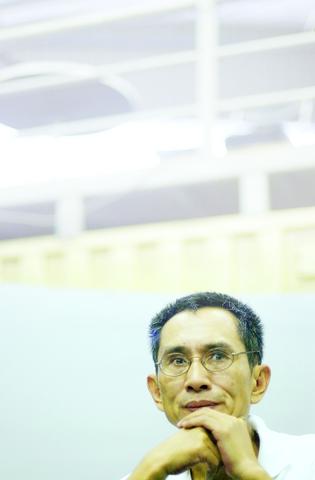
PHOTO: CHEN CHENG-CHANG, TAIPEI TIMES
His early work was known for its strong narrative and political elements, most notably in Songs of the Wanderers (家
Although Lin's new work is based on a more personal philosophy, it is still deeply rooted in Chinese tradition. Lin explains: "As I grow older I think less is more. I really think audiences should not expect themselves to understand a work. They should enjoy the work, interpret the work, they should take off into their own fantasy." He talks about watching the water flow along the Tamsui river near his home "Watching the water, it tells you a lot of things, but it doesn't say anything. It is so complicated, so intricate to see the ripples and the flow, full of expression but it doesn't pretend to tell you anything," Lin said.
To this end, Lin, Taiwan's foremost choreographer, makes the ironic comment: "down with choreography, present the dancers." He has left behind narrative altogether, which is an "obstacle between their [the dancers'] being and the audience. ... When I watch them, I think their bodies and their movement is sufficient already, you don't have to add anything.
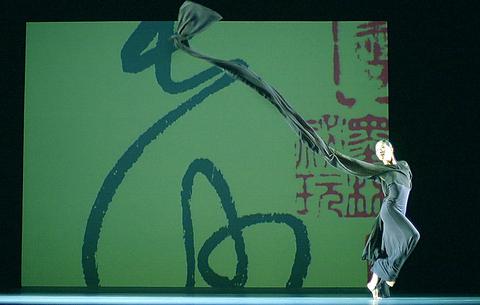
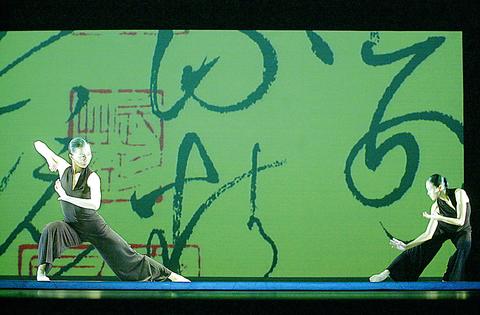
"What I care about is the communication between the stage and the audience, and the best communication is pure interaction of energy," Lin said. The fluid movements of Cursive, with its rushes of speed inter-cut with slow surges of power, has a mystical quality, and Lin tells of people who have seen a performance of Moon Water who had later come up to him in tears to thank him for the almost miraculous effects of watching the dance.
"There was a lady who had practiced tai chi for 10 years, but had never got it through. The chi did not flow. But after watching Moon Water, the chi in her body was all moving. It opened up the passages for the chi. It sounds tacky maybe, but its not, because things really vibrate. It's energy. When we rehearse in a small room, I cannot sit still, because I get so much energy running through me," Lin said.
For Lin, it is this energy which is the most direct form of communication.
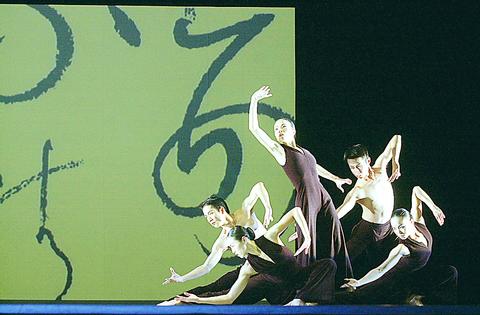
While Moon Water was extremely slow, Lin said with Cursive, he has greatly increased the range of movement. "This is because the dancers' bodies are more capable now," Lin said.
Lin has put considerable time and energy into training Taiwan's dancers, creating the department of dance at the Taipei National Institute of the Arts (台
Cursive is the product of these many years of development in dance, with dancers of a caliber to allow Lin to strive for "pure aesthetics." He said he had wanted to do a performance like this for 20 years, but only now are Taiwan's dancers ready for the challenge.
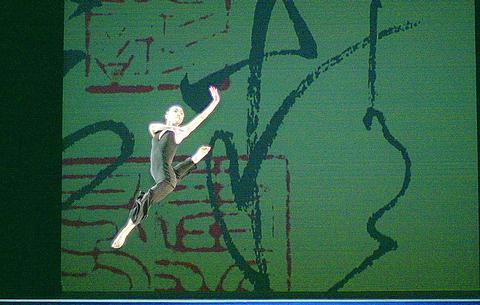
"We play a game, they challenge me and I challenge them," he said. While the dancers in Cursive dance against a backdrop of some of China's greatest calligraphy, Lin said he wanted to distance himself from interpretation of these texts. They are cropped in such a way they cannot really be read. The music was especially composed for the performance, joining traditional Chinese instruments with a cello, which provides the gravity and bass tones.
Once complete, Cloud Gate will resume its arduous touring schedule. Last year, Cloud Gate spent four months on the road, and this year five months will be spent on tour. Although now set to open, such is Cloud Gate's reputation that Cursive has already been booked for numerous engagements at international events in coming years.
What: CursiveWho: Cloud Gate Dance Theatre When & Where: National Theater, Taipei 7:45pm Dec. 1, Dec. 3 to Dec. 8; 4pm Dec. 2; 2:45pm Dec. 8 and Dec. 9 Chungshan Hall, Taichung 7:30pm Dec. 14, 15 Yuanlin Arts Hall, Changhwa County 7:30pm Dec. 21, 22 Chih Teh Hall, Kaohsiung 7:30pm Dec. 28 to 29 Tickets: NT$400 to NT$1,800 (Taipei); NT$300 to NT$1500 (other locations). Call Cloud Gate at tel (02) 2712-2102 for bookings or download a booking form from http://www.cloudgate.org.tw/docs/download.doc

Taiwan’s English education system is being pulled apart by three opposing forces. Bilingual Nation 2030 pulls students toward English and global communication. Artificial Intelligence (AI) readiness pulls them toward digital judgment, verification and AI-mediated work. But Taiwan’s old exam culture pulls them back toward memorization, grammar drills, timed reading and correct answers. If the education system keeps using old exams to define success, it risks producing graduates who are neither genuinely bilingual nor genuinely AI-ready, but trained for tasks machines can already perform. The first force is Bilingual Nation 2030. Launched in 2018, the policy aimed to “help Taiwan’s workforce connect

It seems every few days one bumps into one of those “real man” comments in which Taiwan is urged to “face reality” or similar, and “make a deal,” with the speaker implying that soon it will be too late. “Deal” advocates always present themselves as having a superior grip on reality, and the manly ability to make the “hard choice.” Their testosterone-laden language often echoes that of Taiwan sellout advocates. Note that such commentary always specifies a process (“make a deal, work with, make progress”), never the end state of what occupation by a violent authoritarian colonialist state will entail. In
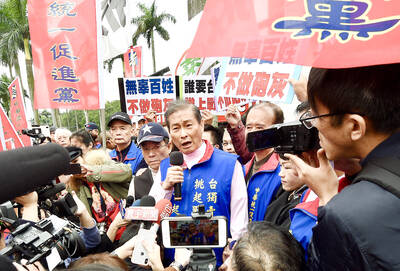
There are shadowy cabals plotting to sell out Taiwan to be annexed by China, by invasion if necessary. Fortunately, they are buffoons. In 2019, former Bamboo Union gangster and founder of the China Unification Promotion Party (CUPP), Chang An-le (張安樂, colorfully known as “White Wolf”), led a protest at the Legislative Yuan against comments made by then-premier Su Tseng-chang (蘇貞昌) that in the event of an attack by China, he would never surrender, but would protect the nation by fighting to the end, even if he only had a broom. Chang had party members bring a wooden casket that they
June 1 to June 7 "If all Taiwanese were as afraid of dying as you, then what would happen?” Physician Shih Chiang-nan (施江南) reportedly said this to his wife Chen Chiao-tung (陳焦桐) after she urged him to stop intervening on behalf of Taiwanese soldiers stranded overseas after serving in the Japanese Army during World War II. Shih had clashed with high-ranking officials over the issue, engaged in several heated arguments with Taiwan governor-general Chen Yi (陳儀) and allegedly shouted at general Ko Yuan-fen (柯遠芬), chief of staff of the Taiwan Garrison Command, over


 RSS
RSS