


Pacing her office at Arc Light Films (吉光電影公司), producer and film critic Peggy Chiao (焦雄屏) looks harried as she talks into a cellphone. She later explains: "that was Miramax and Warner. They wanted to buy our films, so I had to explain to them that the films were already sold to Sony Classics."
Chiao is busy these days, not least because her two recent productions -- Betelnut Beauty (愛你愛我) and Beijing Bicycle (十七歲的單車) -- won four major awards at last month's Berlin International Film Festival.
Lin Cheng-sheng (林正盛), director of Betelnut Beauty, came away from the festival with the Silver Berlin Bear and the movie's star, Lee Sinjie (李心潔), captured the Piper Heidsieck New Talent award for the best young actress. Meanwhile, Wang Xiaoshuai (王小帥), who directed Beijing Bicycle, won a Silver Bear Jury Prize and the movie's two young actors together picked up the Piper Heidsieck New Talent awards in the men's category.
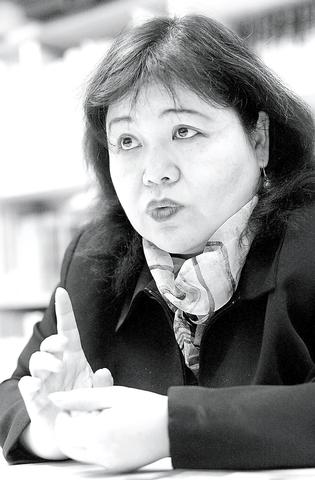
PHOTO: CHEN CHENG-CHANG, TAIPEI TIMES
Arc Light suddenly became a hot item during the event, at which hundreds of film dealers and distributors hunt for films from different regions and markets. And after the worldwide success of Ang Lee's (李安) Crouching Tiger, Hidden Dragon (臥虎藏龍), no one wants to underestimate the market for Chinese-language films.
Not surprisingly, when discussing the so-called "Asia Invasion" in the Western film market, Chiao is visibly proud and excited, for she has been a major force behind the phenomenal success of Chinese-language films in the global market over the past decade.
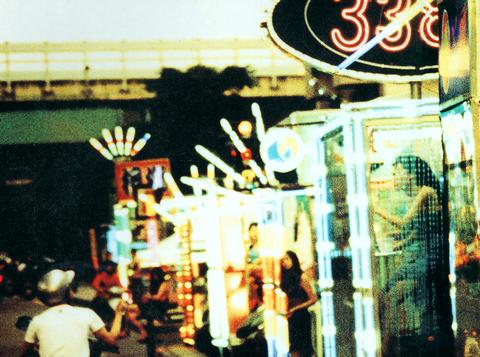
"Chinese-language films have been recognized internationally for at least 10 years. The first-generation directors such as Hou Hsiao-hsien (侯孝賢) and Edward Yang (楊德昌) from Taiwan, Tsui Hark (徐克) from Hong Kong and Zhang Yimou (張藝謀) and Chen Kaige (陳凱歌) from China have established a reputation for quality and strong artistic style in their films. The new trend is to make Chinese-language films more marketable and popular in a global market," said Chiao.

PHOTO COURTESY OF ARC LIGHT FILMS
Chiao attributes recent breakthroughs to the introduction of higher-quality Asian films into the global film promotion system, making them far more accessible arger audiences to larger audiences.
"Crouching Tiger can be shown in small German towns where audiences had no idea why the characters in the film could fly above roofs. Edward Yang's A One and A Two (
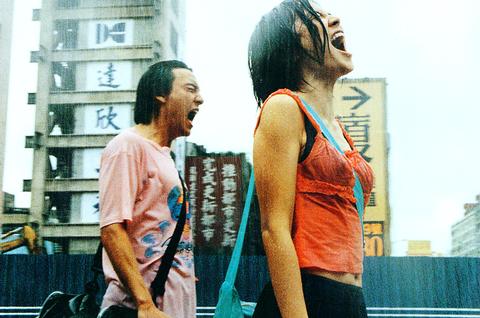
PHOTO COURTESY OF ARC LIGHT FILMS
"The global market for Chinese-language films has been opened," she said.
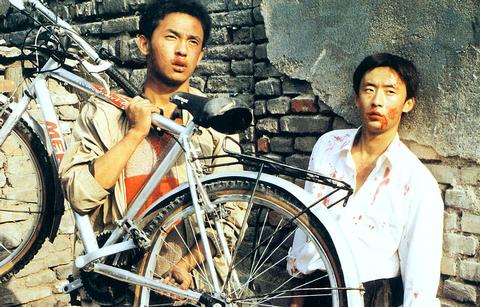
PHOTO COURTESY OF ARC LIGHT FILMS
Chiao is no stranger to international film festivals. Twenty years ago, as a film critic, she began touting the new film movement called "New Taiwan Cinema" (
When Hou's City of Sadness (
Chiao has been a fixture at European film festivals over the past 10 years, shuttling back and forth and taking Taiwanese directors to visit festival chairpeople, judges, film critics and dealers.
"Hi, do you remember me? I'm Peggy. Do you like our films from Taiwan?" Chiao recalls as her signature introduction at these events.
"Twenty years ago, we were looking at the birth of Taiwan's own cinema, films which were not just propaganda or cheap melodrama," she said.
She says most filmmakers in the New Taiwan Cinema movement made highly politicized retrospective pieces, such as Hou's City of Sadness which dealt with the 228 Incident, or Edward Yang's A Bright Summer Day (牯嶺街少年殺人事件) which took a nostalgic look at life in Taiwan's veterans' villages. Collectively, she said, these directors were compiling what she called a cultural history of Taiwan.
"But that phase is over," said Chiao. "Films in the 21st century should walk out of the historical melancholy [that characterized New Taiwan Cinema filmmaking] and should deal with our current status."
And key to this change of direction, according to Chiao, is to draw from the vast social and political changes occurring in Taiwan, Hong Kong and China.
"China has become more capitalist, Hong Kong has been made aware of the importance of democracy and Taiwan's society has become more materialistic. These dramatic social changes and the stories behind these changes are something in which the whole world is interested," she said.
Chiao's role shifted from that of a film scholar and critic to that of producer four years ago. Winning four Berlin bears is by far the greatest achievement of Arc Light Films and provided a boost to the company's market value, making it one of the few film companies in Taiwan that is doing better than just getting by.
"Betelnut Beauty talks about Taiwan's betel nut culture, but also, it tells a story about young people lost in a materialistic world of fashion and trends. It is a very current situation," she said.
Beijing Bicycle, a story about the friendship between two teenage boys, tackles equally contemporary subject matter. "You can see from the context of the film that Beijing has changed. Class differences have emerged. A bicycle is no longer just a means of transportation. It represents peer identification, economic status and pride," she said. "It's a reflection of just how fast China's society is changing."
The two movies are part of a six-film project by Arc Light collectively titled "Tales of Three Cities" (
Hong Kong director Yu Lik-wai (余力為) contributed People Exchange (人民找換), a story about immigration between Hong Kong and China. Shanghai Babe, by Chinese director Jia Zhang-ke (賈樟柯), will be a story about a group of pretty Shanghai girls who use their looks and English ability to pick up foreigners. Taiwanese director Yi Chih-yen (易智言) will present a film about sexual identity and anxiety among Taipei's high school students in The Blue Gate (藍色大門). Rounding out the series will be Hsu Hsiao-ming (徐小明) with a film called Wandering to Tamsui (流浪到淡水), a look at the gap that separates the old and young, and also urban and rural people.
Looking at the "Tales of Three Cities" project, it is not difficult to see that Chiao has expanded the scope of her career, to be not merely a marketer for Taiwanese films, but also as a producer bent on expanding the market for Chinese-language films. For her, the project is a passing of the torch to the upcoming generation of filmmakers.
And as usual there are financial considerations. "Because we have six products, we can get a cheaper deal for production expenses. This makes it easier to get investment from overseas," she said. "If you say you have a package of six movies about the changes in Chinese societies, it's more appealing to foreign investors," Chiao said.
"Tales of Three Cities" received funds from French distributor Flach Pyramide International in the pre-production phase, and after its success in Berlin, its US distribution was bought by Sony Classics. And according to Chiao, five Japanese distributors and two Hong Kong companies intended to cover the project's Asian market.
Arc Light Films is also one of the few Taiwanese companies to recruit directors from China, with Wang Xiaoshuai for Beijing Bicycle and Jia Zhangke for Shanghai Babe.
Beijing Bicycle was entirely produced in Taiwan and most of the post-production credits go to Taiwanese, but Chiao says the participation of a director from China has made the film a political hot potato. "It's a pity our government is still reluctant to recognize the effort and achievement of Arc Light Films," Chiao said. "It's absurd! Joint ventures are the trend in international filmmaking. And whether you like the word globalization or not, you will see a European film with investment by different nations so that you cannot tell the nationality of the film," Chiao added.
For Chiao, culture precedes politics, and she says the future of film investment will require a broader mind and vision. "In the future, it will be impossible to have a pure-blooded Taiwanese film. You will have a director from Taiwan, stars from Hong Kong or Japan, studio shots in Beijing ..." she said. "You will have to go even beyond Chinese-language films and integrate resources from around the Asian region."
With the synthesis of international funding and talent, she says, Chinese-language films just may be able to compete with the Hollywood monolith.
A week after returning from Berlin, Chiao said she can finally repay her million US dollar debt and start on the next project. And having said that, Chiao rushed off to meet with a Korean film distributor.

In late October of 1873 the government of Japan decided against sending a military expedition to Korea to force that nation to open trade relations. Across the government supporters of the expedition resigned immediately. The spectacle of revolt by disaffected samurai began to loom over Japanese politics. In January of 1874 disaffected samurai attacked a senior minister in Tokyo. A month later, a group of pro-Korea expedition and anti-foreign elements from Saga prefecture in Kyushu revolted, driven in part by high food prices stemming from poor harvests. Their leader, according to Edward Drea’s classic Japan’s Imperial Army, was a samurai

The following three paragraphs are just some of what the local Chinese-language press is reporting on breathlessly and following every twist and turn with the eagerness of a soap opera fan. For many English-language readers, it probably comes across as incomprehensibly opaque, so bear with me briefly dear reader: To the surprise of many, former pop singer and Democratic Progressive Party (DPP) ex-lawmaker Yu Tien (余天) of the Taiwan Normal Country Promotion Association (TNCPA) at the last minute dropped out of the running for committee chair of the DPP’s New Taipei City chapter, paving the way for DPP legislator Su
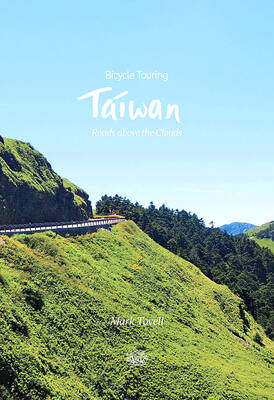
It’s hard to know where to begin with Mark Tovell’s Taiwan: Roads Above the Clouds. Having published a travelogue myself, as well as having contributed to several guidebooks, at first glance Tovell’s book appears to inhabit a middle ground — the kind of hard-to-sell nowheresville publishers detest. Leaf through the pages and you’ll find them suffuse with the purple prose best associated with travel literature: “When the sun is low on a warm, clear morning, and with the heat already rising, we stand at the riverside bike path leading south from Sanxia’s old cobble streets.” Hardly the stuff of your
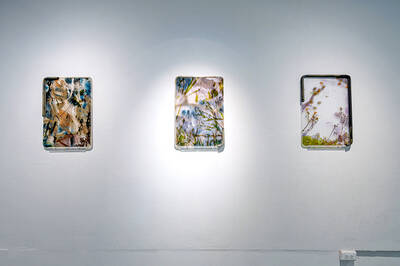
Located down a sideroad in old Wanhua District (萬華區), Waley Art (水谷藝術) has an established reputation for curating some of the more provocative indie art exhibitions in Taipei. And this month is no exception. Beyond the innocuous facade of a shophouse, the full three stories of the gallery space (including the basement) have been taken over by photographs, installation videos and abstract images courtesy of two creatives who hail from the opposite ends of the earth, Taiwan’s Hsu Yi-ting (許懿婷) and Germany’s Benjamin Janzen. “In 2019, I had an art residency in Europe,” Hsu says. “I met Benjamin in the lobby


 RSS
RSS