


The world is seeing the emergence of another health crisis originating in China. Exact details regarding the exposure, virulence and mortality rates of the disease remain unclear. The lack of transparency from Chinese officials has only worsened the spread of a virus that does not discriminate based on ethnicity, nationality or political beliefs.
Rapid diagnosis and open collaboration on information sharing is crucial in preventing the early spread of new epidemics. Governments need all hands on deck to keep populations safe from disease. This kind of collaboration was present with past outbreaks, such as when SARS and Middle East respiratory syndrome (MERS) emerged on the world stage.
In 2002, Chinese officials stalled their reporting in the wake of the SARS epidemic emerging in China. Eventually, the world learned that more than 8,000 people contracted this disease and nearly 800 people died from it. This new coronavirus is on track to surpass that number.
We learned that the rate of SARS transmission was worsened by deception and incompetence on the part of the People’s Republic of China. It is essential that the US bring every capable world health partner into the conversation for keeping harmful diseases from the country’s shores.
Interestingly enough, Taiwan was the first nation to diagnose the cause, which reaffirms their role as an invaluable ally on global health and disease prevention efforts. The US must take the lead on inviting their assistance.
Since 1996, Taiwan has invested more than US$6 billion in international medical and humanitarian aid efforts in more than 80 countries. During the 2014 Ebola crisis, Taiwan donated US$1 million and provided 100,000 sets of personal protective equipment.
Taiwan has proven its capability and determination on the global stage to contribute to disease prevention efforts time and again, and Taiwan deserves the opportunity to participate in the international health arena.
Despite Taiwan’s contributions, China has steadily increased its marginalization of the nation through provocative military actions and pressuring their remaining diplomatic partners to exclude them from international organizations.
Although Taiwan participated in the WHO’s annual summit as an observer for years, the Taiwanese delegation has been blocked from attending since 2017, for seemingly no other reason than to placate the insecurities of Beijing.
This pressure from China seems even more hypocritical given that it is at least partially responsible for the spread of the coronavirus across much of Asia, including Taiwan. Undoubtedly, this should be of concern to Americans as hundreds of people across the nation are currently being tested for coronavirus.
Taiwan’s exclusion from the WHO puts the world at risk. That is why I have called for the re-establishment of Taiwan’s observer status on numerous occasions.
On Jan. 8 last year, I introduced a bipartisan bill with the support of US House of Representatives Foreign Affairs Committee Chairman Eliot Engel and ranking member Mike McCaul that would direct the US secretary of state to develop a strategy to regain Taiwan’s observer status in the WHO’s World Health Assembly.
The bill, H.R. 353, passed the House unanimously on Jan. 22 last year, demonstrating the US government’s resolve in defending Taiwan’s seat at the table.
It would be naive to think the world community can effectively combat cross-border infectious diseases, especially in the Indo-Pacific region, while excluding a population of 23 million people in Taiwan from participating in disease prevention efforts happening in their own backyard.
The health of the world needs and benefits from the expertise of Taiwan’s healthcare researchers. The US’ expectation is that China looks beyond its pride and works together with Taiwan and the rest of the world before all continents become infected by this new Chinese plague.
Ted Yoho is the US representative for Florida’s Third Congressional District and is the ranking Republican member of the US House of Representatives Foreign Affairs Subcommittee on Asia, the Pacific and Nonproliferation.
Minister of Labor Hung Sun-han (洪申翰) on April 9 said that the first group of Indian workers could arrive as early as this year as part of a memorandum of understanding (MOU) between the Taipei Economic and Cultural Center in India and the India Taipei Association. Signed in February 2024, the MOU stipulates that Taipei would decide the number of migrant workers and which industries would employ them, while New Delhi would manage recruitment and training. Employment would be governed by the laws of both countries. Months after its signing, the two sides agreed that 1,000 migrant workers from India would
On March 31, the South Korean Ministry of Foreign Affairs released declassified diplomatic records from 1995 that drew wide domestic media attention. One revelation stood out: North Korea had once raised the possibility of diplomatic relations with Taiwan. In a meeting with visiting Chinese officials in May 1995, as then-Chinese president Jiang Zemin (江澤民) prepared for a visit to South Korea, North Korean officials objected to Beijing’s growing ties with Seoul and raised Taiwan directly. According to the newly released records, North Korean officials asked why Pyongyang should refrain from developing relations with Taiwan while China and South Korea were expanding high-level
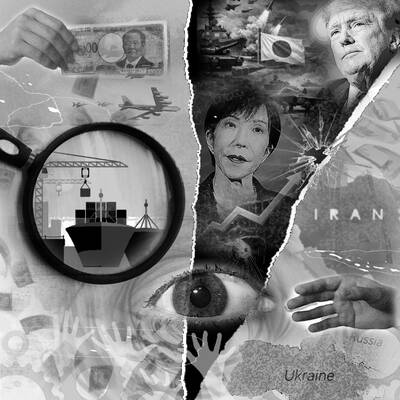
Japan’s imminent easing of arms export rules has sparked strong interest from Warsaw to Manila, Reuters reporting found, as US President Donald Trump wavers on security commitments to allies, and the wars in Iran and Ukraine strain US weapons supplies. Japanese Prime Minister Sanae Takaichi’s ruling party approved the changes this week as she tries to invigorate the pacifist country’s military industrial base. Her government would formally adopt the new rules as soon as this month, three Japanese government officials told Reuters. Despite largely isolating itself from global arms markets since World War II, Japan spends enough on its own
When 17,000 troops from the US, the Philippines, Australia, Japan, Canada, France and New Zealand spread across the Philippine archipelago for the Balikatan military exercise, running from tomorrow through May 8, the official language would be about interoperability, readiness and regional peace. However, the strategic subtext is becoming harder to ignore: The exercises are increasingly about the military geography around Taiwan. Balikatan has always carried political weight. This year, however, the exercise looks different in ways that matter not only to Manila and Washington, but also to Taipei. What began in 2023 as a shift toward a more serious deterrence posture


 RSS
RSS