


A Taiwanese e-sports team was on Wednesday denied entry to a competition next year after the German body overseeing it argued that Taiwan does not exist on any UN list of countries or regions. This underscores the urgent need for a referendum on independence.
Although a declaration of independence would probably not see Taiwanese sovereignty recognized in the short term, it would legally protect the nation from annexation and afford it international recognition, while putting it on the path toward sovereignty in the long term. It would also protect the democratic rights and the will of the nation’s 23.5 million people.
While there is no set definition for what constitutes sovereignty, legal experts around the world largely agree on a few key requirements and generally concur that UN recognition is the standard for a successful determination of the requirements.
A BBC article on Oct. 10 last year delineated four components that comprise a state: a people, a territory, a government and the ability to conduct relations with other states on a sovereign basis.
The definition of “a people” is disputed, the article said, but added that some argue it means a permanent population with a concept of and belief in their own nationality.
Despite having these components, Taiwan remains in limbo — neither under the control of another nation nor recognized as sovereign. This is largely due to international laws being somewhat contradictory. They call for the protection of self-determination, as outlined in the UN Charter and clarified in the International Covenant on Civil and Political Rights, but disallow the fragmentation of existing sovereign states.
An article on theconversation.com says that these laws were mostly written during the period of decolonization, while self-determination in today’s world is typically done by working within the confines of a pre-existing state, such as the establishment of autonomous areas.
Areas claimed by the Republic of China are recognized by the UN as part of the sovereign territory of the People’s Republic of China, whose sovereignty is protected by the 1971 UN General Assembly Resolution 2758.
Then-UN secretary-general Ban Ki-moon in 2007 cited this resolution when he rejected then-president Chen Shui-bian’s (陳水扁) bid for full UN membership for Taiwan.
Three of the world’s newest countries — East Timor, South Sudan and Eritrea — gained sovereignty because the nations from which they separated relinquished territory as part of internationally negotiated peace agreements.
For Taiwan, such a possibility simply does not exist in the short term. The relinquishment of claims over Taiwan by Beijing would give impetus to independence movements in Hong Kong, Tibet and Xinjiang, which would seriously weaken the Chinese Communist Party.
However, even without recognized sovereignty, there is value in declaring independence, as Kosovo’s independence from Serbia in 2008 showed. Although Kosovo is still claimed by Serbia, its independence is recognized by more than half of the UN member states and its de facto statehood also means that Serbia cannot use force to reclaim it.
Citing Oxford University professor of public international law Stefan Talmon, an article on the Web site of Foreign Policy magazine says that the UN Charter prohibits the use of force against an established state as part of Cold War-era rules that protect new states not yet recognized by some governments.
Therefore, a declaration of independence by Taiwan should also be protected by UN regulations, which China, as a member of the UN Permanent Security Council, should be aware of.
KMT Chairwoman Cheng Li-wun’s (鄭麗文) recent visit to Beijing and her upcoming visit to Washington will serve as a high-level test of her diplomatic mettle. In Beijing, Cheng was received with symbolic gestures, a warm reception, and high-level access. In Washington, she will receive far less pomp and far sharper questions about the KMT’s vision for the future of Taiwan. Her challenge will be to persuade Washington that the KMT’s engagement with China can coexist with strong deterrence. Cheng’s April 7-12 visit to mainland China coincided with an intense period of conflict in Iran. Despite the strategic significance of Cheng’s trip,
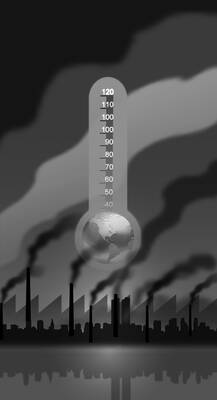
The closure of the Strait of Hormuz has sent the vast Asian chemicals industry into a tailspin. Deprived of the likes of Qatari natural gas and Saudi Arabian oil, the region’s fertilizer and plastics plants are slowing production or even shutting down. Everywhere except China, that is. In petrochemicals, China is unique. As well as a traditional industry that uses oil and gas as feedstock, it has parallel output that relies on its abundant domestic coal. Unsurprisingly, India and other regional powers want to copy and paste the Chinese method. This would not be easy — or climate friendly. The
US President Donald Trump recently repeated his claim that “Taiwan stole America’s chip industry,” reigniting public debate on the issue. As a former Taiwanese minister of economic affairs and an entrepreneur deeply involved in semiconductor supply chain development, I feel a responsibility to clarify this misunderstanding. From the perspective of global industrial evolution and the economic principle of comparative advantage, such a statement appears overly simplistic and risks obscuring the essence of the issue. The rise of Taiwan’s semiconductor industry was not built on “replacing America,” but rather emerged as a result of countries pursuing different development paths within the
The Presidential Office on Saturday reiterated that Taiwan is a sovereign, independent nation after US President Donald Trump said that Taiwan should not “go independent.” “We’re not looking to have somebody say: ‘Let’s go independence because the United States is backing us,’” Trump said in an interview with Fox News aired on Friday. President William Lai (賴清德) on Monday said that the Republic of China (ROC) — Taiwan’s official name — and the People’s Republic of China (PRC) are not subordinate to each other. Speaking at an event marking the 40th anniversary of the establishment of the Democratic Progressive Party (DPP), Lai said


 RSS
RSS