


Whitewashing the military
The nation’s military academies are busy training new recruits, but not only has the overall number of recruits dropped this year, the military is facing an increasing shortage. This is cause for concern.
Despite this, the Ministry of National Defense’s spokesperson on Wednesday said in a post on Facebook that enrollment numbers were higher than in the previous two years. Is this right?
According to the post, there were a total of 1,206 recruits this year, 186 more than last year — including an increase of 48 recruits over last year at the military academy — which shows that enrollment numbers have gone up thanks to the ministry offering new welfare measures and using more diversified recruitment channels.
However, a look at the data shows that enrollment at the academy only reached 60 percent of its target last year, or 197 of 330.
To make up for the shortage, the academy this year set planned to enrol 518 new recruits, but only received 245, less than 50 percent and more than 10 percentage points less than last year.
In addition, the test scores of the new recruits dropped this year, so what is there to be so happy about?
The ministry said there has been a shortage of low-level officers in recent years and the problem is particularly serious at the military academy, with only a little more than half of the required number of recruits.
Looking at the reasons for the waning willingness to join the military, there is the low birthrate and pension reform, but there are also frequent irregularities and scandals in the army, as well as criticism in the media and on the Internet.
The military is suffering from an image problem and this is making it difficult to attract young people.
The hypocrisy in the military is a constant target of criticism. At a troop inspection in Yilan County last year, President Tsai Ing-wen (蔡英文), noting that some facilities had been painted specifically for the occasion, pointedly said that “paint will not improve the military.”
The Tsai administration has initiated defense reform because it wants to change the existing culture in the military — and it wants officers and soldiers to remember that.
With one short sentence, the commander of the nation’s armed forces highlighted an old problem within the military.
One can only speculate what she would think if she read the Facebook post by the ministry’s spokesperson.
Wen Shun-te
Taichung
Minister of Labor Hung Sun-han (洪申翰) on April 9 said that the first group of Indian workers could arrive as early as this year as part of a memorandum of understanding (MOU) between the Taipei Economic and Cultural Center in India and the India Taipei Association. Signed in February 2024, the MOU stipulates that Taipei would decide the number of migrant workers and which industries would employ them, while New Delhi would manage recruitment and training. Employment would be governed by the laws of both countries. Months after its signing, the two sides agreed that 1,000 migrant workers from India would
On March 31, the South Korean Ministry of Foreign Affairs released declassified diplomatic records from 1995 that drew wide domestic media attention. One revelation stood out: North Korea had once raised the possibility of diplomatic relations with Taiwan. In a meeting with visiting Chinese officials in May 1995, as then-Chinese president Jiang Zemin (江澤民) prepared for a visit to South Korea, North Korean officials objected to Beijing’s growing ties with Seoul and raised Taiwan directly. According to the newly released records, North Korean officials asked why Pyongyang should refrain from developing relations with Taiwan while China and South Korea were expanding high-level
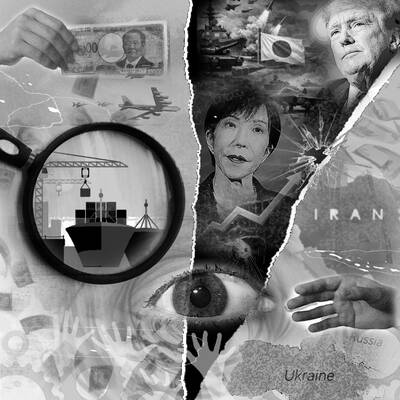
Japan’s imminent easing of arms export rules has sparked strong interest from Warsaw to Manila, Reuters reporting found, as US President Donald Trump wavers on security commitments to allies, and the wars in Iran and Ukraine strain US weapons supplies. Japanese Prime Minister Sanae Takaichi’s ruling party approved the changes this week as she tries to invigorate the pacifist country’s military industrial base. Her government would formally adopt the new rules as soon as this month, three Japanese government officials told Reuters. Despite largely isolating itself from global arms markets since World War II, Japan spends enough on its own
When 17,000 troops from the US, the Philippines, Australia, Japan, Canada, France and New Zealand spread across the Philippine archipelago for the Balikatan military exercise, running from tomorrow through May 8, the official language would be about interoperability, readiness and regional peace. However, the strategic subtext is becoming harder to ignore: The exercises are increasingly about the military geography around Taiwan. Balikatan has always carried political weight. This year, however, the exercise looks different in ways that matter not only to Manila and Washington, but also to Taipei. What began in 2023 as a shift toward a more serious deterrence posture


 RSS
RSS