


Uber’s arrival in Taiwan in 2013 sparked massive protests by taxi unions and professional drivers. The demonstrators demanded that the Investment Commission revoke Uber Taiwan’s investment license on grounds that the company engaged in “unfair competition.”
Policy commentary has thus far focused on fairness issues, internal market regulations, taxation and consumer protection, but has yet to broaden the discussion to evaluate Uber’s potential environmental effects and their implications for sustainable transport systems.
Are Uber and other similar transportation network companies (TNCs) — eg, Lyft and SideCar — climate friends or foes? This is an increasingly critical question as the services proliferate globally, but the answer is still unclear at this moment.
The ride-sharing platforms, unsurprisingly, insist on their positive effects on the environment. The companies claim that passengers are helping lower the carbon footprint left by the modern “driving alone” transportation model and reducing the desire for personal car ownership.
However, a recent study by London’s Department of Transport suggested the rise of ride-sharing apps, such as Uber, has played a part in worsening traffic congestion. In the past few years, the number of private-hire cars has increased by 26 percent, because some people use ride-sharing services to take trips that they would not have taken otherwise.
The transportation situation varies by city and nation. To formulate robust policy solutions, Taiwan first needs to collect data and carry out independent assessments on TNCs mobility, emissions and environmental effects within its own territory.
In terms of legal action and regulatory responses, Uber is involved in at least 173 lawsuits around the world. In October last year, the Court of Justice of the EU was requested by a Spanish judge to issue a preliminary ruling to declare Uber’s legal status either as a transportation company or a digital platform provider.
Given past litigious experiences, government authorities face two options. The first is to simply ban the market entry of Uber and other similar TNCs. This choice might deprive people of collaborative consumption benefits and trigger legal disputes. The second option is to allow Uber to compete at the same level with local taxi companies and harness the sharing services’ pro-environmental potential for promoting a more sustainable transportation system.
Regulatory reform processes from early-acting jurisdictions, such as the US states of California and Colorado and the city of Seattle, have offered insightful lessons. For example, California has set a minimum fuel-efficiency standard and model, engine and year restrictions on vehicles eligible for Uber drivers. The California regulators also require all TNCs to submit reports detailing their drivers, routes, passengers, payments and the services provided within each ZIP code.
These additional low-carbon requirements and compulsory reporting standards can be useful to balance the interests of public safety, environmental protection and flexibility for innovation in the transport sector.
Technological changes bring both challenges and opportunities. Transport policy should be politically and publicly acceptable. Besides the operation of the Investment Commission, Taiwan might need a cross-agency policy
making integration, especially between transport and environmental authorities, and take this chance to convene public consultations on the regulatory environment for app-based platforms and collaborative economy.
Yang Chung-han is a doctoral candidate researching international environmental law at the University of Cambridge in England.
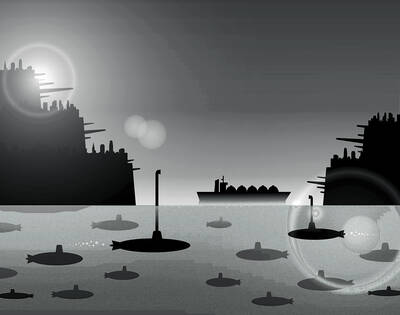
In the event of a war with China, Taiwan has some surprisingly tough defenses that could make it as difficult to tackle as a porcupine: A shoreline dotted with swamps, rocks and concrete barriers; conscription for all adult men; highways and airports that are built to double as hardened combat facilities. This porcupine has a soft underbelly, though, and the war in Iran is exposing it: energy. About 39,000 ships dock at Taiwan’s ports each year, more than the 30,000 that transit the Strait of Hormuz. About one-fifth of their inbound tonnage is coal, oil, refined fuels and liquefied natural gas (LNG),
On Monday, the day before Chinese Nationalist Party (KMT) Chairwoman Cheng Li-wun (鄭麗文) departed on her visit to China, the party released a promotional video titled “Only with peace can we ‘lie flat’” to highlight its desire to have peace across the Taiwan Strait. However, its use of the expression “lie flat” (tang ping, 躺平) drew sarcastic comments, with critics saying it sounded as if the party was “bowing down” to the Chinese Communist Party (CCP). Amid the controversy over the opposition parties blocking proposed defense budgets, Cheng departed for China after receiving an invitation from the CCP, with a meeting with
Chinese Nationalist Party (KMT) Chairwoman Cheng Li-wun (鄭麗文) is leading a delegation to China through Sunday. She is expected to meet with Chinese President Xi Jinping (習近平) in Beijing tomorrow. That date coincides with the anniversary of the signing of the Taiwan Relations Act (TRA), which marked a cornerstone of Taiwan-US relations. Staging their meeting on this date makes it clear that the Chinese Communist Party (CCP) intends to challenge the US and demonstrate its “authority” over Taiwan. Since the US severed official diplomatic relations with Taiwan in 1979, it has relied on the TRA as a legal basis for all
The two major opposition parties, the Chinese Nationalist Party (KMT) and the Taiwan People’s Party (TPP), jointly announced on Tuesday last week that former TPP lawmaker Chang Chi-kai (張啟楷) would be their joint candidate for Chiayi mayor, following polling conducted earlier this month. It is the first case of blue-white (KMT-TPP) cooperation in selecting a joint candidate under an agreement signed by their chairpersons last month. KMT and TPP supporters have blamed their 2024 presidential election loss on failing to decide on a joint candidate, which ended in a dramatic breakdown with participants pointing fingers, calling polls unfair, sobbing and walking


 RSS
RSS