


The Ministry of Economic Affairs has held three public hearings on amendments to the Electricity Act (電業法). The Cabinet aims to submit a draft to the legislature for review before the legislative session begins next month.
Under the proposal, the electricity sector would undergo a major transition from a state-run system to a market-driven pricing scheme. The government is making an effort to break the nation’s electricity monopoly and welcome private participants to the market.
Looking at electricity reform worldwide, a sound institutional design is critical to ensuring a transition to a low-carbon electricity supply while maintaining reasonable electricity prices and adequate energy security. Over the past two decades, the world’s largest developing countries, such as Brazil, India, Mexico, Argentina and China, have also initiated power sector reforms and articulated reform strategies referencing some advanced jurisdictions, such as California, England and the EU.
From the beginning of its reform process, the EU decided to move toward a low-carbon electricity supply, with an emphasis on increasing the contribution of renewable energy sources, the introduction of a cap on carbon emissions and the establishment of the EU Emissions Trading Scheme.
From this, the key components of a successful low-carbon electricity supply transition can be distilled. First, privatization of state-run electricity monopolies; second, vertical separation of potentially competitive elements, such as generation, marketing and retail supply; third, horizontal integration of transmission facilities and network operations; fourth, competitive procurement processes for low-carbon generation, with reasonable exposure to wholesale price variability; fifth, appropriate pricing of environmental externalities; sixth, development of demand participation in wholesale market prices; seventh, cost reflective access terms for renewables; and eighth, well-established transition mechanisms.
While the experiences in implementing reform vary by jurisdiction within the EU, overall progress has been remarkable. The EU model demonstrates that energy and environmental policies can be inextricably linked.
According to Taiwan’s intended nationally determined contribution (INDC), the nation accounted for approximately 0.55 percent of total global greenhouse gas emissions in 2012 and about 0.8 percent of total global carbon emissions. The report also said that the energy and manufacturing industries make up the highest proportion (about 43.25 percent) of Taiwan’s total greenhouse gas emissions.
However, the current draft mainly focuses on legal separation of electricity markets and the restructuring of state-run Taiwan Power Co. It has not clearly integrated this liberalizing process with the national emission reduction target, utility rate design and other important social and technological issues, such as adequate supply of low-cost electricity to poorer households and long-term investment in energy innovation.
Article 3 of the Basic Environment Act (環境基本法) and Article 5 of Greenhouse Gas Reduction and Management Act (溫室氣體減量及管理法 ) state that the government’s energy policies place balanced emphasis on environmental protection, economic development and social justice.
Under this integrated approach, the draft might explicitly include low-carbon targets or environmental considerations and enhance the institutional connections with the INDC, Renewable Energy Development Act (再生能源發展條例) and Greenhouse Gas Reduction and Management Act.
Yang Chung-han is a doctoral candidate researching international environmental law at the University of Cambridge and is a member of the Taipei Bar Association.
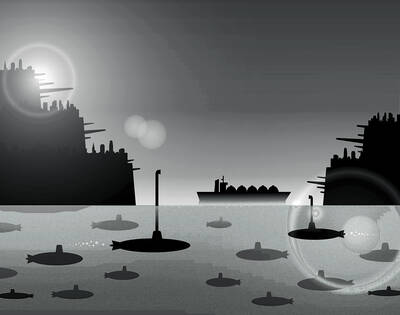
In the event of a war with China, Taiwan has some surprisingly tough defenses that could make it as difficult to tackle as a porcupine: A shoreline dotted with swamps, rocks and concrete barriers; conscription for all adult men; highways and airports that are built to double as hardened combat facilities. This porcupine has a soft underbelly, though, and the war in Iran is exposing it: energy. About 39,000 ships dock at Taiwan’s ports each year, more than the 30,000 that transit the Strait of Hormuz. About one-fifth of their inbound tonnage is coal, oil, refined fuels and liquefied natural gas (LNG),
On Monday, the day before Chinese Nationalist Party (KMT) Chairwoman Cheng Li-wun (鄭麗文) departed on her visit to China, the party released a promotional video titled “Only with peace can we ‘lie flat’” to highlight its desire to have peace across the Taiwan Strait. However, its use of the expression “lie flat” (tang ping, 躺平) drew sarcastic comments, with critics saying it sounded as if the party was “bowing down” to the Chinese Communist Party (CCP). Amid the controversy over the opposition parties blocking proposed defense budgets, Cheng departed for China after receiving an invitation from the CCP, with a meeting with
Chinese Nationalist Party (KMT) Chairwoman Cheng Li-wun (鄭麗文) is leading a delegation to China through Sunday. She is expected to meet with Chinese President Xi Jinping (習近平) in Beijing tomorrow. That date coincides with the anniversary of the signing of the Taiwan Relations Act (TRA), which marked a cornerstone of Taiwan-US relations. Staging their meeting on this date makes it clear that the Chinese Communist Party (CCP) intends to challenge the US and demonstrate its “authority” over Taiwan. Since the US severed official diplomatic relations with Taiwan in 1979, it has relied on the TRA as a legal basis for all
The two major opposition parties, the Chinese Nationalist Party (KMT) and the Taiwan People’s Party (TPP), jointly announced on Tuesday last week that former TPP lawmaker Chang Chi-kai (張啟楷) would be their joint candidate for Chiayi mayor, following polling conducted earlier this month. It is the first case of blue-white (KMT-TPP) cooperation in selecting a joint candidate under an agreement signed by their chairpersons last month. KMT and TPP supporters have blamed their 2024 presidential election loss on failing to decide on a joint candidate, which ended in a dramatic breakdown with participants pointing fingers, calling polls unfair, sobbing and walking


 RSS
RSS