


The British have voted to leave the EU, delivering a heavy blow to the once-popular notion of integration and to globalization. The result also reflects how much ordinary people have been affected by these trends and how they have finally decided to hit back against them.
Britain leaving the EU symbolizes a reawakening of nationalism and ordinary people’s desire to reclaim national sovereignty. People are unconvinced that they are receiving the benefits of integration and globalization, and instead feel that their national sovereignty has been eroded. They feel that they cannot devise laws and government policies based upon the needs of their own country or to solve their own problems.
Despite the result of the Brexit referendum, there was a difference of only 1.2 million votes between “Remain” and “Leave,” revealing a distinct split of opinion within the country. It is difficult to predict the hardships that lie down the road for a post-Brexit Britain, but with terrorism rampant, war refugees swamping Western countries and wealthy nations being encumbered by poorer nations, the frustration and dissatisfaction being felt by ordinary people has led them to reject control from outside governments.
Integration has long been the dominant trend in Europe, just like during the time of former president Chen Shui-bian (陳水扁), when there were those who played with semantics, hoping for “integration” with China to address the threat of “unification” and to increase economic competitiveness.
People are now turning away from the superstate model of integrating sovereign European democracies observing the rule of law on an equal footing.
Globalization has held sway for some time, but the entities it has served best have been an impoverished China — before its rise — and major Western corporations. Many ordinary people have been forced out of work by competition with cheap labor in China and are unable to change government policy to promote their own interests. They have been left with the sense that they have been exploited, both politically and economically.
The world has to deal with the new global epidemic of public anger, of the rise of the political right and of a rejection of immigrants. This has been evidenced by the unlikely rise of Donald Trump as the head of a populist political movement in the US and the rise of the far right and the Brexit vote in Europe.
Taiwan has borne the brunt of China’s magnet effect. Some financial groups have benefited from this, but ordinary people have been hit with soaring unemployment and stagnant salaries. There has been a backlash to this model of “integration” with China from the younger generation, who have sought to save their nation.
“Leave” campaigners in the Brexit referendum appealed to the British general public to allow their country to retake control of their ability to make their own laws and taxes according to the UK’s economic needs. This was, in many ways, parallel to the appeals of the Taiwanese youth, calling on Taiwanese to save their own nation.
James Wang is a media commentator.
Translated by Paul Cooper
Minister of Labor Hung Sun-han (洪申翰) on April 9 said that the first group of Indian workers could arrive as early as this year as part of a memorandum of understanding (MOU) between the Taipei Economic and Cultural Center in India and the India Taipei Association. Signed in February 2024, the MOU stipulates that Taipei would decide the number of migrant workers and which industries would employ them, while New Delhi would manage recruitment and training. Employment would be governed by the laws of both countries. Months after its signing, the two sides agreed that 1,000 migrant workers from India would
In recent weeks, Taiwan has witnessed a surge of public anxiety over the possible introduction of Indian migrant workers. What began as a policy signal from the Ministry of Labor quickly escalated into a broader controversy. Petitions gathered thousands of signatures within days, political figures issued strong warnings, and social media became saturated with concerns about public safety and social stability. At first glance, this appears to be a straightforward policy question: Should Taiwan introduce Indian migrant workers or not? However, this framing is misleading. The current debate is not fundamentally about India. It is about Taiwan’s labor system, its
On March 31, the South Korean Ministry of Foreign Affairs released declassified diplomatic records from 1995 that drew wide domestic media attention. One revelation stood out: North Korea had once raised the possibility of diplomatic relations with Taiwan. In a meeting with visiting Chinese officials in May 1995, as then-Chinese president Jiang Zemin (江澤民) prepared for a visit to South Korea, North Korean officials objected to Beijing’s growing ties with Seoul and raised Taiwan directly. According to the newly released records, North Korean officials asked why Pyongyang should refrain from developing relations with Taiwan while China and South Korea were expanding high-level
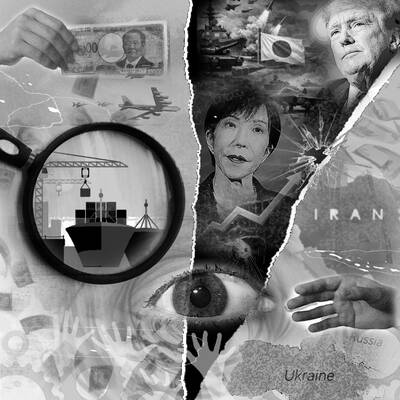
Japan’s imminent easing of arms export rules has sparked strong interest from Warsaw to Manila, Reuters reporting found, as US President Donald Trump wavers on security commitments to allies, and the wars in Iran and Ukraine strain US weapons supplies. Japanese Prime Minister Sanae Takaichi’s ruling party approved the changes this week as she tries to invigorate the pacifist country’s military industrial base. Her government would formally adopt the new rules as soon as this month, three Japanese government officials told Reuters. Despite largely isolating itself from global arms markets since World War II, Japan spends enough on its own


 RSS
RSS