


Before and after her inauguration on May 20, President Tsai Ing-wen (蔡英文) has repeatedly stated that her new government would continue to promote the stable and peaceful development of cross-strait relations based on existing realities and political foundations.
The careful way Tsai had balanced the conflicting demands of Beijing and her domestic political constituency appeared to meet US expectations, as the US Department of State congratulated Tsai and said in a statement that her inauguration “marks another milestone in the development of Taiwan’s vibrant democracy.”
It added that the US looks forward to “working with the new administration, as well as all of Taiwan’s political parties and civil society groups to further strengthen ties between the people of the US and Taiwan.”
Beijing, on the other hand, was dissatisfied with Tsai’s inaugural address, which did not clearly recognize the so-called “1992 consensus,” nor agree to its core meaning (i.e. the “one China” principle). China’s Taiwan Affairs Office (TAO) complained in a statement that Tsai adopted a murky attitude “on the fundamental question of the nature of cross-strait relations that people on the two sides of the [Taiwan] Strait are most concerned about,” and described her speech as “an incomplete test paper.”
Knowingly or otherwise, the TAO has assumed an air of condescension, seeking to bully Taiwan into submission, but to no avail.
Tsai solemnly said: “I was elected president of the Republic of China, thus it is my responsibility to safeguard the sovereignty and territory of the Republic of China.”
In other words, she will never accept Beijing’s demand on Taiwan’s unification with China.
As a matter of fact, a large majority of Taiwanese clearly expressed their views on the cross-strait relationship during the nine-in-one local elections in November 2014 and the presidential and legislative elections in January. Not only did they vote overwhelmingly in favor of ending the Chinese Nationalist Party’s (KMT) colonial rule led by then-president Ma Ying-jeou (馬英九), they also totally repudiated Beijing’s conspiracy in collusion with its fellow travelers and agents inside the KMT to “liberate” Taiwan peacefully.
In addition to reiterating her pledge to maintain the “status quo” in cross-strait relations, Tsai pointed out to her audience at home and abroad that China is equally responsible. She said that both sides of the Taiwan Strait “must collectively cherish and sustain” the accumulated outcomes of the past 20 years of interactions and negotiations, and that on the basis of “such existing realities and political foundations that the stable and peaceful development of the cross-strait relationship must be continuously promoted.”
To detached observers, Tsai’s crafty and subtle appeal provides a stark contrast to China’s threats to terminate cross-strait contacts and initiate economic sanctions, and the military saber-rattling along the Taiwan Strait, might have put Beijing on the defensive. Unable to effectively respond to Tsai’s sophisticated challenge, Beijing has instead resorted to personal attack.
On May 24, Wang Weixing (王衛星), an analyst at Beijing’s Academy of Military Science and a board member of the Association for Relations Across the Taiwan Straits, published an article in the International Herald Leader, a newspaper affiliated with Xinhua news agency, to attack Tsai personally. The article criticized Tsai for being “extreme” and “emotional,” because she is unmarried and lacks the “burden of love, family and children.”
In one passage, Wang said that Tsai is not to be trusted, because she is loyal to Japan, describing her fondness for Japanese rice balls and her close relationship with Japanese Prime Minister Shinzo Abe.
To the vast majority of Taiwanese, the publication of Wang’s article is not worthy of a civilized major power clamoring for international respect and leadership. Beijing’s relentless efforts to annex Taiwan will only arouse greater international distrust in China.
In truth, Communist China is not a “status quo” power, rather it is a revisionist seeking to change the international order. For several years, China has been contesting the US’ economic and military supremacy in the Asia-Pacific region and challenging Pax Americana.
In recent years, Beijing has established and used an international economic and financial organization — the Asian Infrastructure Investment Bank — to rival the World Bank, the IMF and the Asian Development Bank, institutions directed and controlled by the US and its allies.
In 2014, Chinese President Xi Jinping (習近平) proposed to an international gathering in Shanghai a new Asian security concept — an idea for a new order in Asia, with China at the center and the exclusion of the US. Xi’s “China Dream” is for China to build the world’s largest economy and strongest military, and eventually supplant the US as the global “champion nation.”
China’s hegemonic ambitions in the Asia-Pacific region are clearly discernible in its expansive claim of sovereignty and the militarization of South China Sea islands and their adjacent waters. In recent years, China has constructed seven artificial islands in the disputed Spratly Islands (Nansha Islands, 南沙群島), and built military posts there.
Contrary to Xi’s assurance in Washington in September last year that China would not militarize the Spratlys, it has dredged a deep-water port, built a military runway and deployed fighter jets and surface-to-air missiles to Fiery Cross Reef (Yongshu Reef, 永暑島), one of the seven artificial islands.
Furthermore, China might plan to reclaim land and build a military outpost on Scarborough Shoal (Huangyan Island, 黃岩島), 230km off the Philippines’ coast and within the exclusive economic zone that Manila claims. In 2012, China seized Scarborough from the Philippines, and the planned outpost might include a military-capable airstrip, enabling Beijing to project its power across the South China Sea and present an overt threat to the Philippines — a US ally.
To deter China from taking hostile actions and contain its growing expansionism in the region, the US has conveyed a strong message through shows of force. The nuclear-powered US aircraft carrier USS John C. Stennis and its battle group, which has operated in the South China Sea since March, was tasked with enforcing freedom of navigation and reassure allies and partners of the US’ determination to preserve regional peace and security.
Thus, at the Asian Security summit at Singapore on Saturday last week, US Secretary of Defense Ashton Carter warned Beijing of US countermeasures if China went ahead with the development. On Sunday, US Secretary of State John Kerry, who was on his way to China from Mongolia, also urged Beijing not to establish an air defense identification zone over the South China Sea, which would be “a provocative and destabilizing act.”
Not a few military analysts also regard the Stennis’ patrol in the northern sector of the South China Sea, in sea lanes adjacent to the Philippines and in waters near Taiwan, in the second half of last month as a warning to China not to make any provocations during the inauguration of Taiwan’s new president.
For a change, the US is placing a greater emphasis on military power, as well as boosting alliances to contain China’s growing military reach in the region. There are unmistakable signs that China’s militarization of the South China Sea and its expansionism have backfired badly, as many of China’s neighbors have felt compelled to strengthen security cooperation with the US, whose successes in forging military ties with Japan, India and Vietnam (in the wake of US President Barack Obama’s visit and a new policy to allow US arms sales last month) appear to have dealt a severe blow to China’s diplomatic and military position in the region.
It is imperative that the policymakers of the US, Japan and their partners harbor no illusions about Communist China and clearly see through Chinese leaders’ hegemonic ambitions, and act accordingly. The joint statement of the G7 summit in Japan last month, in which the leaders of the world’s top industrial nations criticized China’s excessive sovereignty claims and militarization of the South China Sea, was an important and timely move.
The picture of six incumbent and former directors of the American Institute in Taiwan, who lined up to shout their approval of Taiwan-US relations on May 23, was quite dramatic and highlighted a new stage in their relations. Now it is also time for Washington to abandon its policy of “benign neglect” toward Taiwan. Instead, the US must recognize Taiwan’s strategic importance and its vital role in the US pivot to Asia, or rebalancing strategy.
It is long overdue that the US should strengthen military, economic and diplomatic ties with Taiwan and support the freedom of its 23 million people to determine and safeguard their future.
Even more important, Taiwan’s new government must step up its military investment to defend itself against China’s use of coercive means to alter the “status quo” in the Taiwan Strait.
The Pentagon warned in a recent report that “The PRC [People’s Republic of China] continues to focus on preparing for potential conflict in the Taiwan Strait.”
The
KMT regime steadily cut Taiwan’s defense spending down to 2.2 percent of GDP in recent years. As Taiwan allocated only US$9.9 billion for defense this year (in contrast with China’s US$144 billion), Tsai’s government has good reasons to adhere to the counsel of a high-ranking US defense official that Taiwan must “continue to increase its defense spending and to invest in asymmetric and innovative capabilities and concepts.”
Likewise, US Senator John McCain, who led a Senate delegation to visit Taiwan on Sunday, the first by a Senate Armed Forces Committee chairman to Taiwan in 24 years, suggested in a meeting with Tsai that Taiwan increase its defense budget to 3 percent of GDP.
Parris Chang is professor emeritus of political science at Pennsylvania State University and president of the Taiwan Institute for Political, Economic and Strategic Studies.
Minister of Labor Hung Sun-han (洪申翰) on April 9 said that the first group of Indian workers could arrive as early as this year as part of a memorandum of understanding (MOU) between the Taipei Economic and Cultural Center in India and the India Taipei Association. Signed in February 2024, the MOU stipulates that Taipei would decide the number of migrant workers and which industries would employ them, while New Delhi would manage recruitment and training. Employment would be governed by the laws of both countries. Months after its signing, the two sides agreed that 1,000 migrant workers from India would
In recent weeks, Taiwan has witnessed a surge of public anxiety over the possible introduction of Indian migrant workers. What began as a policy signal from the Ministry of Labor quickly escalated into a broader controversy. Petitions gathered thousands of signatures within days, political figures issued strong warnings, and social media became saturated with concerns about public safety and social stability. At first glance, this appears to be a straightforward policy question: Should Taiwan introduce Indian migrant workers or not? However, this framing is misleading. The current debate is not fundamentally about India. It is about Taiwan’s labor system, its
On March 31, the South Korean Ministry of Foreign Affairs released declassified diplomatic records from 1995 that drew wide domestic media attention. One revelation stood out: North Korea had once raised the possibility of diplomatic relations with Taiwan. In a meeting with visiting Chinese officials in May 1995, as then-Chinese president Jiang Zemin (江澤民) prepared for a visit to South Korea, North Korean officials objected to Beijing’s growing ties with Seoul and raised Taiwan directly. According to the newly released records, North Korean officials asked why Pyongyang should refrain from developing relations with Taiwan while China and South Korea were expanding high-level
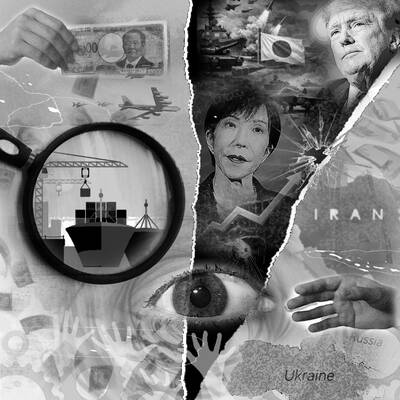
Japan’s imminent easing of arms export rules has sparked strong interest from Warsaw to Manila, Reuters reporting found, as US President Donald Trump wavers on security commitments to allies, and the wars in Iran and Ukraine strain US weapons supplies. Japanese Prime Minister Sanae Takaichi’s ruling party approved the changes this week as she tries to invigorate the pacifist country’s military industrial base. Her government would formally adopt the new rules as soon as this month, three Japanese government officials told Reuters. Despite largely isolating itself from global arms markets since World War II, Japan spends enough on its own


 RSS
RSS