


Apple Inc last month ran an Apps for Earth promotion, a fundraiser for the World Wide Fund for Nature (WWF) to mark this year’s Earth Day. The company has announced that the proceeds from 27 apps — including popular titles like Angry Birds II, Cooking Dash 2016 and Candy Crush Soda Saga — between Saturday next week and April 24 will go to the WWF, a global conservation organization.
The cross-sector partnership between Apple and the the WWF illustrates a new technological frontier for raising environmental awareness and influencing conservation practices.
Four technological forces — mobile, social, cloud and big data — have emerged as “game changers” in the way environmental science, policymaking, consumer culture and democracy have developed.
Apps, such as Earth, give the campaigners the opportunity to engage worldwide, tech-savvy, middle-class customers and reach new financial sources.
However, billions of people around the world still live in poverty and lack essential technology for their basic needs.
Digital technologies can be environmentally unsustainable. Much technology, including smartphones, are designed to be thrown away at the first sign of trouble rather than be repaired. The volume of global electronic waste increases by a third every two years. The ugly truth is that developed economies dump most of their harmful and toxic e-waste illegally in developing nations — one in three containers from the EU contains illegal waste under false pretenses.
Moreover, the increasing scarcity of metal and mineral raw materials, the huge and irrecoverable environmental damage, and widespread bloodshed and use of child workers — also mainly in developing nations — do not prevent the development of the next “must-have” digital device. Technology can have deep geopolitical and social bias in favor of elites and to the detriment of poor people.
On Sept. 25 last year, the UN adopted 17 Sustainable Development Goals (SDGs) to end poverty, protect the environment and ensure prosperity for all. Following the Millennium Development Goals, SDGs are to define global development targets and goals for the next 15 years.
The UN has recognized that technology and development are indistinguishably connected. The implementation of the SDGs has to be guided by the principle of technology justice. Therefore, two new policy mechanisms — the UN Technology Bank and the Technology Facilitation Mechanism — have been proposed to assist the least developed countries to address technology injustices.
The system requires a greater role for states to harness investment in clean and environmentally sound technologies and to ensure that technologies do not exacerbate the vulnerabilities of poor people.
On the first Earth Day in 1970, about 2 million people marched down New York’s Fifth Avenue to express a new environmental paradigm for change and call for a healthy lifestyle for all — not just for the relatively small wealthy population.
Earth Day needs to be a day for demonstration of unity and ecological sustainability.
Lawyers might approach the issue by reconsidering international treaties that govern intellectual property rights, such as Trade-Related Aspects of Intellectual Property Rights, an international agreement administrated by the WTO — of which Taiwan is a signatory — to rebalance in favor of the least developed countries and sustainable development agendas.
Yang Chung-han is a doctoral candidate at the University of Cambridge and a member of the Taipei Bar Association.
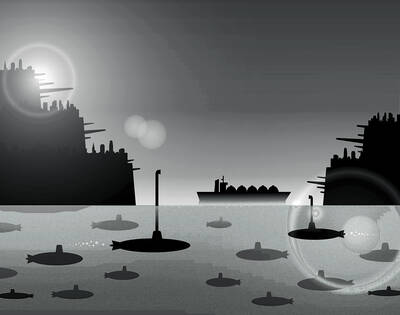
In the event of a war with China, Taiwan has some surprisingly tough defenses that could make it as difficult to tackle as a porcupine: A shoreline dotted with swamps, rocks and concrete barriers; conscription for all adult men; highways and airports that are built to double as hardened combat facilities. This porcupine has a soft underbelly, though, and the war in Iran is exposing it: energy. About 39,000 ships dock at Taiwan’s ports each year, more than the 30,000 that transit the Strait of Hormuz. About one-fifth of their inbound tonnage is coal, oil, refined fuels and liquefied natural gas (LNG),
On Monday, the day before Chinese Nationalist Party (KMT) Chairwoman Cheng Li-wun (鄭麗文) departed on her visit to China, the party released a promotional video titled “Only with peace can we ‘lie flat’” to highlight its desire to have peace across the Taiwan Strait. However, its use of the expression “lie flat” (tang ping, 躺平) drew sarcastic comments, with critics saying it sounded as if the party was “bowing down” to the Chinese Communist Party (CCP). Amid the controversy over the opposition parties blocking proposed defense budgets, Cheng departed for China after receiving an invitation from the CCP, with a meeting with
Chinese Nationalist Party (KMT) Chairwoman Cheng Li-wun (鄭麗文) is leading a delegation to China through Sunday. She is expected to meet with Chinese President Xi Jinping (習近平) in Beijing tomorrow. That date coincides with the anniversary of the signing of the Taiwan Relations Act (TRA), which marked a cornerstone of Taiwan-US relations. Staging their meeting on this date makes it clear that the Chinese Communist Party (CCP) intends to challenge the US and demonstrate its “authority” over Taiwan. Since the US severed official diplomatic relations with Taiwan in 1979, it has relied on the TRA as a legal basis for all
The two major opposition parties, the Chinese Nationalist Party (KMT) and the Taiwan People’s Party (TPP), jointly announced on Tuesday last week that former TPP lawmaker Chang Chi-kai (張啟楷) would be their joint candidate for Chiayi mayor, following polling conducted earlier this month. It is the first case of blue-white (KMT-TPP) cooperation in selecting a joint candidate under an agreement signed by their chairpersons last month. KMT and TPP supporters have blamed their 2024 presidential election loss on failing to decide on a joint candidate, which ended in a dramatic breakdown with participants pointing fingers, calling polls unfair, sobbing and walking


 RSS
RSS