


“State-to-state” is the shorthand expression that the news media like to use to refer to the idea that the Republic of China (ROC) and the People’s Republic of China (PRC) have a special state-to-state relationship that former president Lee Teng-hui (李登輝) formulated toward the end of his presidency.
This was originally intended as a discourse to guarantee the continued existence of the ROC, and it was Lee’s — who was then also chairman of the Chinese Nationalist Party (KMT) — report back to Taiwanese on the state of the nation before he stepped down as Taiwan’s first popularly and directly elected president.
This expression is also the reason why pledges to maintain the “status quo” are, if not satisfactory, at least acceptable.
It has already been 16 years since Lee stepped down as president, and during this time, not only has his old party refused to treat him with respect, but the Chinese Communist Party (CCP) has also rejected his description of the cross-strait relationship as being state-to-state in nature.
During his eight-year tenure, President Ma Ying-jeou (馬英九) has repeatedly used the so-called “1992 consensus” to boast about his one-sided idea of a “one China, with each side having its own interpretation” of what that China is, and pushed a Taiwan that is independent of China toward Beijing while looking at the fetters with which he has tried to bind Taiwan to China as a lifeline.
This ran counter to mainstream public opinion, and after his eight years in office, he will now be known as the person who destroyed the KMT.
As the third transfer of power is under way, Lee decided to publish his book Last Days: My Life’s Journey and the Roadmap of Taiwan’s Democratization (餘生) in which he talks about the things that remain unfinished. The state-to-state formulation is once again creating waves, showing that the KMT clearly continues to fail to understand why it is being spurned by Taiwanese.
In 1971, former president Chiang Kai-shek (蔣介石) and his regime chose to give up the ROC’s status as a UN member state instead of admitting that their government did not represent all of China. In doing so, the Chiang regime gave Taiwan the status of a nation that is not a nation. The KMT was unable to properly follow up on Chiang’s decision, and the nation instead saw the party-state deviate more and more from mainstream public opinion. There is indeed a reason why the party has been abandoned by Taiwanese.
Maintaining the “status quo,” according to which the ROC is not a part of China, is not a radicalized and idealized state-to-state formula, but a rather conservative view of reality. Lee is a pragmatist and a realist rather than someone who promotes rash aggression, and he is a protector of Taiwan’s sovereignty.
All presidents after Lee should lead Taiwan and Taiwanese toward developing the cross-strait special state-to-state relationship and direct their efforts toward consolidating liberty and democracy in Taiwan and striving for economic wellbeing, peace and security. A deep understanding of the essence of the state-to-state formula will help Taiwan smoothly develop into a small and beautiful nation that is no threat to China’s territory and sovereignty.
The ROC Constitution articles that deal with China should be amended as Taiwan goes through a process of normalization. Taiwanese must recognize the PRC, and bringing the ROC on Taiwan and the Constitution in line with each other is a necessary step if Taiwanese are to rebuild their identity.
Lee Min-yung is a poet.
Translated by Perry Svensson
KMT Chairwoman Cheng Li-wun’s (鄭麗文) recent visit to Beijing and her upcoming visit to Washington will serve as a high-level test of her diplomatic mettle. In Beijing, Cheng was received with symbolic gestures, a warm reception, and high-level access. In Washington, she will receive far less pomp and far sharper questions about the KMT’s vision for the future of Taiwan. Her challenge will be to persuade Washington that the KMT’s engagement with China can coexist with strong deterrence. Cheng’s April 7-12 visit to mainland China coincided with an intense period of conflict in Iran. Despite the strategic significance of Cheng’s trip,
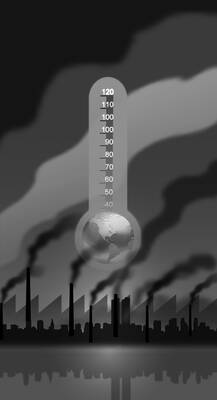
The closure of the Strait of Hormuz has sent the vast Asian chemicals industry into a tailspin. Deprived of the likes of Qatari natural gas and Saudi Arabian oil, the region’s fertilizer and plastics plants are slowing production or even shutting down. Everywhere except China, that is. In petrochemicals, China is unique. As well as a traditional industry that uses oil and gas as feedstock, it has parallel output that relies on its abundant domestic coal. Unsurprisingly, India and other regional powers want to copy and paste the Chinese method. This would not be easy — or climate friendly. The
US President Donald Trump recently repeated his claim that “Taiwan stole America’s chip industry,” reigniting public debate on the issue. As a former Taiwanese minister of economic affairs and an entrepreneur deeply involved in semiconductor supply chain development, I feel a responsibility to clarify this misunderstanding. From the perspective of global industrial evolution and the economic principle of comparative advantage, such a statement appears overly simplistic and risks obscuring the essence of the issue. The rise of Taiwan’s semiconductor industry was not built on “replacing America,” but rather emerged as a result of countries pursuing different development paths within the
Indonesian President Prabowo Subianto says he knows how to fix the problems facing Indonesia. Yet his economic mismanagement and authoritarian tendencies are steering the nation toward a familiar mix of currency instability and political chaos. The world’s fourth-most populous nation risks reversing the hard-won democratic and business reforms that came after the Asian Financial Crisis in 1997. At that time, the rupiah collapsed and the political upheaval that followed forced former president Haji Mohamed Suharto from power. Prabowo’s administration is ignoring similar warning signs. That disconnect was apparent in a national address on Wednesday, when Prabowo projected the swagger that has


 RSS
RSS