


For farmer Achmad Rusli, it was a season of smoke: Ten weeks without sunlight for his oranges, guavas and durians, due to deliberately set forest fires that burned a chunk of Indonesia the size of New Jersey.
The fires have finally died down with the arrival of monsoon rains, but too late for his crops, which are far too measly to sell.
“We had not seen the sun in a two-and-a-half months,” said Rusli, 34, from Riau Province in eastern Sumatra, among the six hardest-hit provinces. “How can we harvest the fruit?”

Illustration: Yusha
The ecological disaster has inflicted a staggering toll on the region’s environment, economy and human health: 2.1 million hectares of forests and other land burned, 21 deaths, more than 500,000 people sickened with respiratory problems and US$9 billion in economic losses, from damaged crops to hundreds of canceled flights.
Palm oil and paper pulp companies illegally set fire to forests to clear land to plant more trees in the cheapest and fastest way possible. Authorities are investigating more than 300 plantation companies and 83 suspects have been arrested, according to national police chief General Badrodin Haiti. The licenses of three plantation companies have been revoked and those of 11 others have been suspended.
The fires have been an annual problem since the mid-1990s, but this was the worst year since 1997, when blazes spread across nearly 10 million hectares.
Greed is the cause. Herry Purnomo, a scientist at Center for International Forestry Research, said it costs just US$7 to clear a hectare of land by burning, compared with US$150 to do so with tractors. Indonesian law bans clearing land by burning, except by small-scale farmers, who are allowed up to two hectares.
All told, nearly 50,000 fires were detected since July, according to satellite data, with most on the islands of Sumatra and Borneo. An absence of rain from the El Nino effect made them worse.
The thick haze forced schools to close in Singapore and Malaysia, and, for the first time, it reached communities in southern Thailand, where the air pollution index rose to record levels of unhealthiness.
Indonesia’s neighbors have grown increasingly critical, though many of the palm-oil companies operating in the nation are Singaporean and Malaysian-owned. Indonesians endured the worst of the effects.
Syarif, 46 — who, like many Indonesians, uses a single name — failed to harvest any of his chili peppers and tomatoes, which withered and shriveled on the vine.
“I lost everything... Drought and smog has ruined our vegetables,” Syarif said. “I have to start again from scratch.”
Visibility fell below 50m in some areas, forcing 13 airports in the nation to close.
Drone footage taken over smoldering forests showed the charred remains of trees poking through billowing smoke and haze that extended as far as the eye could see. Gray and white patches of ash covered the forest floor.
The haze, resembling a wintry fog, is laced with tiny particles of ash that are particularly harmful to the elderly, children and those with chronic heart and lung conditions. It can lead to respiratory tract infections and pneumonia.
In the six most affected provinces, home to more than 26 million people, hospitals were overwhelmed with 556,945 cases of people with smoke-related respiratory tract issues between July and the end of last month — nearly three times the normal rate, according to the Indonesian Ministry of Health.
Late last month, the Pollution Standards Index hit a record high of 3,300 in Central Kalimantan Province in Borneo, the giant island that Indonesia shares with Malaysia and Brunei. Anything above 300 is deemed hazardous.
Rosita Rossie, a coordinator at Riau’s provincial health office, said that when the pollution index rose higher than 300, many clinics and hospitals in the province of 6 million provided 24-hour service, with some sending health workers into remote areas to meet needs there.
The Indonesian National Disaster Mitigation Agency recorded 21 fire-related fatalities, including burns, pneumonia, asthma and meningitis aggravated by upper respiratory tract infections.
Nearly 20,000 schools had to close in the worst-hit provinces, affecting about 2.4 million students.
The fires also likely killed many endangered or threatened species, including orangutans and Sumatran rhinos, said Rosichon Ubaidilla, an animal taxonomy expert who heads the Zoology Center for Biological Research at the Indonesia Institute of Science.
Researchers and local residents are scrambling to protect the estimated 50,000 wild orangutans that live only on Borneo and Sumatra. The apes must cope with not only the destruction of their habitat, but also respiratory problems, said Raffles Panjaitan, director of forest and land fire control at the Indonesian Ministry of Environment and Forestry.
The fires have also sent enormous amounts of greenhouse gas emissions into the air. Much of the forests lost were peatland, which stores a particularly large amount of carbon.
Research by the Center for International Forestry Research found that, in 2012, forest fires in Riau Province alone released between 1.5 billion and 2 billion tonnes of carbon emissions in just one week — up to 10 percent of Indonesia’s total annual emissions, said Sofyan Kurnianto, a scientist with the group and the lead author of the study.
Indonesia’s US$9 billion estimate of the damage caused by the fires excludes emissions.
Willem Rampangilei, head of the disaster mitigation agency, said the tentative number is based on World Bank data from 2013 that focused only on Riau Province. The vast majority of the financial losses were in forestry, agriculture and manufacturing.
To fight the fires, Indonesia used everything from helicopters to elephants outfitted with water pumps and hoses. Russia leased two amphibious jets, while Singapore, Malaysia, Australia and Japan also sent aircraft, firefighters or chemicals and experts to help out. More than 30,000 soldiers and firefighting personnel were deployed, and the disaster agency spent US$36.5 million. Ultimately, it was seasonal rains that ended this year’s crisis.
Indonesian President Joko Widodo said he was “ashamed” that authorities failed to prevent the fires. He ordered law enforcement agencies to punish perpetrators, including revoking forest concessions and blacklisting those responsible.
The government is drafting new regulations to stiffen penalties, reduce haze pollution and avoid forest fires. However, Widodo has also asked for patience in tackling the problem for good, that Indonesia needs three years to solve it. Malaysia has said that is not fast enough.
Minister of Labor Hung Sun-han (洪申翰) on April 9 said that the first group of Indian workers could arrive as early as this year as part of a memorandum of understanding (MOU) between the Taipei Economic and Cultural Center in India and the India Taipei Association. Signed in February 2024, the MOU stipulates that Taipei would decide the number of migrant workers and which industries would employ them, while New Delhi would manage recruitment and training. Employment would be governed by the laws of both countries. Months after its signing, the two sides agreed that 1,000 migrant workers from India would
In recent weeks, Taiwan has witnessed a surge of public anxiety over the possible introduction of Indian migrant workers. What began as a policy signal from the Ministry of Labor quickly escalated into a broader controversy. Petitions gathered thousands of signatures within days, political figures issued strong warnings, and social media became saturated with concerns about public safety and social stability. At first glance, this appears to be a straightforward policy question: Should Taiwan introduce Indian migrant workers or not? However, this framing is misleading. The current debate is not fundamentally about India. It is about Taiwan’s labor system, its
On March 31, the South Korean Ministry of Foreign Affairs released declassified diplomatic records from 1995 that drew wide domestic media attention. One revelation stood out: North Korea had once raised the possibility of diplomatic relations with Taiwan. In a meeting with visiting Chinese officials in May 1995, as then-Chinese president Jiang Zemin (江澤民) prepared for a visit to South Korea, North Korean officials objected to Beijing’s growing ties with Seoul and raised Taiwan directly. According to the newly released records, North Korean officials asked why Pyongyang should refrain from developing relations with Taiwan while China and South Korea were expanding high-level
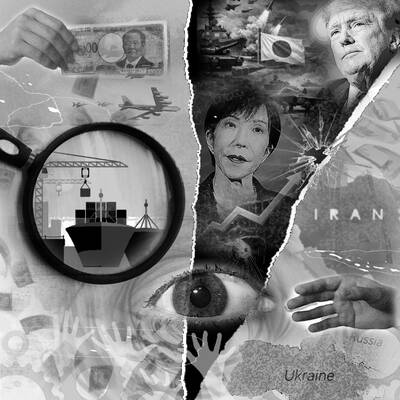
Japan’s imminent easing of arms export rules has sparked strong interest from Warsaw to Manila, Reuters reporting found, as US President Donald Trump wavers on security commitments to allies, and the wars in Iran and Ukraine strain US weapons supplies. Japanese Prime Minister Sanae Takaichi’s ruling party approved the changes this week as she tries to invigorate the pacifist country’s military industrial base. Her government would formally adopt the new rules as soon as this month, three Japanese government officials told Reuters. Despite largely isolating itself from global arms markets since World War II, Japan spends enough on its own


 RSS
RSS