


Many years ago, Taiwan implemented a public housing policy. However given the state of the real estate market at the time and the belief that government should not compete with private construction companies for profit, the policy was canceled. Today, in order to carry out housing justice, the construction of social housing has become an unstoppable trend.
Recently, the Ministry of Finance made it clear that it plans to build public housing in Taipei’s Huaguang Community (華光社區), one of three benchmark projects for government-owned land. However, the government should think twice before building public or social housing in prime areas.
Prime land should be used for grand development projects. The Huaguang project is close to the Chiang Kai-shek Memorial Hall and the Yongkang street shopping area.
There are several major organizations in this area, such as Chunghwa Telecom Co, Chunghwa Post Co, National Chengchi University’s Center for Public and Business Administration Education and Tamkang University’s Division of Continuing Education, making this a rare piece of Taipei prime property.
Whether the site will be turned into a financial center, a business complex or a green area, it offers a flexible option for Taipei’s future urban development.
The rent for social housing should be fair and affordable. Construction should be of good quality, and public transportation should be convenient.
If the government builds social housing on the site of the Huaguang Community, although the location meets the requirement for transport, it would face difficulty offering fair and affordable rent.
If the rent is low and affordable, it will become extremely difficult to find an apartment there in the future. Putting aside the question of whether the rent would hurt housing prices in the neighborhood, it is unfair to the general public when only a few lucky ones can move into such units.
If the rent follows the average level in the area, it is unlikely to meet the affordable housing requirement, so that would not work either.
The construction of social housing requires overall planning and land should be acquired from a variety of sources.
Generally, the volume and location of social housing units in Taipei’s urban area should be carefully planned to match local job opportunities and should be matched with a future management plan. The best policy is to integrate a complete social housing strategy.
There are many ways to increase the number of social housing units. The government could use publicly owned land for urban renewal developments or donate land in exchange for floor area incentives in private urban renewal projects Such methods would not only increase the volume but also avoid a negative image of the units as they are mixed with other houses.
The government could build social housing units to meet public needs by year and district according to urban planning, but there is no need to build a large number of units in the best downtown areas.
Building social housing on prime land would not achieve fair and affordable rent, tenants would be far from their workplaces and such units would not be mixed with regular housing.
Moreover, it may kill the potential of the city’s urban development. The authorities should think twice before building a large number of social housing units in prime areas.
Justin Sun is an associate professor in the Department of Land Economics at National Chengchi University.
Translated by Eddy Chang
KMT Chairwoman Cheng Li-wun’s (鄭麗文) recent visit to Beijing and her upcoming visit to Washington will serve as a high-level test of her diplomatic mettle. In Beijing, Cheng was received with symbolic gestures, a warm reception, and high-level access. In Washington, she will receive far less pomp and far sharper questions about the KMT’s vision for the future of Taiwan. Her challenge will be to persuade Washington that the KMT’s engagement with China can coexist with strong deterrence. Cheng’s April 7-12 visit to mainland China coincided with an intense period of conflict in Iran. Despite the strategic significance of Cheng’s trip,
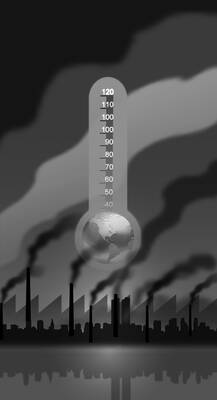
The closure of the Strait of Hormuz has sent the vast Asian chemicals industry into a tailspin. Deprived of the likes of Qatari natural gas and Saudi Arabian oil, the region’s fertilizer and plastics plants are slowing production or even shutting down. Everywhere except China, that is. In petrochemicals, China is unique. As well as a traditional industry that uses oil and gas as feedstock, it has parallel output that relies on its abundant domestic coal. Unsurprisingly, India and other regional powers want to copy and paste the Chinese method. This would not be easy — or climate friendly. The
US President Donald Trump recently repeated his claim that “Taiwan stole America’s chip industry,” reigniting public debate on the issue. As a former Taiwanese minister of economic affairs and an entrepreneur deeply involved in semiconductor supply chain development, I feel a responsibility to clarify this misunderstanding. From the perspective of global industrial evolution and the economic principle of comparative advantage, such a statement appears overly simplistic and risks obscuring the essence of the issue. The rise of Taiwan’s semiconductor industry was not built on “replacing America,” but rather emerged as a result of countries pursuing different development paths within the
Indonesian President Prabowo Subianto says he knows how to fix the problems facing Indonesia. Yet his economic mismanagement and authoritarian tendencies are steering the nation toward a familiar mix of currency instability and political chaos. The world’s fourth-most populous nation risks reversing the hard-won democratic and business reforms that came after the Asian Financial Crisis in 1997. At that time, the rupiah collapsed and the political upheaval that followed forced former president Haji Mohamed Suharto from power. Prabowo’s administration is ignoring similar warning signs. That disconnect was apparent in a national address on Wednesday, when Prabowo projected the swagger that has


 RSS
RSS