


Christianity is thriving in China. There might be more Christians than Chinese Communist Party (CCP) members.
Beijing’s sensitivities to religion are well known. Religion offers a competitive world view to the party. The latter fears many Christians, especially Catholics, have loyalties beyond China’s borders. Religion brings people together in ways that might eventually influence politics.
In its early days, the People’s Republic of China (PRC) responded harshly to religious activity, but official policy has moderated over time. There is an increasing amount of reluctant toleration of religious belief. However, there is no national approach. The treatment of religious believers varies regionally. For instance, authorities in Wenzhou, sometimes called the Jerusalem of China, have lately enforced more restrictions than many other cities and provinces.
In contrast, Beijing appears to have a more relaxed policy. Last year, I visited a church of about 800 people in the capital. It operated openly, attracted many young people and hosted dozens of baptisms on the Sunday I attended.
I saw a car in traffic that sported the traditional Christian “fish.” A friend of mine who lives in Beijing talked of hearing Christian music in malls and seeing people carry Bibles in public.
Ironically, the lesson of the West’s experience with religion is that the best way for a government to avoid conflict between believers and political authorities is to provide the greatest freedom possible. Obviously there have been many strains of Christianity throughout the centuries. However, the faith emphasizes a transcendent commitment to God while accommodating many different political perspectives.
The apostle Paul, whose ministry benefited from the order imposed by the Roman Empire, urged submission to the ruling authorities. However, there were exceptions, most obviously when secular rulers sought to impede the exercise of faith.
For instance, when the Jewish leadership in the Sanhedrin instructed the apostles Peter and John to no longer preach about Jesus’ death and resurrection, they responded that they had to obey God rather than men: “We cannot help speaking about what we have seen and heard.”
The original disciples and their followers persevered despite episodic persecution.
Ironically, the Romans found Christians to be good citizens. Indeed, the latter’s commitment to better living today and belief in heavenly rewards tomorrow caused Christians to ameliorate some of the social problems evident in the ancient world.
Only when more abusive emperors demanded to be worshiped as gods did Christians resist, often at the cost of their lives. Contra the empire’s expectations, persecution did not extinguish religious faith.
As Christianity became the majority faith in the West, the faithful began to play a much larger political role. However, in general they sought to shape, not overturn, the political order. And their greatest concern always was the status of their faith, both individually and communally. The worst battles between religious and civil powers occurred when the latter sought to exercise spiritual authority.
The PRC does not easily fit into the Western experience. However, one lesson clearly applies. The best way to minimize political confrontations between church and state is to reduce government restraints on religion. Christians have no unified view of politics, but believers everywhere agree on the importance of being allowed to worship God.
Interfering with the ability of people to live their faith guarantees, requires resistance. Whatever the government’s objectives, the effect will be social conflict. Believers will perceive the state to be challenging their core faith.
The CCP cannot win this battle. For years, Christianity’s growth was concentrated in rural areas, but has recently spread to the cities and reached a better educated population. Based on existing growth rates, there could be nearly 250 million Christians in China by 2030.
Beijing hopes to make Christianity conform to China. Gu Mengfei of the Three-Self Patriotic Movement, which represents legal Protestant churches in China, said that the PRC desires to “encourage more believers to make contributions to the country’s harmonious social progress, cultural prosperity and economic development.”
Such harmony is best achieved by eliminating the greatest source of potential conflict, barriers to religious practice. Last year Pope Francis proposed a dialogue with Beijing. He said that the Catholic Church “only asks to have freedom to do its work. No other conditions.”
When its freedom to practice is protected, the Catholic Church typically is not a revolutionary force. To the contrary, in much of the world it is one of the most important advocates for social stability.
China is increasingly influencing Asia and the world, but it will in turn be influenced by developments within. One of those is religion. The government would best respond in a way that accommodates increased religious faith.
Doug Bandow is a senior fellow at the Cato Institute and served as a special assistant to former US president Ronald Reagan.
Minister of Labor Hung Sun-han (洪申翰) on April 9 said that the first group of Indian workers could arrive as early as this year as part of a memorandum of understanding (MOU) between the Taipei Economic and Cultural Center in India and the India Taipei Association. Signed in February 2024, the MOU stipulates that Taipei would decide the number of migrant workers and which industries would employ them, while New Delhi would manage recruitment and training. Employment would be governed by the laws of both countries. Months after its signing, the two sides agreed that 1,000 migrant workers from India would
On March 31, the South Korean Ministry of Foreign Affairs released declassified diplomatic records from 1995 that drew wide domestic media attention. One revelation stood out: North Korea had once raised the possibility of diplomatic relations with Taiwan. In a meeting with visiting Chinese officials in May 1995, as then-Chinese president Jiang Zemin (江澤民) prepared for a visit to South Korea, North Korean officials objected to Beijing’s growing ties with Seoul and raised Taiwan directly. According to the newly released records, North Korean officials asked why Pyongyang should refrain from developing relations with Taiwan while China and South Korea were expanding high-level
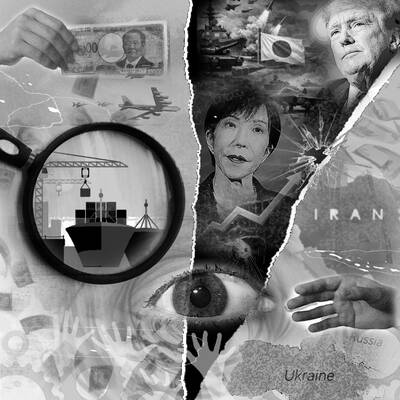
Japan’s imminent easing of arms export rules has sparked strong interest from Warsaw to Manila, Reuters reporting found, as US President Donald Trump wavers on security commitments to allies, and the wars in Iran and Ukraine strain US weapons supplies. Japanese Prime Minister Sanae Takaichi’s ruling party approved the changes this week as she tries to invigorate the pacifist country’s military industrial base. Her government would formally adopt the new rules as soon as this month, three Japanese government officials told Reuters. Despite largely isolating itself from global arms markets since World War II, Japan spends enough on its own
When 17,000 troops from the US, the Philippines, Australia, Japan, Canada, France and New Zealand spread across the Philippine archipelago for the Balikatan military exercise, running from tomorrow through May 8, the official language would be about interoperability, readiness and regional peace. However, the strategic subtext is becoming harder to ignore: The exercises are increasingly about the military geography around Taiwan. Balikatan has always carried political weight. This year, however, the exercise looks different in ways that matter not only to Manila and Washington, but also to Taipei. What began in 2023 as a shift toward a more serious deterrence posture


 RSS
RSS