


After more than 30 years of extraordinary growth, the Chinese economy is shifting onto a more conventional development path — and a difficult rebalancing is under way, affecting nearly every aspect of the economy.
China’s current-account surplus has shrunk from its 2007 peak of 10 percent of GDP to just over 2 percent last year — its lowest level in nine years.
In the third quarter of last year, China’s external surplus stood at US$81.5 billion and its capital and financial account deficits amounted to US$81.6 billion, reflecting a more stable balance of payments.
This shift can partly be explained by the fact that, over the past two years, developed nations have been pursuing reindustrialization to boost their trade competitiveness. For example, in the US manufacturing grew at an annual rate of 4.3 percent, on average, in 2011 and 2012, and growth in durable-goods manufacturing reached 8 percent — having risen from 4.1 percent in 2002 and 5.7 percent in 2007. Indeed, the US’ manufacturing industry has helped to drive its macroeconomic recovery.
Meanwhile, as China’s wage costs rise, its labor-intensive manufacturing industries are facing increasingly intense competition, with the likes of India, Mexico, Vietnam and some Eastern European economies acting as new, more cost-effective bases for industrial transfer from developed nations. As a result, the recovery in advanced economies is not returning Chinese export demand to pre-crisis levels.
These trends — together with the continued appreciation of the yuan — have contributed to the decline of Chinese goods’ market share in developed nations. Indeed, Chinese exports have lost about 2.3 percent of market share in the developed world since 2013, and about 2 percent in the US since 2011.
Incipient trade agreements, such as the Trans-Pacific Partnership, the Transatlantic Trade and Investment Partnership, and the Plurilateral Services Agreement, are set to accelerate this process further, as they eliminate tariffs among certain nations and implement labor and environmental criteria. Add to that furtive protectionism, in the form of state assistance and government procurement, and Chinese exports are facing serious challenges.
China is also undergoing an internal rebalancing of investment and consumption. As it stands, declining growth in fixed-asset investment — from 33 percent in 2009 to 16 percent this year — is placing significant downward pressure on output growth. Investment’s contribution to GDP growth fell from 8.1 percent in 2009 to 4.2 percent last year.
One reason for the decline is that China has yet to absorb the production capacity created by large-scale investment in 2010 and 2011. Aside from traditional industries, inlcuding steel, non-ferrous metals, construction materials, chemical engineering and shipbuilding, excess capacity is now affecting emerging industries, such as wind power, photovoltaics and carbon fiber, with many using less than 75 percent of their production capacity.
However, the decline in investment is also directly correlated with that of capital formation. From 1996 to 2012, China’s average incremental capital-output ratio — the marginal capital investment needed to increase overall output by one unit — was a relatively high 3.9, meaning that capital investment in China was less efficient than in developing nations experiencing similar levels of growth.
Moreover, the cyclical increase in financing rates and factor costs has brought a gradual restoration of the price scissors of industrial and agricultural goods. As a result, industrial firms’ profits are likely to continue to fall, making it difficult to sustain high investment.
Meanwhile, the expansion of China’s middle class is having a major impact on consumption. Last year, China surpassed Japan to become the second-largest consumer market in the world, after the US.
Chinese imports remain focused on intermediate goods, with imports of raw materials like iron ore having surged over the past decade. However, in the past few years, the share of imported consumption goods and mixed-use (consumption and investment) finished products, such as automobiles and computers, has increased considerably. This trend is set to contribute to a more balanced global environment.
The final piece of China’s rebalancing puzzle is technology. As it stands, a lag in technological adoption and innovation is contributing to the growing divide between China and the Western developed nations, stifling economic transformation and upgrading, and hampering China’s ability to move up global value chains.
However, as China’s per capita income increases, its consumer market matures, and its industrial structure is transformed, demand for capital equipment and commercial services is likely to increase considerably. Indeed, over the next decade, China’s high-tech market is expected to reach annual growth rates of 20 to 40 percent.
If the US loosens restrictions on exports to China and maintains its 18.3 percent share of China’s total imports, US exports of high-tech products to China stand to reach more than US$60 billion over this period. This would accelerate industrial upgrading and innovation in China, while improving global technological transmission and expanding related investment in developed nations.
China’s economy might be decelerating, but its prospects remain strong. Its GDP might have reached US$10 trillion last year. Once it weathers the current rebalancing, it could well be stronger than ever.
Zhang Monan is a fellow of the China Information Center and the China Foundation for International Studies, and a researcher at the China Macroeconomic Research Platform.
Copyright: Project Syndicate
Minister of Labor Hung Sun-han (洪申翰) on April 9 said that the first group of Indian workers could arrive as early as this year as part of a memorandum of understanding (MOU) between the Taipei Economic and Cultural Center in India and the India Taipei Association. Signed in February 2024, the MOU stipulates that Taipei would decide the number of migrant workers and which industries would employ them, while New Delhi would manage recruitment and training. Employment would be governed by the laws of both countries. Months after its signing, the two sides agreed that 1,000 migrant workers from India would
In recent weeks, Taiwan has witnessed a surge of public anxiety over the possible introduction of Indian migrant workers. What began as a policy signal from the Ministry of Labor quickly escalated into a broader controversy. Petitions gathered thousands of signatures within days, political figures issued strong warnings, and social media became saturated with concerns about public safety and social stability. At first glance, this appears to be a straightforward policy question: Should Taiwan introduce Indian migrant workers or not? However, this framing is misleading. The current debate is not fundamentally about India. It is about Taiwan’s labor system, its
On March 31, the South Korean Ministry of Foreign Affairs released declassified diplomatic records from 1995 that drew wide domestic media attention. One revelation stood out: North Korea had once raised the possibility of diplomatic relations with Taiwan. In a meeting with visiting Chinese officials in May 1995, as then-Chinese president Jiang Zemin (江澤民) prepared for a visit to South Korea, North Korean officials objected to Beijing’s growing ties with Seoul and raised Taiwan directly. According to the newly released records, North Korean officials asked why Pyongyang should refrain from developing relations with Taiwan while China and South Korea were expanding high-level
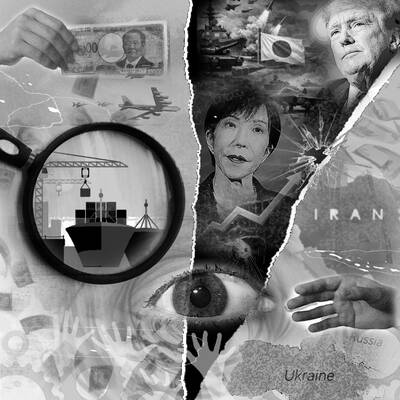
Japan’s imminent easing of arms export rules has sparked strong interest from Warsaw to Manila, Reuters reporting found, as US President Donald Trump wavers on security commitments to allies, and the wars in Iran and Ukraine strain US weapons supplies. Japanese Prime Minister Sanae Takaichi’s ruling party approved the changes this week as she tries to invigorate the pacifist country’s military industrial base. Her government would formally adopt the new rules as soon as this month, three Japanese government officials told Reuters. Despite largely isolating itself from global arms markets since World War II, Japan spends enough on its own


 RSS
RSS