


The Xingtian Temple in Taipei on Tuesday introduced a new policy banning the burning of incense and food offerings. The decision has drawn mixed reactions, with some temple visitors disagreeing with it, saying they do not know what they will do now, while others support the move in light of environmental concerns.
Burning incense is a longstanding traditional ritual in Taiwan and many other countries. Lighting candles and burning incense are said to have a calming effect on worshipers. As the smoke rises, some believe that their prayers rise with it to the heavens. At some temples, devotees race to light the first stick of incense at auspicious events in the hope that the gods will notice and bestow particularly good luck on them.
Some other temples have said they are not following Xingtian Temple’s move, as they wish to respect tradition, the freedom of worshipers and the small businesses in the communities surrounding the temples.
However, Xingtian Temple’s move has also found favor, especially among those who support a green lifestyle and environmental protection. Burning incense and ghost money creates huge volumes of smoke and releases a lot of carbon monoxide and carbon dioxide, which are said to advance global warming as well as a variety of other substances, including carcinogens such as benzene. The practice also puts respirable particles into the atmosphere and cause pollution, which is bad for worshipers, temple staff and people living in neighboring areas. Popular temples with large numbers of worshipers have been affected by carbon emissions, blackening columns, walls, ceilings and even statues and figurines of deities, making restoration work difficult.
Modern residential habits have changed, and temples and residential areas are now mixed together, making it difficult to maintain buffer zones between temples and houses. Burning incense and ghost money spews black smoke, destroying air quality in neighboring areas, while ashes and embers spread, posing a fire hazard and potentially bringing losses to temples and surrounding areas.
When religious ceremonies are held at temples, the volume of incense and ghost money burned by the large numbers of devotees far exceeds the capacity of the burners, so temple staff arrange for the items to be burned offsite. However, this approach negates the original intention of the offering, which is for the devotees to express their wishes directly to the temple deities. Xingtian Temple is in central Taipei, and the feeling is certain to be very different from what it would be if the items were removed to a temple in a rural or mountainous area.
Religious ceremonies are one link in the chain for freedom of religion. It is not easy to change thousands of years of tradition, and Xingtian Temple worshipers have different views about the change. It is only to be expected that some find it hard to accept the temple’s decision. However, such changes are not made overnight, and building acceptance requires a long period of communication and adaptation.
In the past, incense and offering tables were needed to communicate prayers to gods, and sacrificial offerings were made and ghost money burned to link heaven and earth. Without incense and ghost money to burn, devotees will go in search of other mediums to connect with gods.
While temples should respect tradition and the desires of devotees, they should also pay attention to the interaction between religion and the environment, and adapt as lifestyles change.
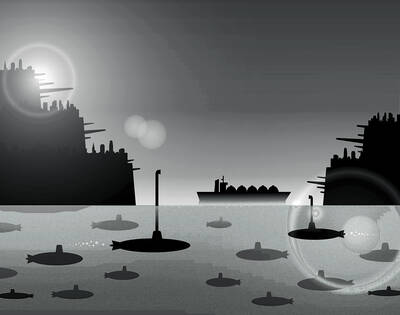
In the event of a war with China, Taiwan has some surprisingly tough defenses that could make it as difficult to tackle as a porcupine: A shoreline dotted with swamps, rocks and concrete barriers; conscription for all adult men; highways and airports that are built to double as hardened combat facilities. This porcupine has a soft underbelly, though, and the war in Iran is exposing it: energy. About 39,000 ships dock at Taiwan’s ports each year, more than the 30,000 that transit the Strait of Hormuz. About one-fifth of their inbound tonnage is coal, oil, refined fuels and liquefied natural gas (LNG),
On Monday, the day before Chinese Nationalist Party (KMT) Chairwoman Cheng Li-wun (鄭麗文) departed on her visit to China, the party released a promotional video titled “Only with peace can we ‘lie flat’” to highlight its desire to have peace across the Taiwan Strait. However, its use of the expression “lie flat” (tang ping, 躺平) drew sarcastic comments, with critics saying it sounded as if the party was “bowing down” to the Chinese Communist Party (CCP). Amid the controversy over the opposition parties blocking proposed defense budgets, Cheng departed for China after receiving an invitation from the CCP, with a meeting with
To counter the CCP’s escalating threats, Taiwan must build a national consensus and demonstrate the capability and the will to fight. The Chinese Communist Party (CCP) often leans on a seductive mantra to soften its threats, such as “Chinese do not kill Chinese.” The slogan is designed to frame territorial conquest (annexation) as a domestic family matter. A look at the historical ledger reveals a different truth. For the CCP, being labeled “family” has never been a guarantee of safety; it has been the primary prerequisite for state-sanctioned slaughter. From the forced starvation of 150,000 civilians at the Siege of Changchun
The two major opposition parties, the Chinese Nationalist Party (KMT) and the Taiwan People’s Party (TPP), jointly announced on Tuesday last week that former TPP lawmaker Chang Chi-kai (張啟楷) would be their joint candidate for Chiayi mayor, following polling conducted earlier this month. It is the first case of blue-white (KMT-TPP) cooperation in selecting a joint candidate under an agreement signed by their chairpersons last month. KMT and TPP supporters have blamed their 2024 presidential election loss on failing to decide on a joint candidate, which ended in a dramatic breakdown with participants pointing fingers, calling polls unfair, sobbing and walking


 RSS
RSS