


Jung Chang (張戎) gained notoriety by being the first person from China to get a doctorate from a British university, but it was her award-winning book Wild Swans, Three Daughters of China (1991) that cast her into the international literary spotlight.
Following three generations of women in Jung’s family, Wild Swans goes from China’s warlord era, through resistance to Japan, the continuing Chinese Civil War and Communist victory, on up to the Great Famine and the Cultural Revolution, ending with the death of former Chinese leader Mao Zedong (毛澤東) and the aftermath.
Each of the three female lead characters has a unique personal struggle with culture, identity and emancipation. This makes a tremendously interesting read into China’s changing past as one follows in turn the grandmother, a concubine to a warlord general, the mother, a devoted idealist casting her lot early on with the Communists, and Jung, a former Red Guard who loses faith in Mao.
Despite this gripping panorama of history and struggle, one might ask why, almost 25 years later, anyone in Taiwan would consider revisiting the work?
Taiwan is not prevalent in the story. The nation’s history and experience is totally different from China’s and its only mention is that it was where Chiang Kai-shek (蔣介石) and the Chinese Nationalist Party (KMT) fled when they lost the Civil War.
However, the book offers an insight into modern Taiwan, especially as it struggles with its identity, the Economic Cooperation Framework Agreement and the crucial Nov. 29 elections. It highlights the dangers of trade with China and what kind of leadership the nation currently needs.
Taiwan was not on Chang’s radar when she wrote the book. Her focus was on the three women in her family and their separate challenges. When she criticized, she took aim primarily at the Chinese Communist Party (CCP) and Mao on whom she would later write a scathing biography, Mao: The Unknown Story, with her British husband, Jon Halliday.
By reading “between the lines,” insights for Taiwanese are apparent. For example, after expressing disgust with the flaws of the CCP government, one could ask: Would China ever consider returning to a KMT government? This question never even comes up. If it did, the answer would be: absolutely not. For while there is clear criticism of the CCP, the book also clearly illustrates that it was the KMT’s blatant corruption that made it lose China. Chang has no axe to grind with the KMT; but she wrote that the KMT was a party of plutocrats, in which almost any position could be bought for the right price.
Thus even while the KMT and CCP engaged in their fierce struggle for the resource rich area of “Manchukuo” (Manchuria) after World War II, positions in the KMT intelligence service could be and were easily purchased. The standard of profit outweighed all other considerations.
This priority of profit is only one among many points that help Taiwanese fill in the blanks on what actually happened on the other side of the Taiwan Strait at that time and especially why the KMT became the wandering diaspora it is today. Young and old Taiwanese might pick up different lessons from this.
For older people who suffered forty years of KMT Martial Law, White Terror and indoctrination under those corrupt regimes, they only knew that the KMT lost China. What they never heard amidst all the propaganda of “retaking China,” was that the loss of China was due to the extent of corruption and greed in the party.
Younger people can glean different insights. They can see the end result, and the separate history and background of the people in the country on the other side of the Strait. They are the people who they must now deal with in any negotiations.
Another clear unspoken message that comes through is how China remains the “other” when considered alongside Taiwan. Chang debunks the cult of Mao that ironically is still preserved in China, especially among the CCP leadership. In contrast, Taiwan has all but eliminated the cult of Chiang that the KMT brought with it. As it develops its democracy, Taiwan has little need for the cult of any past one-party state leaders.
A more salient point that Chang’s work brings out with this sense of “other,” is how the KMT remains divided in diaspora. In its own sense of “reuniting” with China or claiming to be China, the KMT is a divided party. What is worse, it is and perhaps always has been a party that is ideologically adrift. If one had to rank the party’s priorities on these four categories: staying in power, profit, unifying China and the pursuit of democracy, the pursuit of democracy would always come last. That comes through in Chang’s book and it comes through now. That does not speak well for a party that claims its origins with a “government of the people, by the people and for the people.”
The KMT claims to support democracy, yet its leader, President Ma Ying-jeou (馬英九), resists any sense of democratic discussion when it comes to decisionmaking. He courts a dangerous relationship of reunifying with the oligarchs on the other side of the Strait, so the KMT remains adrift. Many in it do not know where to hang their hat. Some cling to preserving the Constitution, which they feel legitimizes them as the true China and keeps them in power. Some will be happy to be a “satellite” of China, like Hong Kong perhaps. Others will go to the highest bidder where profit is concerned. Still others have decided that they have left China and they now commit to Taiwan and its democracy.
China’s problems are not Taiwan’s problems, and Taiwan’s problems are not China’s problems. Beijing’s main relationship to democracy is that it is a threat to it, for Taiwan’s sense of democracy comes primarily from those who learned of it while studying in Japan during the Japanese colonial era and then had to fight for it during the KMT one-party state days.
Thus as the elections and trade deals approach, Taiwanese must ask why they would trust their nation to a party that is ideologically adrift and does not know where it belongs.
Wild Swans is not Taiwan’s story; but it can help Taiwanese know their enemies and how they must forge their own history and identity.
Jerome Keating is a writer based in Taipei.
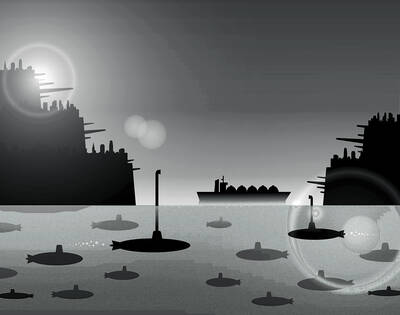
In the event of a war with China, Taiwan has some surprisingly tough defenses that could make it as difficult to tackle as a porcupine: A shoreline dotted with swamps, rocks and concrete barriers; conscription for all adult men; highways and airports that are built to double as hardened combat facilities. This porcupine has a soft underbelly, though, and the war in Iran is exposing it: energy. About 39,000 ships dock at Taiwan’s ports each year, more than the 30,000 that transit the Strait of Hormuz. About one-fifth of their inbound tonnage is coal, oil, refined fuels and liquefied natural gas (LNG),
To counter the CCP’s escalating threats, Taiwan must build a national consensus and demonstrate the capability and the will to fight. The Chinese Communist Party (CCP) often leans on a seductive mantra to soften its threats, such as “Chinese do not kill Chinese.” The slogan is designed to frame territorial conquest (annexation) as a domestic family matter. A look at the historical ledger reveals a different truth. For the CCP, being labeled “family” has never been a guarantee of safety; it has been the primary prerequisite for state-sanctioned slaughter. From the forced starvation of 150,000 civilians at the Siege of Changchun
The two major opposition parties, the Chinese Nationalist Party (KMT) and the Taiwan People’s Party (TPP), jointly announced on Tuesday last week that former TPP lawmaker Chang Chi-kai (張啟楷) would be their joint candidate for Chiayi mayor, following polling conducted earlier this month. It is the first case of blue-white (KMT-TPP) cooperation in selecting a joint candidate under an agreement signed by their chairpersons last month. KMT and TPP supporters have blamed their 2024 presidential election loss on failing to decide on a joint candidate, which ended in a dramatic breakdown with participants pointing fingers, calling polls unfair, sobbing and walking
In the opening remarks of her meeting with Chinese President Xi Jinping (習近平) in the Great Hall of the People in Beijing on Friday, Chinese Nationalist Party (KMT) Chairwoman Cheng Li-wun (鄭麗文) framed her visit as a historic occasion. In his own remarks, Xi had also emphasized the history of the relationship between the KMT and the Chinese Communist Party (CCP). Where they differed was that Cheng’s account, while flawed by its omissions, at least partially corresponded to reality. The meeting was certainly historic, albeit not in the way that Cheng and Xi were signaling, and not from the perspective


 RSS
RSS