


The amyotrophic lateral sclerosis (ALS) Ice Bucket Challenge has made waves across the world; Taiwan has also caught on, and the public in the past few days has been treated to reports in media outlets of celebrities, athletes, politicians and big-shot billionaires getting doused with buckets of ice water “for a good cause,” raising awareness and funds for ALS, also known as Lou Gehrig’s disease.
While the challenge continues to attract the participation of more household names, the well-meant activity, of late, has seemingly descended into a circus, drifting away from the original purpose of boosting public understanding about this rare genetic illness.
Take, for example, the participation of people like Chinese Nationalist Party (KMT) Taipei mayoral candidate Sean Lien (連勝文), who, after finishing the challenge, shouted that “it felt freaking good,” an expression that totally defeats the purpose of the activity.
The idea is that one experiences a degree of physical discomfort and tingling numbness and is thereby able to empathize with the agony patients suffering from this progressive neurodegenerative disease go through. Then there are some who only appear eager to name others to take the challenge, seemingly treating the activity as a quick and cheap way to gain media exposure.
While the challenge of splashing ice water onto one’s head can be enjoyable, the fun should not steal all attention from the serious stuff, let alone making it a “showboating” activity.
As Taipei City councilor Rosalia Wu (吳思瑤) rightly put it: “When a charity campaign becomes a celebrity PR activity, those who benefit from it are not the disadvantaged.”
By all means, the ALS Ice Bucket challenge is a creative way to spread awareness of ALS, through the method in which people dunk ice water on their heads and then nominate others to accept the challenge within the next 24 hours and make a donation to ALS. Coupled with A-list celebrities who rose to the occasion and played their part for charity, the celebrity endorsement certainly has been helpful in enabling members of the public who have no prior knowledge about this disease to gain an understanding of the illness and the difficulties that ALS sufferers go through.
According to the ALS Association, there is no treatment or cure for ALS, which attacks the nerve cells controlling voluntary muscle movement. While ALS patients do not lose their mental facilities, the disease gradually robs its victims of their freedom to move, speak, swallow and eventually breathe.
For ALS patients and their families, the ALS Ice Bucket Challenge certainly helps provide a great morale boost, as they can take comfort in knowing that members of the public care about them, spread ALS awareness and raise funds, thereby allowing greater research into the disease.
According to the Taiwan Motor Neuron Disease Association, the Ice Bucket Challenge helped attract a total of 113 donations amounting to NT$336,220 (US$11,196) from Sunday through Tuesday, nearly three times the amount the association used to receive in three days before the challenge.
This type of fund-raising and the current Ice Bucket Challenge fad can be short-lived. Can the funds raised truly mitigate the financial burden of ALS sufferers? Does the nation currently have enough trained manpower to care for those suffering from ALS and other rare diseases? What are the plans for cultivating the necessary number of caregivers needed for a long-term care system? All these are serious issues that need long-term planning and well-conceived policies to be able to provide substantial assistance to families of ALS sufferers.
It is to be hoped that through the Ice Bucket Challenge, all those who take up the challenge, as well as the general public, can truly acquaint themselves with ALS awareness and provide genuine help and care to not just ALS sufferers, but all disadvantaged groups.
Minister of Labor Hung Sun-han (洪申翰) on April 9 said that the first group of Indian workers could arrive as early as this year as part of a memorandum of understanding (MOU) between the Taipei Economic and Cultural Center in India and the India Taipei Association. Signed in February 2024, the MOU stipulates that Taipei would decide the number of migrant workers and which industries would employ them, while New Delhi would manage recruitment and training. Employment would be governed by the laws of both countries. Months after its signing, the two sides agreed that 1,000 migrant workers from India would
In recent weeks, Taiwan has witnessed a surge of public anxiety over the possible introduction of Indian migrant workers. What began as a policy signal from the Ministry of Labor quickly escalated into a broader controversy. Petitions gathered thousands of signatures within days, political figures issued strong warnings, and social media became saturated with concerns about public safety and social stability. At first glance, this appears to be a straightforward policy question: Should Taiwan introduce Indian migrant workers or not? However, this framing is misleading. The current debate is not fundamentally about India. It is about Taiwan’s labor system, its
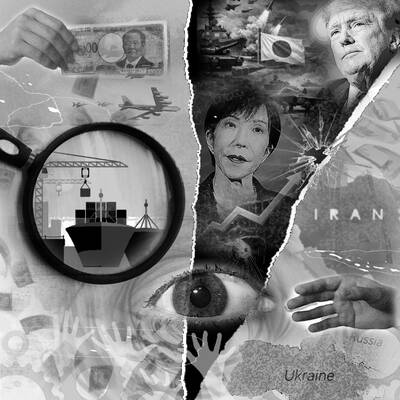
Japan’s imminent easing of arms export rules has sparked strong interest from Warsaw to Manila, Reuters reporting found, as US President Donald Trump wavers on security commitments to allies, and the wars in Iran and Ukraine strain US weapons supplies. Japanese Prime Minister Sanae Takaichi’s ruling party approved the changes this week as she tries to invigorate the pacifist country’s military industrial base. Her government would formally adopt the new rules as soon as this month, three Japanese government officials told Reuters. Despite largely isolating itself from global arms markets since World War II, Japan spends enough on its own
On March 31, the South Korean Ministry of Foreign Affairs released declassified diplomatic records from 1995 that drew wide domestic media attention. One revelation stood out: North Korea had once raised the possibility of diplomatic relations with Taiwan. In a meeting with visiting Chinese officials in May 1995, as then-Chinese president Jiang Zemin (江澤民) prepared for a visit to South Korea, North Korean officials objected to Beijing’s growing ties with Seoul and raised Taiwan directly. According to the newly released records, North Korean officials asked why Pyongyang should refrain from developing relations with Taiwan while China and South Korea were expanding high-level


 RSS
RSS