


No words can describe the anguish this author experienced following Greater Kaohsiung’s gas pipeline explosions and the numerous lives the incident has taken and wrecked.
Realizing that the tragedy resembles a nightmarish scenario the author had forewarned in a Taipei Times article (“Ticking bombs threaten Taiwan,” June 4, 2013, page 8) makes the torment even more unbearable.
Could the incident have been prevented? Who is to blame? Will it happen again? A host of questions naturally rush through one’s mind at such a moment.
The answer may sound cruel: Yes, it will happen again and Taiwanese are to blame. No, the accident cannot be prevented.
For decades, Taiwanese have been living in a fissure, with gleaming towers built on ground under which tons of ticking bombs are buried. In Taipei, open sewers can be seen in almost every alleyway.
A practice that should not occur in a modern country is almost the norm across the nation. It does not take a medical specialist to realize what disaster it can cause if, God forbid, an epidemic erupts.
Taiwanese must refuse to live in chaos and fear. The first order of business to reach that goal must be a reorientation of each citizen’s view of life. Tolerating matters that are intolerable is not life. Accepting expedience with no regard for order must be rejected.
A case in point, and a chaotic scene in plain sight for every citizen to see with their own eyes are the totally disorganized store signs that line the streets of cities big and small. Public walkways and store fronts with uneven paving, crammed with racks of merchandise blocking the path of pedestrian’s adorn every city block.
Yet people turn a blind eye, not realizing it could be a detonator, a trigger, a fuse for something much worse than a pipeline explosion.
At this juncture, life will, and must, go on. However, it has to go on with a new sense of urgency and seriousness. The lesson the tragedy is communicating to us all cannot simply be swept under the rug.
In the short term, and prior to reactivating the pipelines, the integrity of the remaining pipeline system must be ascertained. Confidence, once shattered, can be extremely hard to rebuild. Mistrust, once planted, cannot be easily removed.
In the longer term, and considering the reported lack of documents showing all existing pipeline layouts and their maintenance records, both the industrial sector and the government must cooperate to map out the system.
Modern technology and advance tools derived from oil and gas exploration are available to map out underground structures, such as ground penetrating radars, ultrasonic probes, advance drilling bits and tethered robots, to name but a few.
Once mapping is redone, color coded markers identifying hazards should be installed above ground.
All pipelines, long and short, must have shut-off valves at multiple locations and at regular intervals. It is also possible to install gas sensors in existing traffic lights. In addition, residential households should be encouraged to keep fire extinguishers, and communities should be organized and prepared.
Taiwan wants to be an advanced society. Taiwanese do not want to live in fear. To both ends, members must act in a responsible way expected of a citizen of a truly advanced country.
That may be a tall order, but there is simply neither a short cut nor an excuse not to.
Kengchi Goah is a senior research fellow at Taiwan Public Policy Council, USA.
Minister of Labor Hung Sun-han (洪申翰) on April 9 said that the first group of Indian workers could arrive as early as this year as part of a memorandum of understanding (MOU) between the Taipei Economic and Cultural Center in India and the India Taipei Association. Signed in February 2024, the MOU stipulates that Taipei would decide the number of migrant workers and which industries would employ them, while New Delhi would manage recruitment and training. Employment would be governed by the laws of both countries. Months after its signing, the two sides agreed that 1,000 migrant workers from India would
In recent weeks, Taiwan has witnessed a surge of public anxiety over the possible introduction of Indian migrant workers. What began as a policy signal from the Ministry of Labor quickly escalated into a broader controversy. Petitions gathered thousands of signatures within days, political figures issued strong warnings, and social media became saturated with concerns about public safety and social stability. At first glance, this appears to be a straightforward policy question: Should Taiwan introduce Indian migrant workers or not? However, this framing is misleading. The current debate is not fundamentally about India. It is about Taiwan’s labor system, its
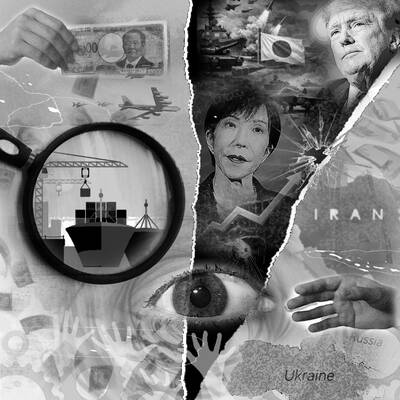
Japan’s imminent easing of arms export rules has sparked strong interest from Warsaw to Manila, Reuters reporting found, as US President Donald Trump wavers on security commitments to allies, and the wars in Iran and Ukraine strain US weapons supplies. Japanese Prime Minister Sanae Takaichi’s ruling party approved the changes this week as she tries to invigorate the pacifist country’s military industrial base. Her government would formally adopt the new rules as soon as this month, three Japanese government officials told Reuters. Despite largely isolating itself from global arms markets since World War II, Japan spends enough on its own
On March 31, the South Korean Ministry of Foreign Affairs released declassified diplomatic records from 1995 that drew wide domestic media attention. One revelation stood out: North Korea had once raised the possibility of diplomatic relations with Taiwan. In a meeting with visiting Chinese officials in May 1995, as then-Chinese president Jiang Zemin (江澤民) prepared for a visit to South Korea, North Korean officials objected to Beijing’s growing ties with Seoul and raised Taiwan directly. According to the newly released records, North Korean officials asked why Pyongyang should refrain from developing relations with Taiwan while China and South Korea were expanding high-level


 RSS
RSS