


At a US congressional hearing on March 14 — the 35th anniversary of the US’ Taiwan Relations Act — US Congressman Brad Sherman asked if Taiwan was doing enough for its national defense.
“It is important that we provide Taiwan with the tools to defend itself, but Taiwan needs to act as well. Taiwan spends less than one-fifth per capita [on defense] than we Americans do,” Sherman said.
As a 19-year-old Taiwanese, I was surprised to hear that Taiwan spends less than many nations that do not face the same external threat. At present, Taiwan’s defense expenditure amounts to approximately 2.2 percent of GDP, compared with the 3 percent considered nominal internationally.
It is the nation’s responsibility and privilege to protect its democracy, liberty and culture.
I have heard a lot of people say that no matter how much Taiwan spends on defense, it would still lose in a cross-strait confrontation with China. That attitude is wrong: Taiwanese should not surrender before the fight has even begun. The people of Taiwan want peace, but freedom and democracy are just as important.
Others argue that the US will not sell Taiwan its latest weapons, so spending money on old military aircraft is a waste. Taipei is seeking to purchase F-16C/Ds, but Washington only wants to upgrade Taiwan’s F-16A/Bs, so purchasing F-35s is impossible. Also, does the nation even have the experts and technical knowledge required to maintain and operate such advanced fighter jets?
Opposition to spending big on national defense is also down to a lack of public trust in the military, in part due to several high-ranking military officials being charged with spying for China or corruption. The government must take action to shake up the military culture, since they are the ones that the public should entrust their lives to.
Taiwan recently implemented an all-volunteer military service system to replace the semi-voluntary one. Joining the military should be seen as a meaningful and courageous career move, but local culture does not encourage pride in serving one’s country.
Some Taiwanese feel that serving in the military is a waste of time and a career for people who do not want to study and cannot find a job. In this digital age, the military is more about brain than muscle. Taiwanese have to change their attitude toward the military and the government should come up with creative ideas to encourage young people to take pride in protecting their nation.
It is a fallacy to think that as long as Taiwan maintains the “status quo” and does not declare independence, war is not going to happen. China has 1,600 missiles aimed at Taiwan and would not hesitate to apply military force if they saw a chance to take the country. Taiwanese therefore need to protect themselves and develop “self-defense consciousness.”
To build up the public’s trust and willingness to invest in national defense, the government needs to be transparent about defense spending, engage domestic industries in supplying military arms and equipment, undertake military reform and provide incentives for outstanding young Taiwanese to serve their nation.
Only with strong enough national military capabilities — which requires spending of at least 3 percent of GDP on defense — will the nation be able to protect the democracy and liberty that Taiwanese have worked so hard to achieve.
Doing this will show Sherman and other international friends of Taiwan’s that Taiwanese do care about national defense and are contributing to peace and stability in the part of the world they inhabit.
Roxie Zhuang is a sophomore at Wesleyan University and an intern at the Formosan Association for Public Affairs in Washington.
Minister of Labor Hung Sun-han (洪申翰) on April 9 said that the first group of Indian workers could arrive as early as this year as part of a memorandum of understanding (MOU) between the Taipei Economic and Cultural Center in India and the India Taipei Association. Signed in February 2024, the MOU stipulates that Taipei would decide the number of migrant workers and which industries would employ them, while New Delhi would manage recruitment and training. Employment would be governed by the laws of both countries. Months after its signing, the two sides agreed that 1,000 migrant workers from India would
On March 31, the South Korean Ministry of Foreign Affairs released declassified diplomatic records from 1995 that drew wide domestic media attention. One revelation stood out: North Korea had once raised the possibility of diplomatic relations with Taiwan. In a meeting with visiting Chinese officials in May 1995, as then-Chinese president Jiang Zemin (江澤民) prepared for a visit to South Korea, North Korean officials objected to Beijing’s growing ties with Seoul and raised Taiwan directly. According to the newly released records, North Korean officials asked why Pyongyang should refrain from developing relations with Taiwan while China and South Korea were expanding high-level
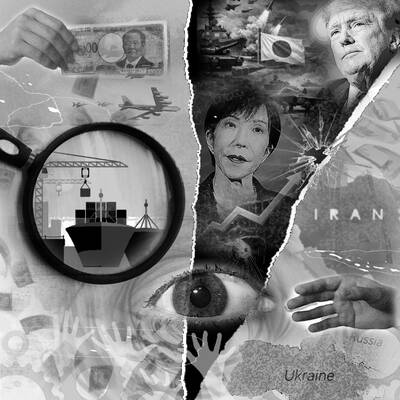
Japan’s imminent easing of arms export rules has sparked strong interest from Warsaw to Manila, Reuters reporting found, as US President Donald Trump wavers on security commitments to allies, and the wars in Iran and Ukraine strain US weapons supplies. Japanese Prime Minister Sanae Takaichi’s ruling party approved the changes this week as she tries to invigorate the pacifist country’s military industrial base. Her government would formally adopt the new rules as soon as this month, three Japanese government officials told Reuters. Despite largely isolating itself from global arms markets since World War II, Japan spends enough on its own
When 17,000 troops from the US, the Philippines, Australia, Japan, Canada, France and New Zealand spread across the Philippine archipelago for the Balikatan military exercise, running from tomorrow through May 8, the official language would be about interoperability, readiness and regional peace. However, the strategic subtext is becoming harder to ignore: The exercises are increasingly about the military geography around Taiwan. Balikatan has always carried political weight. This year, however, the exercise looks different in ways that matter not only to Manila and Washington, but also to Taipei. What began in 2023 as a shift toward a more serious deterrence posture


 RSS
RSS