


Cynicism has become the default setting for many people in Taiwan, especially regarding political maneuvering and government machinations. It has been rife this week, as officials and politicians have scrambled to escape blame for last week’s gas pipeline explosions in Greater Kaohsiung.
It is no wonder that cynicism greeted the announcement on Monday that the Special Investigation Division (SID) of the Supreme Prosecutors’ Office had closed its eight-year investigation into the Dec. 24, 2005, sale of the Broadcasting Corp of China (BCC), the China Television Co and the Central Motion Picture Corp (CMPC) to Jungli Investment Co. The division also closed investigations into New Party cofounder and UFO Radio founder Jaw Shaw-kong (趙少康), then-CMPC president and now Chinese Nationalist Party (KMT) Legislator Alex Tsai (蔡正元), and President Ma Ying-jeou (馬英九), who was then-Taipei mayor and KMT chairman, linked to the sale.
No evidence of criminal wrongdoing had been found, the division said. However, the timing of its announcements, three-and-a-half months ahead of the nine-in-one elections and while the nation is transfixed by the Kaohsiung tragedy, has aroused suspicions that the Ma administration was trying to bury the story.
The three outlets were sold as a package to China Times Group subsidiary Jungli Investment Co in a suspect deal. The three outlets were owned by the KMT — through its Hua Hsia Investment Holding Co — which had finalized the sale just one day before the deadline for political parties, politicians and the military to divest themselves of media assets, as required by a 2003 amendment to the Broadcasting and Television Act (廣播電視法). The sale also met Ma’s pledge after becoming KMT chairman the preceding August of completing the sale of the party’s controversial assets before 2008 and in a transparent manner.
In late 2006, then-Democratic Progressive Party (DPP) chairman Yu Shyi-kun and three other DPP members sued the KMT on charges of fraud, embezzlement and money laundering for allegedly selling the firms at far below their market value. They said the three companies had been sold for almost NT$9 billion (US$299.3 million) less than they were worth and that a kickback scheme would give the KMT half of the profits of any future sale of the real estate owned by the outlets.
In January 2007, it was reported that Jaw had bought the BCC shares from Hua Hsia Investment, not Jungli Investment Co, and that Jungli was part of a Hua Hsia-managed trust — which implied that the KMT still technically owned the three outlets.
Questions were also raised about the manner in which Jaw bought the BCC shares, amid suspicions that he and his wife had set up dummy corporations to evade legal restrictions barring an individual from owning more than 10 percent of a radio station. The controversy over his ownership led Jaw in October 2007 to resign as BCC chairman and general manager and terminate his contract with Hua Hsai.
If anything, the sale of the three outlets looked less transparent as time went by. However, one has to wonder why it took eight years for the SID to drop the probe triggered by the lawsuit filed by Yu and others.
The SID said it had interviewed almost 100 people, and reviewed receipts and bank statements, before deciding the NT$4 billion sale price was fair because the NT$15.2 billion assessment of the outlets had been made in 2003, but their value had fallen to NT$7.82 billion by the time of the sale, and the purchaser had to shoulder the companies’ NT$5.3 billion in debts. It gave no explanation for why the outlets’ value had dropped almost by half in just two years or how Jaw was able to buy the BCC shares.
The SID may have found no evidence of criminal wrongdoing, but the deals were anything but transparent. The KMT’s ability to manipulate its assets, stolen or “legal,” remains unchecked and questions still exist for the party and Ma to answer.
Minister of Labor Hung Sun-han (洪申翰) on April 9 said that the first group of Indian workers could arrive as early as this year as part of a memorandum of understanding (MOU) between the Taipei Economic and Cultural Center in India and the India Taipei Association. Signed in February 2024, the MOU stipulates that Taipei would decide the number of migrant workers and which industries would employ them, while New Delhi would manage recruitment and training. Employment would be governed by the laws of both countries. Months after its signing, the two sides agreed that 1,000 migrant workers from India would
On March 31, the South Korean Ministry of Foreign Affairs released declassified diplomatic records from 1995 that drew wide domestic media attention. One revelation stood out: North Korea had once raised the possibility of diplomatic relations with Taiwan. In a meeting with visiting Chinese officials in May 1995, as then-Chinese president Jiang Zemin (江澤民) prepared for a visit to South Korea, North Korean officials objected to Beijing’s growing ties with Seoul and raised Taiwan directly. According to the newly released records, North Korean officials asked why Pyongyang should refrain from developing relations with Taiwan while China and South Korea were expanding high-level
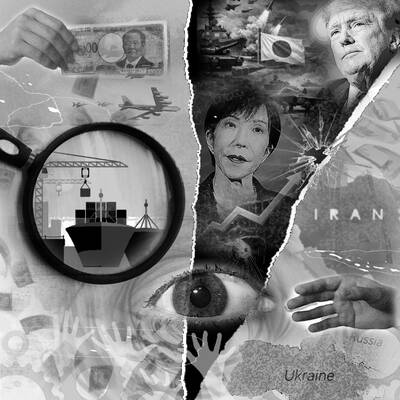
Japan’s imminent easing of arms export rules has sparked strong interest from Warsaw to Manila, Reuters reporting found, as US President Donald Trump wavers on security commitments to allies, and the wars in Iran and Ukraine strain US weapons supplies. Japanese Prime Minister Sanae Takaichi’s ruling party approved the changes this week as she tries to invigorate the pacifist country’s military industrial base. Her government would formally adopt the new rules as soon as this month, three Japanese government officials told Reuters. Despite largely isolating itself from global arms markets since World War II, Japan spends enough on its own
When 17,000 troops from the US, the Philippines, Australia, Japan, Canada, France and New Zealand spread across the Philippine archipelago for the Balikatan military exercise, running from tomorrow through May 8, the official language would be about interoperability, readiness and regional peace. However, the strategic subtext is becoming harder to ignore: The exercises are increasingly about the military geography around Taiwan. Balikatan has always carried political weight. This year, however, the exercise looks different in ways that matter not only to Manila and Washington, but also to Taipei. What began in 2023 as a shift toward a more serious deterrence posture


 RSS
RSS