


Freedom to demonstrate and support like-minded people is a fundamental right among democratic nations. It is therefore surprising that this right is not fully extended to foreign visitors to Taiwan. Most foreigners seem unaware that they can run into trouble if they participate in legal and peaceful demonstrations during their visit.
The Immigration Act (出入國及移民法) says that foreigners are not allowed to participate in an activity that is different from the purpose of the visit or residence of the person in question. However, there is no up-to-date list of permissible activities. Consequently, foreigners are forced to make their own — perhaps erroneous — judgments of what is allowed. Is a tourist allowed to participate in a parade with a sign advocating gay marriage? Perhaps the case could be made that this would violate the purpose of the visit, unless the parade is not considered to be a protest.
The law restricting foreigner involvement is unexpected because this is a democratic country, but more so because the law appears to violate the International Covenant on Civil and Political rights that Taiwan has ratified and which took effect on Dec. 10, 2009. The covenant stipulates that foreigners within the jurisdiction of a state enjoy the same rights as nationals, with only limited exceptions. The right to assembly is not among these exceptions.
The law should therefore be changed to line up with the covenant so that foreigners have their rights protected. Still this would have exceptions; they would not have the right to vote. Every lawful activity should be open to all, unless it is specially excluded to protect national interests. However, under the current rules, foreigners are better off staying away from protests and politics because there are no clear guidelines for what they can and cannot do.
It is discouraging to see that the Chinese Nationalist Party (KMT) government appears reluctant to do the right thing. This adds to the widely held view that the nation’s democratic development is on the wrong path.
The opposition Democratic Progressive Party is currently pushing the KMT to allow foreigners on short stays to join demonstrations. However, the KMT appears reluctant. It will only consider a relaxation for nonpolitical assemblies and will not allow participation during election periods.
The KMT prefers to open up an array of arbitrary policies and to provoke a debate over the definition of nonpolitical assemblies. Would participation in a homosexual pride parade be considered a nonpolitical activity? Would it depend on how a person acts in the parade?
A change in the law is warranted. Recently, a young European was banned from entering Taiwan for three years because authorities claimed that he participated in an activity that was different from the purpose of his residence. They claimed that he participated in a peaceful antinuclear demonstration on June 11, 2011, in Greater Tainan. He said that he did not participate. After a long struggle with the help of lawyers, the Ministry of the Interior finally admitted that it treated him unjustly when it denied him an entry visa.
He has now been cleared of any wrongdoing.
One could argue that the legal system is working, but his case highlights the democratic problem with the act’s general prohibition of participation in “activities different from the purposes of their visits or residence.”
Of course national affairs are first and foremost the affairs of Taiwanese. However, it should be permissible for democratically-minded people to show their support for like-minded people, regardless of nationality.
Taiwan has ratified the International Covenant on Civil and Political Rights. Consequently, Taiwan has an obligation to change its laws accordingly.
Michael Danielsen is the chairman of Taiwan Corner.

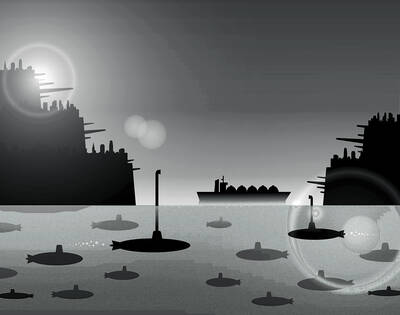
In the event of a war with China, Taiwan has some surprisingly tough defenses that could make it as difficult to tackle as a porcupine: A shoreline dotted with swamps, rocks and concrete barriers; conscription for all adult men; highways and airports that are built to double as hardened combat facilities. This porcupine has a soft underbelly, though, and the war in Iran is exposing it: energy. About 39,000 ships dock at Taiwan’s ports each year, more than the 30,000 that transit the Strait of Hormuz. About one-fifth of their inbound tonnage is coal, oil, refined fuels and liquefied natural gas (LNG),
On Monday, the day before Chinese Nationalist Party (KMT) Chairwoman Cheng Li-wun (鄭麗文) departed on her visit to China, the party released a promotional video titled “Only with peace can we ‘lie flat’” to highlight its desire to have peace across the Taiwan Strait. However, its use of the expression “lie flat” (tang ping, 躺平) drew sarcastic comments, with critics saying it sounded as if the party was “bowing down” to the Chinese Communist Party (CCP). Amid the controversy over the opposition parties blocking proposed defense budgets, Cheng departed for China after receiving an invitation from the CCP, with a meeting with
Chinese Nationalist Party (KMT) Chairwoman Cheng Li-wun (鄭麗文) is leading a delegation to China through Sunday. She is expected to meet with Chinese President Xi Jinping (習近平) in Beijing tomorrow. That date coincides with the anniversary of the signing of the Taiwan Relations Act (TRA), which marked a cornerstone of Taiwan-US relations. Staging their meeting on this date makes it clear that the Chinese Communist Party (CCP) intends to challenge the US and demonstrate its “authority” over Taiwan. Since the US severed official diplomatic relations with Taiwan in 1979, it has relied on the TRA as a legal basis for all
To counter the CCP’s escalating threats, Taiwan must build a national consensus and demonstrate the capability and the will to fight. The Chinese Communist Party (CCP) often leans on a seductive mantra to soften its threats, such as “Chinese do not kill Chinese.” The slogan is designed to frame territorial conquest (annexation) as a domestic family matter. A look at the historical ledger reveals a different truth. For the CCP, being labeled “family” has never been a guarantee of safety; it has been the primary prerequisite for state-sanctioned slaughter. From the forced starvation of 150,000 civilians at the Siege of Changchun


 RSS
RSS