


It is a principle of international law that “the only form in which a cession can be effected is an agreement normally in the form of a treaty between the ceding and the acquiring state,” as stated in Oppenheim’s International Law.
Japan, shortly after securing Taiwan by way of the Shimonoseki Treaty in 1895, concluded a declaration with the Kingdom of Spain, in which “the parallel passing through the middle of the navigable Channel of Bachi is taken as the dividing line between Japanese and Spanish possessions in the western Pacific Ocean.”
In the peace talks after the Spain-US war, the US intended to assert that the northernmost point of the Philippines should be at 21.5o north latitude; however, Spain said that it could not cede to the US anything that did not belong to Spain.
Therefore, in the Treaty of Peace between the US and Spain signed in Paris in 1898, the line in the declaration of 1895 was defined as 20o north latitude by the US and Spain.
Two years later, on Nov. 7, 1900, the US concluded a sole article treaty, to make clear the geographical extent of the Philippine archipelagoes.
In the 1898 peace treaty, the two parties explicitly identified Cagayan Sulu Island, which is located at 6o north latitude, and the Sibutu Islands, at 4.83o north latitude, as part of the archipelagoes as a whole. They did not mention the Batan Islands, which are at 20.42o north latitude, and thus not a part of the Philippines as defined by the treaty.
In addition, the US had already sent a gunboat, the USS Princeton, to occupy the Batan Islands on Jan. 10, 1900, which also proves that the Batan Islands had nothing to do with the peace treaty. The US did not receive any mandate in 1895, 1898 or 1900 to rule the Batan Islands.
The US then recognized the independence of the Republic of the Philippines in the Treaty of Manila of 1946 and transferred its power where applicable. Article VII stipulated that “the Republic of the Philippines agrees to assume all continuing obligations assumed by the United States of America under the Treaty of Peace between the United States of America and Spain concluded at Paris on the 10th day of December, 1898, by which the Philippine Islands were ceded to the United States of America, and under the Treaty between the United States of America and Spain concluded at Washington on the 7th day of November, 1900.”
Only the treaties of 1898 and 1900, which do not refer to the Batan Islands at all, were mentioned.
In light of the content of the four treaties, it is clear that the Philippines holds no sovereignty over the Batan Islands and accordingly has no rights to its Exclusive Economic Zone.
In other words, Taipei, which is involved in a criminal argument and fisheries dispute with Manila, need not leave the Batan Islands blank out of courtesy for the so-called “temporary enforcement line” of 20o north latitude. Also, there is no issue about abolishing the enforcement line or not.
The question of who holds sovereignty over the Batan Islands should be decided by Taiwan, Japan and the US. The Batan question has nothing to do with the Philippines or China.
So, just dispatch the nation’s coast guard vessels there.
HoonTing is a commentator in Taipei.
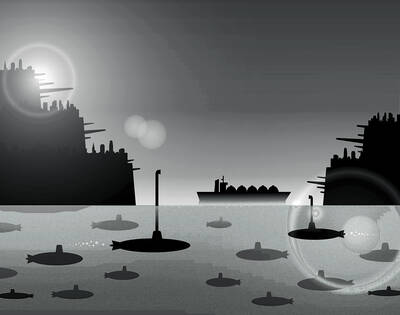
In the event of a war with China, Taiwan has some surprisingly tough defenses that could make it as difficult to tackle as a porcupine: A shoreline dotted with swamps, rocks and concrete barriers; conscription for all adult men; highways and airports that are built to double as hardened combat facilities. This porcupine has a soft underbelly, though, and the war in Iran is exposing it: energy. About 39,000 ships dock at Taiwan’s ports each year, more than the 30,000 that transit the Strait of Hormuz. About one-fifth of their inbound tonnage is coal, oil, refined fuels and liquefied natural gas (LNG),
On Monday, the day before Chinese Nationalist Party (KMT) Chairwoman Cheng Li-wun (鄭麗文) departed on her visit to China, the party released a promotional video titled “Only with peace can we ‘lie flat’” to highlight its desire to have peace across the Taiwan Strait. However, its use of the expression “lie flat” (tang ping, 躺平) drew sarcastic comments, with critics saying it sounded as if the party was “bowing down” to the Chinese Communist Party (CCP). Amid the controversy over the opposition parties blocking proposed defense budgets, Cheng departed for China after receiving an invitation from the CCP, with a meeting with
Chinese Nationalist Party (KMT) Chairwoman Cheng Li-wun (鄭麗文) is leading a delegation to China through Sunday. She is expected to meet with Chinese President Xi Jinping (習近平) in Beijing tomorrow. That date coincides with the anniversary of the signing of the Taiwan Relations Act (TRA), which marked a cornerstone of Taiwan-US relations. Staging their meeting on this date makes it clear that the Chinese Communist Party (CCP) intends to challenge the US and demonstrate its “authority” over Taiwan. Since the US severed official diplomatic relations with Taiwan in 1979, it has relied on the TRA as a legal basis for all
Taiwan ranks second globally in terms of share of population with a higher-education degree, with about 60 percent of Taiwanese holding a post-secondary or graduate degree, a survey by the Organisation for Economic Co-operation and Development showed. The findings are consistent with Ministry of the Interior data, which showed that as of the end of last year, 10.602 million Taiwanese had completed post-secondary education or higher. Among them, the number of women with graduate degrees was 786,000, an increase of 48.1 percent over the past decade and a faster rate of growth than among men. A highly educated population brings clear advantages.


 RSS
RSS