


Sports bring people together
I have lived in Taiwan for several years and I have never had a strong compulsion to write to a newspaper until I was out jogging on a particularly beautiful morning near the outskirts of Tianjhong (田中) in Changhua County on Sunday.
My wife and I were in town for the inaugural Rice Harvest Marathon. As with many of the other sports events that I have attended in Taiwan over the years, I was impressed with the enthusiasm of the participants, the smooth organization of the race and the beautiful scenery that this country is blessed with. However, it was the overwhelming support from the local people and the real sense of camaraderie and community that I felt during the race which motivated me to share my experience.
As a sports enthusiast, I often travel around Taiwan for cycling, triathlon or road-running events. Recently I have been encouraged by a renewed enthusiasm for sports in Taiwan. I have noticed more competitors in races, more folks exercising in or around local parks, and the gaining popularity of sports in schools which, I believe, is a real cause for celebration.
It seems that many people now are enjoying some form of exercise or another, and I sense that a sports culture is budding in Taiwan. However, I think that what really grows sports and passion for healthy living is the support that sportspeople get from their community. This may include everything from building more parks, bike lanes or sports facilities, to being more tolerant or careful of athletes on the road, to providing private or government sponsorships and so on.
In Tianjhong, young and old people lined the streets chanting, playing music and high-fiving weary athletes. Schoolchildren were out cheering on the streets, several people wore costumes and music blared from food stalls and colorful cars. Water stations laden with fresh bananas, oranges, cookies and juices were manned by smiling grandmas and rugged, sunburnt farmers. There was a real fun, festive, family atmosphere which made for a very special race.
From my experience this weekend, I would like to encourage people living in Taiwan to consider doing two things: First, if there is a sports event in your own town or community, consider joining up, volunteering to help or just shout a few words of encouragement — you will be surprised how much it is appreciated by those competing and how far it goes to motivate people to keep exercising and building a sports culture.
Second, in the busy world of long work hours, deadlines and rushed schedules, try to remember the friends, family and people around you. Many of the people we met this weekend did not have a lot of worldly riches, but I sensed that it was a happy, supportive, generous community, and many of us can learn a lot from our friends in the countryside about what really is important in life; love, health and being there for others when they need it most.
Patrick Carlson
Greater Taichung
KMT Chairwoman Cheng Li-wun’s (鄭麗文) recent visit to Beijing and her upcoming visit to Washington will serve as a high-level test of her diplomatic mettle. In Beijing, Cheng was received with symbolic gestures, a warm reception, and high-level access. In Washington, she will receive far less pomp and far sharper questions about the KMT’s vision for the future of Taiwan. Her challenge will be to persuade Washington that the KMT’s engagement with China can coexist with strong deterrence. Cheng’s April 7-12 visit to mainland China coincided with an intense period of conflict in Iran. Despite the strategic significance of Cheng’s trip,
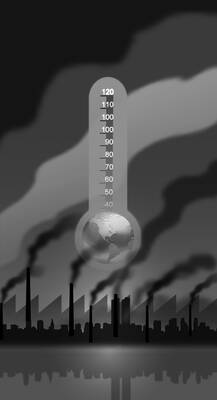
The closure of the Strait of Hormuz has sent the vast Asian chemicals industry into a tailspin. Deprived of the likes of Qatari natural gas and Saudi Arabian oil, the region’s fertilizer and plastics plants are slowing production or even shutting down. Everywhere except China, that is. In petrochemicals, China is unique. As well as a traditional industry that uses oil and gas as feedstock, it has parallel output that relies on its abundant domestic coal. Unsurprisingly, India and other regional powers want to copy and paste the Chinese method. This would not be easy — or climate friendly. The
US President Donald Trump recently repeated his claim that “Taiwan stole America’s chip industry,” reigniting public debate on the issue. As a former Taiwanese minister of economic affairs and an entrepreneur deeply involved in semiconductor supply chain development, I feel a responsibility to clarify this misunderstanding. From the perspective of global industrial evolution and the economic principle of comparative advantage, such a statement appears overly simplistic and risks obscuring the essence of the issue. The rise of Taiwan’s semiconductor industry was not built on “replacing America,” but rather emerged as a result of countries pursuing different development paths within the
Indonesian President Prabowo Subianto says he knows how to fix the problems facing Indonesia. Yet his economic mismanagement and authoritarian tendencies are steering the nation toward a familiar mix of currency instability and political chaos. The world’s fourth-most populous nation risks reversing the hard-won democratic and business reforms that came after the Asian Financial Crisis in 1997. At that time, the rupiah collapsed and the political upheaval that followed forced former president Haji Mohamed Suharto from power. Prabowo’s administration is ignoring similar warning signs. That disconnect was apparent in a national address on Wednesday, when Prabowo projected the swagger that has


 RSS
RSS