


A Japanese report on Chinese military power goes immediately to the heart of the matter with an opening question: “Is the People’s Liberation Army [PLA] under civilian control?”
In guarded language, analysts at the National Institute for Defense Studies, an agency of the Ministry of Defense in Tokyo, conclude that considerable concern has been expressed in China and elsewhere that the Chinese Communist Party (CCP) and government in Beijing no longer exercise control over the People’s Liberation Army.
The Japanese appear to have been cautious in their assessment to avoid angering Chinese leaders, who have often been quick to take offense openly whenever outsiders comment on an issue they consider to be a Chinese internal affair.
In some contrast to the Japanese findings, US defense officials with access to intelligence on China say privately that the PLA has clearly become more independent of party and government control in recent years.
In this assessment, PLA leaders are not so much defying the authority of the party as they are ignoring the policies set by the politburo in national security and foreign policy. It is as if the PLA has become a separate, autonomous center of power and policy in Beijing.
Whatever the case, these assessments mean that the US, Japan, and everyone else must take the PLA’s posture and position into account when fashioning a foreign or security policy concerning China. PLA leaders have often shown themselves to be more assertive and nationalistic than civilian political or economic leaders.
Moreover, a miscalculation on the part of PLA generals or admirals can have more deadly consequences than a miscalculation by the foreign ministry or a ministry concerned with economic issues.
According to doctrine set by China’s revolutionary leader Mao Zedong (毛澤東), the PLA is the military arm of the Chinese Communist Party and must demonstrate loyalty to the party, not to the government or the nation. Individually, PLA officers swear allegiance to the party. In contrast, US officers swear to defend the Constitution.
The authority to guide the PLA rests with the Central Military Commission, which commands the Ministry of Defense, the army, navy, air force and the Second Artillery, plus four staff departments. The Second Artillery has charge of China’s nuclear weapons.
The commission’s new chairman is Chinese President and CCP General Secretary Xi Jinping (習近平). The two vice-chairmen and the other eight members are all uniformed military officers. While Xi is China’s political leader and was a vice chairman of the commission under former Chinese president and CMC chairman Hu Jintao (胡錦濤), his is the commission’s sole civilian voice.
This fresh commission is part of the transition from the regime led by Hu to that led by Xi, who has had little contact with the PLA as he has risen though the party ranks. One new vice-chairman is army General Fan Changiong (范長龍), who was commander of the Jinan Military Region on the shores of the Yellow Sea opposite the Korean Peninsula.
The other new vice chairman is air force General Xu Qiliang (許其亮), the first air force officer to be named to that post. His promotion reflects the increasing importance of air power in China’s military modernization.
There have also been rumors that Chinese Premier Li Keqiang (李克強) may be named to the commission, adding a civilian voice to its deliberations.
Perhaps the most intriguing new member of the commission and a sign of the times is the appointment of the air force’s commander, General Ma Xiaotian (馬曉天). He is an outspoken nationalist who, as a deputy chief of the general staff, has traveled all over Asia and to other countries in conducting the PLA’s foreign policy.
When China and the Philippines clashed over the Scarborough Shoal (Huangyan Island, 黃岩島) in the South China Sea, he told a TV interviewer that the “issue is none of the United States’ business,” but a dispute between China and the Philippines.
The US has called for protecting the freedom of navigation through the South China Sea.
At last year’s Shangri-La conference in Singapore, Ma tangled with Admiral Robert Willard, then chief of the US Pacific Command, demanding that the US cease naval and air surveillance in the East and South China Seas. He also reiterated in forceful terms Beijing’s standard demand that the US stop selling arms to Taiwan.
More recently, Ma met Admiral Samuel Locklear, the current Pacific Command leader, when Locklear visited Beijing last year. According to the PLA Daily newspaper, Ma repeated the demand that the US stop its naval and aerial reconnaissance of China.
Presumably, Locklear demurred.
Richard Halloran is a commentator in Hawaii.
KMT Chairwoman Cheng Li-wun’s (鄭麗文) recent visit to Beijing and her upcoming visit to Washington will serve as a high-level test of her diplomatic mettle. In Beijing, Cheng was received with symbolic gestures, a warm reception, and high-level access. In Washington, she will receive far less pomp and far sharper questions about the KMT’s vision for the future of Taiwan. Her challenge will be to persuade Washington that the KMT’s engagement with China can coexist with strong deterrence. Cheng’s April 7-12 visit to mainland China coincided with an intense period of conflict in Iran. Despite the strategic significance of Cheng’s trip,
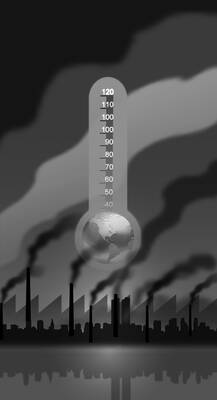
The closure of the Strait of Hormuz has sent the vast Asian chemicals industry into a tailspin. Deprived of the likes of Qatari natural gas and Saudi Arabian oil, the region’s fertilizer and plastics plants are slowing production or even shutting down. Everywhere except China, that is. In petrochemicals, China is unique. As well as a traditional industry that uses oil and gas as feedstock, it has parallel output that relies on its abundant domestic coal. Unsurprisingly, India and other regional powers want to copy and paste the Chinese method. This would not be easy — or climate friendly. The
Indonesian President Prabowo Subianto says he knows how to fix the problems facing Indonesia. Yet his economic mismanagement and authoritarian tendencies are steering the nation toward a familiar mix of currency instability and political chaos. The world’s fourth-most populous nation risks reversing the hard-won democratic and business reforms that came after the Asian Financial Crisis in 1997. At that time, the rupiah collapsed and the political upheaval that followed forced former president Haji Mohamed Suharto from power. Prabowo’s administration is ignoring similar warning signs. That disconnect was apparent in a national address on Wednesday, when Prabowo projected the swagger that has
“Of course you can choose not to be Taiwanese, just do not stay here,” chairwoman of Taipei 101 operator Taipei Financial Center Corp Janet Chia (賈永婕) said in an online interview with local entertainer Tai Chih-yuan (邰智源), triggering intense discussion on social media, with politicians across party lines weighing in. In the interview, which was aired on May 14, Chia and Tai’s discussion over a meal in Taipei 101 covered Chia’s career change from entertainer to chairwoman and US climber Alex Honnold’s free solo climb up the Taipei 101 building. During the interview, Chia said, “Being on this land, we


 RSS
RSS