


South Korea has voted in a female leader, president-elect Park Geun-hye, the daughter of military strongman and contemporary of Chiang Kai-shek (蔣介石) former South Korean president Park Chung-hee. In that, she is no ordinary person, but even more extraordinary is the reaction of individuals within the governing and opposition parties of Taiwan.
A country’s presidential election is a domestic affair. The values of the electorates of each and every country, and the way these countries go about their elections, is different from nation to nation. So long as the election is fair and free, it is the right of the electorate in each respective country to elect whomever they choose. Other countries can just observe and hope that mutual relations will remain harmonious after the event. There is no point making a fuss about the result.
Taiwan’s present government, which has observed a diplomatic truce with China for some time, seems to have forgotten even this most basic set of state-to-state etiquette. Premier Sean Chen (陳冲) remarked that he would “calmly keep an eye on the situation,” as if he were talking about a loss for his party, the Chinese Nationalist Party (KMT), to the opposition Democratic Progressive Party (DPP), in a local election. It suggested that there was no reason for concern at the moment, but that the jury was not yet out. There was not even a suggestion that the two sides could work together going forward.
The KMT seems to be seeing South Korea as the DPP. Rather than congratulating the new president and expressing a wish to advance mutual relations, the KMT’s response is suggestive of the party adopting an antagonistic stance, as if it were squaring up for future confrontations. How different this is from the approach of US President Barack Obama, who offered Park his congratulations and emphasized the importance of mutual relations, expressing his hope that the two governments could work together.
The public have concentrated on the next South Korean president’s gender and that she is the daughter of a former military dictator. Naturally, for South Korea, a country still profoundly influenced by the traditional patriarchal cultural values of Confucianism and Taoism, to elect a female president is indeed an event of some significance.
Park’s advantage, or perhaps her only sin, is that she had a military strongman for a father. Her mother, Yuk Young-soo, was murdered by a North Korean sympathizer years before her father’s assassination and so she filled her mother’s shoes on formal occasions. As such, she was also seen by some as tarnished by her father’s poor record on human rights. That notwithstanding, at least 51 percent of the South Korean electorate apparently did not consider it appropriate to lay the sins of the father at his daughter’s feet.
Having suffered under the dictatorial rule of Chiang and his son and successor Chiang Ching-kuo (蔣經國), there are some in Taiwan who have reservations about the offspring of a former dictator coming to power in South Korea. However, there are clear differences between the two situations. Park Chung-hee was not a dictator of a foreign power and neither did his daughter automatically assume the reins of power after his death as if through some form of imperial succession. Park Geun-hye was elected in free and fair elections by the South Korean public about three decades after her father died.
James Wang is a media commentator.
Translated by Paul Cooper
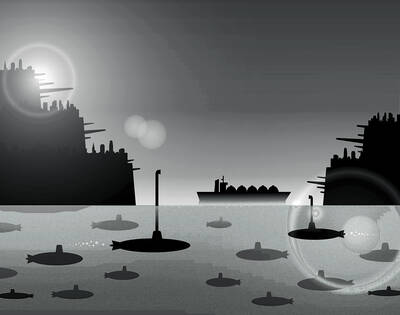
In the event of a war with China, Taiwan has some surprisingly tough defenses that could make it as difficult to tackle as a porcupine: A shoreline dotted with swamps, rocks and concrete barriers; conscription for all adult men; highways and airports that are built to double as hardened combat facilities. This porcupine has a soft underbelly, though, and the war in Iran is exposing it: energy. About 39,000 ships dock at Taiwan’s ports each year, more than the 30,000 that transit the Strait of Hormuz. About one-fifth of their inbound tonnage is coal, oil, refined fuels and liquefied natural gas (LNG),
On Monday, the day before Chinese Nationalist Party (KMT) Chairwoman Cheng Li-wun (鄭麗文) departed on her visit to China, the party released a promotional video titled “Only with peace can we ‘lie flat’” to highlight its desire to have peace across the Taiwan Strait. However, its use of the expression “lie flat” (tang ping, 躺平) drew sarcastic comments, with critics saying it sounded as if the party was “bowing down” to the Chinese Communist Party (CCP). Amid the controversy over the opposition parties blocking proposed defense budgets, Cheng departed for China after receiving an invitation from the CCP, with a meeting with
Chinese Nationalist Party (KMT) Chairwoman Cheng Li-wun (鄭麗文) is leading a delegation to China through Sunday. She is expected to meet with Chinese President Xi Jinping (習近平) in Beijing tomorrow. That date coincides with the anniversary of the signing of the Taiwan Relations Act (TRA), which marked a cornerstone of Taiwan-US relations. Staging their meeting on this date makes it clear that the Chinese Communist Party (CCP) intends to challenge the US and demonstrate its “authority” over Taiwan. Since the US severed official diplomatic relations with Taiwan in 1979, it has relied on the TRA as a legal basis for all
Taiwan ranks second globally in terms of share of population with a higher-education degree, with about 60 percent of Taiwanese holding a post-secondary or graduate degree, a survey by the Organisation for Economic Co-operation and Development showed. The findings are consistent with Ministry of the Interior data, which showed that as of the end of last year, 10.602 million Taiwanese had completed post-secondary education or higher. Among them, the number of women with graduate degrees was 786,000, an increase of 48.1 percent over the past decade and a faster rate of growth than among men. A highly educated population brings clear advantages.


 RSS
RSS