


A casual observer could be forgiven for thinking that major media firms hate technology. They certainly fear it. Since Jack Valenti, the legendary film industry lobbyist, said in 1982 that the VCR was like the Boston Strangler, preparing to murder the innocents of Hollywood, they have viewed such advances as a Godzilla creature rising from the sea to threaten their existence.
In the past 30 years in the US, they have lobbied for 15 pieces of legislation aimed at tightening their grip on their content, as technology has moved ever faster to prize their fingers open.
In this seemingly never-ending battle, Jan. 18 this year was a defining date, a day when the Internet hit back. Mike Masnick, founder of TechDirt and one of Silicon Valley’s most well-connected bloggers, remembers running through the corridors of the Senate in Washington, laptop open, desperately trying to find a Wi-Fi signal.
Around him was chaos. Amid a cacophony of phones, political interns were struggling to keep up with the calls and e-mails from angry people across the US and the world claiming Hollywood-backed legislation was about to break the Internet and end its open culture forever. In an unprecedented day of action, Wikipedia and Reddit, a social news Web site, had gone offline in a protest organized by their communities of editors, and backed by thousands of other sites, large and small. Google had blacked out its logo in protest. Students around the world were bitching on Twitter that they couldn’t get their homework done without Wikipedia. Even Kim Kardashian came out swinging.
One senator’s office that Masnick visited calculated they had taken 3,000 calls. Within hours of the unprecedented assault, SOPA, the Stop Online Piracy Act, was dead and a sister act, PIPA, a neat acronym for the tortuously titled PROTECT IP Act (Preventing Real Online Threats to Economic Creativity and Theft of Intellectual Property Act) was sunk too. In Europe, the action buoyed up opponents of the Anti-Counterfeiting Trade Agreement (ACTA), the US-backed international copyright treaty that has sparked protests across the continent. Countries including Bulgaria, Germany, the Netherlands, Poland and Slovakia have all refused to sign, arguing that ACTA endangers freedom of speech and privacy, and the bill has stalled. But for how long?
“The industry has this down cold,” Masnick says.
The Motion Picture Association of America (MPAA), Valenti’s old stomping ground and one of the most powerful lobbying bodies in Washington, has emerged bruised from the battle, but few doubt it will rally.
There is widespread anger among leading media companies about the way the SOPA fight played out. The protest had many voices, but there was no doubting whom the media executives blamed — Silicon Valley in general and Google in particular. US President Barack Obama had “thrown in his lot with Silicon Valley paymasters,” according to Rupert Murdoch, whose News Corp empire includes the Fox studios.
“Piracy leader is Google who streams movies free, sells advts around them,” Murdoch wrote on Twitter. “No wonder pouring millions into lobbying.”
However, trying to blame Google or even to cast this as a battle between Silicon Valley and Hollywood is to misrepresent a major shift in the media landscape, those pushing for a more open Internet say.
Elizabeth Stark, a free culture advocate who has been campaigning for a relaxation of copyright law for years, says the SOPA battle will be seen as a landmark in a much wider debate about the open nature of the Internet compared with the closed, copyright-protected world from before the digital age.
“This wasn’t Google v Hollywood,” says Stark, a visiting fellow at the Yale Information Society Project. “This was 15 million Internet users v Hollywood. That’s what they don’t get. I think they think we can just get a few executives and put them in a room and call those people ‘the Internet.’ Well, now they know that’s not going to work.”
That said, Stark doubts that this battle is over. The losing side is rallying its troops. The media giant Viacom, owner of Paramount Pictures and Comedy Network, has reanimated a US$1 billion suit against Google’s YouTube, which it accuses of allowing users to use its copyrighted material from shows such as South Park and The Colbert Report. No legislation in the US is likely before November’s election, but as WikiLeaks showed, the US has already pushed for SOPA-style legislation in Spain, and in the tech community, few doubt that SOPA will be revived.
After the act was shelved, Cary Sherman, chief executive of the Recording Industry Association of America (RIAA), which represents music labels, wrote a blistering article in the New York Times attacking Wikipedia and Google for spreading misinformation in order to cause a “digital tsunami” that “raised questions about how the democratic process functions in the digital age.”
Sherman wrote: “The hyperbolic mistruths, presented on the home pages of some of the world’s most popular Web sites, amounted to an abuse of trust and a misuse of power. When Wikipedia and Google purport to be neutral sources of information, but then exploit their stature to present information that is not only not neutral but affirmatively incomplete and misleading, they are duping their users into accepting as truth what are merely self-serving political declarations.”
Wikipedia co-founder Jimmy Wales says the RIAA is missing the point.
“They are irrelevant at this point. I don’t care what they have to say. Someone is so far out of touch with what is going on in Washington, with the public and with their own industry,” he says.
For decades, the media industry has tightened its hold on copyright material. There are valid arguments for protecting the rights of content creators, but it is now clear that applying these rules to the digital age is not going to work — not least because those now affected by copyright rules are not just other companies, but ordinary people.
“The public think it’s gone too far,” Wales said. “It’s just possible that we may be at a point where we can stop the march forward of this ridiculousness.”
The Internet has changed the world so much that current legislation is not adequate, Wales said.
“Go back 50 years and copyright was an industrial regulation that most people had no contact with,” he said. “It was pretty difficult to find yourself in a position where you had committed a felony.”
Now the US is trying to extradite Richard O’Dwyer, a 23-year-old UK-based computer science student, on copyright infringement charges.
“When, 50 years ago, could a kid sitting in his basement in the UK commit a crime in the US? It’s disturbing,” Wales said.
What are the legitimate limits to copyright? What’s the ethical norm for copying?
“None of that is clear yet. It’s going to take time to work that out,” Wales said.
Until Jan. 18, the debate within legislatures had been about extension and enforcement of the current rules. Now he hopes there may be time for a bigger debate.
“We also need to bring back into discussion serious issues about the length of copyright, which has been extended again and again for no good purpose. We need to talk about what constitutes fair use, what kind of copying can the public do without getting into trouble,” Wales said.
If, for example, someone uploads a video of their child’s birthday party and then finds it has been deleted because a copyrighted song is playing in the background, “that’s not piracy. That’s how we use our music these days,” Wales said. “A lot of what people want to do now is not legal, but should be legal. We can say that and still be against full-scale piracy.”
Wales said he had never heard of Megaupload, the online file sharing site at the center of an international criminal investigation, before it was shut down, but had friends who used it.
“It was people who lived outside the US who said they would have bought such and such, but they don’t sell it here,” he said. “If there’s some great show that they are not showing over here, they are very tempted. We can morally disapprove, but that’s the way people are.”
Megaupload was charging a subscription to people who wanted a lot of content.
“Why should you pay these assholes money when you could pay the people who actually made it some money?” Wales said.
If the media industry addressed the needs of its audience, there would be less piracy, he believes.
Stark points to a study by Musiksverige (Music Sweden), an industry association, that found music piracy in Sweden fell significantly after the introduction of Spotify, a streaming music service.
“It shows what we have said all along: People want to reward artists for their work,” Stark said.
Reddit co-founder Alexis Ohanian agrees.
“I’m hopeful right now. These are not soundbite issues, they are complicated. If you look at the work that Reddit’s community did investigating SOPA, you can see that there is a lot of thought going into these issues in the community. Like a lot of rights, I think we took our right to a life online for granted until it was challenged. I think we are on guard now,” Ohanian said.
Media execs are on guard, too. Many look to the music industry and fear they may be next. Since the peer-to-peer filesharing site Napster emerged in 1999, music sales in the US have dropped 53 percent, from US$14.6 billion to US$6.9 billion in 2010. The digital world is a lot less lucrative than selling DVDs.
Last year, the movie industry made US$30 billion at the box office worldwide. Ed Epstein, author of The Hollywood Economist, calculates box office revenue accounts for just 10 percent of a hit movie’s money. The rest comes from cable and satellite channels, pay-per-view TV, video rentals, DVD sales and digital downloads. All that extra cash comes from sources that Hollywood once railed against, and pressed Washington to crack down on.
However, this time Epstein believes the industry may be right to be worried.
As the music industry has shown, digital sales are worth a fraction of physical sales. There are already signs that the movie industry is changing.
There was a new player in town at the Sundance film festival this year, one who had financed 17 of the movies on show. That player was you. Kickstarter, a three-year-old Web site that hosts crowdsourced fund-raising for creative projects, had funded 17 films at Sundance, about 10 percent of the total, and had another 33 films at the South by Southwest festival in March. The company is now a significant player in independent film, allowing cinematic hopefuls to take their case right to the people. It’s just the beginning of a major change in the industry, Kickstarter co-founder Yancey Strickler says.
“I think we are at a point where we are asking whether you really need a film industry for a film to be made or a music industry to make music. People can now speak directly to their audiences,” he said. “And the demands of an audience are very different to the demands of an industry. An industry wants to know about merchandising tie-ins with McDonald’s — that’s not necessarily what the audience is looking for, or what the artist is concerned with.”
Strickler was at Sundance this year, where a number of Kickstarter-financed films were offered distribution deals. However, many people were also rejecting deals they saw as disadvantageous.
“Going straight to the Web, or video on demand, or doing a deal with independent cinemas — these are all viable options now,” Strickler said. “Look at the success of that Joseph Kony video. This is just the beginning.”
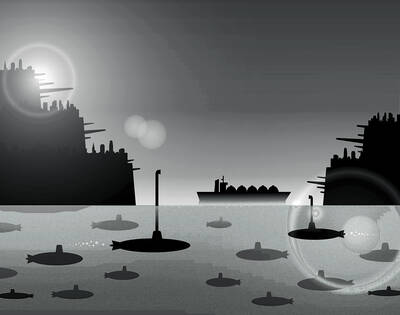
In the event of a war with China, Taiwan has some surprisingly tough defenses that could make it as difficult to tackle as a porcupine: A shoreline dotted with swamps, rocks and concrete barriers; conscription for all adult men; highways and airports that are built to double as hardened combat facilities. This porcupine has a soft underbelly, though, and the war in Iran is exposing it: energy. About 39,000 ships dock at Taiwan’s ports each year, more than the 30,000 that transit the Strait of Hormuz. About one-fifth of their inbound tonnage is coal, oil, refined fuels and liquefied natural gas (LNG),
On Monday, the day before Chinese Nationalist Party (KMT) Chairwoman Cheng Li-wun (鄭麗文) departed on her visit to China, the party released a promotional video titled “Only with peace can we ‘lie flat’” to highlight its desire to have peace across the Taiwan Strait. However, its use of the expression “lie flat” (tang ping, 躺平) drew sarcastic comments, with critics saying it sounded as if the party was “bowing down” to the Chinese Communist Party (CCP). Amid the controversy over the opposition parties blocking proposed defense budgets, Cheng departed for China after receiving an invitation from the CCP, with a meeting with
Chinese Nationalist Party (KMT) Chairwoman Cheng Li-wun (鄭麗文) is leading a delegation to China through Sunday. She is expected to meet with Chinese President Xi Jinping (習近平) in Beijing tomorrow. That date coincides with the anniversary of the signing of the Taiwan Relations Act (TRA), which marked a cornerstone of Taiwan-US relations. Staging their meeting on this date makes it clear that the Chinese Communist Party (CCP) intends to challenge the US and demonstrate its “authority” over Taiwan. Since the US severed official diplomatic relations with Taiwan in 1979, it has relied on the TRA as a legal basis for all
The two major opposition parties, the Chinese Nationalist Party (KMT) and the Taiwan People’s Party (TPP), jointly announced on Tuesday last week that former TPP lawmaker Chang Chi-kai (張啟楷) would be their joint candidate for Chiayi mayor, following polling conducted earlier this month. It is the first case of blue-white (KMT-TPP) cooperation in selecting a joint candidate under an agreement signed by their chairpersons last month. KMT and TPP supporters have blamed their 2024 presidential election loss on failing to decide on a joint candidate, which ended in a dramatic breakdown with participants pointing fingers, calling polls unfair, sobbing and walking


 RSS
RSS