


On April 12, China’s Taiwan Affairs Office Minister Wang Yi (王毅) had a “surprise” meeting with US Deputy Secretary of State William Burns in Washington. The US government, anticipating how sensitive such a meeting might be, arranged for an official working in the area of cross-strait affairs to talk to Taiwanese reporters on April 10.
No sooner had the official sat down than he announced, unprompted, that Wang was to arrive in Washington on April 11, having arranged to meet Burns the next day to discuss cross-strait affairs. The official admitted that Wang’s request for a meeting had taken the US by surprise, because it was not a routine visit.
When the conversation turned to the notion of “one country, two areas” (一國兩區) recently proposed by a Chinese Nationalist Party (KMT) envoy in China, the official said that the US government was not sure what this formula entailed. He said that this proposal had also taken the US by surprise, and that Washington hoped that the Taiwanese authorities would be able to explain it.
On the subject of President Ma Ying-jeou’s (馬英九) proposal for a cross-strait peace agreement, the official said it was unnecessary, since the majority of Taiwanese were in favor of maintaining the “status quo.” The US, he said, did not want to see Taiwan pressurized into making any type of political arrangement that would threaten stability across the Taiwan Strait.
Asked about the issue of US beef imports to Taiwan, the official responded by saying that the US would definitely not link beef imports with other issues, such as arms sales or visa exemptions, and that Ma had brought up the issue with American Institute in Taiwan (AIT) Chairman Raymond Burghardt on Feb. 1, without any prior discussion with the US.
The background information provided by this official was very revealing. He had apparently foreseen that Wang would want to find out what the US thought of Ma’s recent initiatives and had thought it prudent to make clear beforehand that Ma had not mentioned these topics to the US. Not only was the US surprised by the developments, it was confused as to what the “one country, two areas” formula entailed, and also felt that there was no need to sign a peace agreement.
It looks as though Wang did not get the response he was hoping for in Washington. By saying that the developments came as a surprise, the US made it clear there was no prior mutual understanding between itself and Taiwan on these issues. By saying that it was confused by the “one country, two areas” formula and didn’t think a peace agreement was necessary, it made it clear that it did not support such ideas.
During his meeting with Burns, Wang remained decidedly low-key, explaining on Ma’s behalf that Taiwan was expressing its basic stance on cross-strait relations from a legal point of view. Wang added that China hoped to hear some positive messages during Ma’s inauguration speech for his second term on May 20.
The US is attempting to weather the diplomatic storm by reaffirming its commitment to the “one China” policy, the three US-China joint communiques, and the Taiwan Relations Act. What about Taiwan? Taiwanese Representative to the US Jason Yuan (袁健生) acted as if nothing had happened, talking of a “no surprises” principle in US-Taiwan relations, and saying there were no problems between the two countries.
Even as Yuan was talking of “no surprises,” the US official identified three unforeseen moves made by the Ma administration. If you count Wang’s unexpected visit to the US, that makes four surprises altogether. So which story to believe?
There is no need to go into the minutiae here. Judging by the overall picture and strategic interests involved, the US official’s version of events seems more credible. He had to clarify the situation before Wang’s arrival so that neither China nor Taiwan, nor any other country, would misunderstand the positions taken by the US or its overall strategy.
The US is shifting its strategic focus toward the Asia-Pacific area, and the central point of its strategy there is consolidating the strength of free countries to maintain regional security, democracy and development, as well as stopping China from expanding its military power. China’s neighbors, including Myanmar and other Southeast Asian countries, are adapting to this strategic positioning. Only the Ma administration refuses to see the light, remaining fixated on China as the only way forward for Taiwan and neglecting the rest of the world.
Burghardt’s visit to Taiwan is reported to have been mainly about urging Ma to join the Trans-Pacific Partnership (TPP), which he said could be included in talks at next year’s APEC summit. Ma says that the country needs up to 10 years to be ready to enter the TPP, but he is clearly following China’s lead on this. His unsolicited broaching of the US beef issue was intended as a distraction, but it also had the effect of rousing public anger against what people perceive as undue pressure from the US, and there have been protests about the beef issue outside the AIT building in Taipei. Unsurprisingly, the US is rather unhappy about this.
US beef imports are a minor issue. People can eat US beef as they see fit. The big issue is what choices the country will make regarding its national strategy. Are we to stand together with other free and democratic forces in safeguarding liberty, peace and development? Or are we to distance ourselves from them and align ourselves with an authoritarian and threatening China?
Besides, China is changing. Former Chongqing Chinese Communist Party secretary Bo Xilai (薄熙來), a figure who once represented China’s most reactionary and sinister forces, seems to have been the architect of his own demise. Readers may recall how Bo received former KMT chairmen Lien Chan (連戰) and Wu Poh-hsiung (吳伯雄), amid much fanfare and ostentation, in Chongqing, and the lavish praise that Wu heaped on him. Wu remarked that Bo’s image, poise and refinement were very much like those of Ma, and that he had great prospects ahead of him.
Bo could hardly contain his glee as he stood before the TV cameras listening to Wu’s accolades. Just as the Wang Lijun (王立軍) affair threatened to bring Bo’s world crashing down around him, Terry Gou (郭台銘), chairman of Foxconn Technology Group and Taiwan’s richest man, rushed to Chongqing to sign a contract with Bo under the attentive gaze of the press. The photo of Gou and Bo posing together was the last one to be published in the press before Bo disappeared from public view.
From what the US official said, we can see that US-Taiwan relations have gone from “no surprises” to “plenty of surprises.” More than that, his remarks show that Ma’s entire national strategy has lost its way. Ma’s lack of direction is a major issue that affects the fate of each and every Taiwanese, and as such, it cannot be taken lightly.
Ruan Ming is a former professor of Tamkang University and was a special assistant to former general secretary of the Chinese Communist Party Hu Yaobang
Translated by Paul Cooper
Minister of Labor Hung Sun-han (洪申翰) on April 9 said that the first group of Indian workers could arrive as early as this year as part of a memorandum of understanding (MOU) between the Taipei Economic and Cultural Center in India and the India Taipei Association. Signed in February 2024, the MOU stipulates that Taipei would decide the number of migrant workers and which industries would employ them, while New Delhi would manage recruitment and training. Employment would be governed by the laws of both countries. Months after its signing, the two sides agreed that 1,000 migrant workers from India would
In recent weeks, Taiwan has witnessed a surge of public anxiety over the possible introduction of Indian migrant workers. What began as a policy signal from the Ministry of Labor quickly escalated into a broader controversy. Petitions gathered thousands of signatures within days, political figures issued strong warnings, and social media became saturated with concerns about public safety and social stability. At first glance, this appears to be a straightforward policy question: Should Taiwan introduce Indian migrant workers or not? However, this framing is misleading. The current debate is not fundamentally about India. It is about Taiwan’s labor system, its
On March 31, the South Korean Ministry of Foreign Affairs released declassified diplomatic records from 1995 that drew wide domestic media attention. One revelation stood out: North Korea had once raised the possibility of diplomatic relations with Taiwan. In a meeting with visiting Chinese officials in May 1995, as then-Chinese president Jiang Zemin (江澤民) prepared for a visit to South Korea, North Korean officials objected to Beijing’s growing ties with Seoul and raised Taiwan directly. According to the newly released records, North Korean officials asked why Pyongyang should refrain from developing relations with Taiwan while China and South Korea were expanding high-level
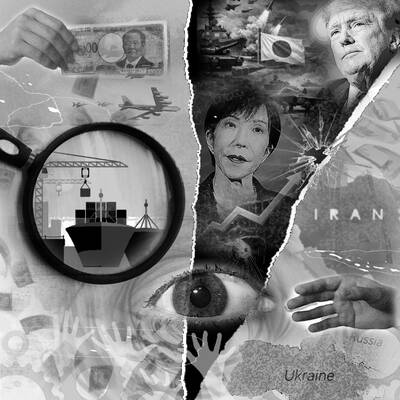
Japan’s imminent easing of arms export rules has sparked strong interest from Warsaw to Manila, Reuters reporting found, as US President Donald Trump wavers on security commitments to allies, and the wars in Iran and Ukraine strain US weapons supplies. Japanese Prime Minister Sanae Takaichi’s ruling party approved the changes this week as she tries to invigorate the pacifist country’s military industrial base. Her government would formally adopt the new rules as soon as this month, three Japanese government officials told Reuters. Despite largely isolating itself from global arms markets since World War II, Japan spends enough on its own


 RSS
RSS