


There was quite a bit of teeth gnashing from the opposition earlier this month about vice president-elect Wu Den-yih’s (吳敦義) plan to attend the Boao Forum for Asia in Hainan, China, at the end of this month. Much of the anger was well deserved, but it appears that some of the angst was misdirected, to the government’s relief.
Wu will be attending the annual conference, not as the vice president-elect or even as a former premier of the Republic of China, but as a senior advisor of the Cross-Straits Common Market Foundation, a non-position designed to provide cover for his trip. The Presidential Office spokesman said Wu would use the forum to boost the country’s international reputation and strengthen cooperation with other countries, since the forum is a global economic event.
The main problem with Taiwan’s attendance is that, despite what the Presidential Office says, the Cross-Straits Common Market Foundation is not on an equal footing with other delegations, because it is grouped with those from Hong Kong and Macau, rather than being a representative of an independent, sovereign nation. And if Wu meets with Chinese Vice Premier Li Keqiang (李克強), who is expected to become China’s next premier, they will not be meeting on an equal basis, but as common delegation member to senior government leader, no matter how both sides try to dress it up.
Meanwhile, in another example of dressing up, former Chinese Nationalist Party (KMT) chairman Wu Poh-hsiung (吳伯雄) on Thursday met with Chinese President Hu Jintao (胡錦濤) in Beijing at the annual KMT and Chinese Communist Party (CCP) Cross-Taiwan Strait Economic and Cultural Forum and once again pretended to be speaking on behalf of all of Taiwan.
Wu Poh-hsiung told Hu that cross-strait matters should be handled under the banner of “one country, two areas” and reportedly called on Beijing to be more understanding of Taiwan’s efforts to expand its international space.
Last year, Wu Poh-hsiung told the KMT-CCP forum that ideas proposed at the previous forums had become major policies for both sides of the Strait, “providing reference in formulating policies for both governments.”
There’s the rub. The KMT is pretending that, like the CCP, it is still running a one-party state, ignoring that almost half the population did not vote for it and even those who did do not embrace all aspects of its headlong rush into Beijing’s embrace. Just because Wu Poh-hsiung and the KMT are willing to abrogate recognition of Taiwan’s sovereignty does not mean that all, or even most, Taiwanese are ready to do so.
This is really where some of the angst that was aimed at Wu Den-yih’s trip should have been directed. Once again, with Wu Poh-hsiung at the head of the KMT delegation, we have someone who is not an elected official or government representative discussing crucial foreign policy issues, even if Wu Poh-hsiung and the KMT want to pretend along with the CCP that cross-strait issues are a “domestic” matter.
The annual KMT-CCP forum is supposed to focus on cultural and economic matters, but those appear to be little more than stage dressing for the real issues, which are politics and furthering China’s goal of unification. In this surreal, Alice-in-Wonderland world, two non-democratic parties are discussing issues and policies of vital interest and importance to the future and well-being of this nation. And too few complaints are heard on this side of the Strait.
The government should not be allowed to have it both ways. If it wants to pretend that the KMT-CCP forum is simply a private affair, then any discussions should remain strictly private and not be given the status of official initiatives or policy perspectives.
Minister of Labor Hung Sun-han (洪申翰) on April 9 said that the first group of Indian workers could arrive as early as this year as part of a memorandum of understanding (MOU) between the Taipei Economic and Cultural Center in India and the India Taipei Association. Signed in February 2024, the MOU stipulates that Taipei would decide the number of migrant workers and which industries would employ them, while New Delhi would manage recruitment and training. Employment would be governed by the laws of both countries. Months after its signing, the two sides agreed that 1,000 migrant workers from India would
In recent weeks, Taiwan has witnessed a surge of public anxiety over the possible introduction of Indian migrant workers. What began as a policy signal from the Ministry of Labor quickly escalated into a broader controversy. Petitions gathered thousands of signatures within days, political figures issued strong warnings, and social media became saturated with concerns about public safety and social stability. At first glance, this appears to be a straightforward policy question: Should Taiwan introduce Indian migrant workers or not? However, this framing is misleading. The current debate is not fundamentally about India. It is about Taiwan’s labor system, its
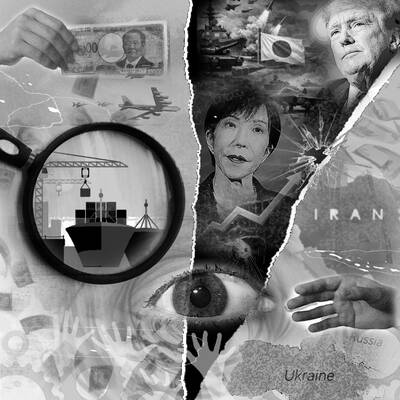
Japan’s imminent easing of arms export rules has sparked strong interest from Warsaw to Manila, Reuters reporting found, as US President Donald Trump wavers on security commitments to allies, and the wars in Iran and Ukraine strain US weapons supplies. Japanese Prime Minister Sanae Takaichi’s ruling party approved the changes this week as she tries to invigorate the pacifist country’s military industrial base. Her government would formally adopt the new rules as soon as this month, three Japanese government officials told Reuters. Despite largely isolating itself from global arms markets since World War II, Japan spends enough on its own
On March 31, the South Korean Ministry of Foreign Affairs released declassified diplomatic records from 1995 that drew wide domestic media attention. One revelation stood out: North Korea had once raised the possibility of diplomatic relations with Taiwan. In a meeting with visiting Chinese officials in May 1995, as then-Chinese president Jiang Zemin (江澤民) prepared for a visit to South Korea, North Korean officials objected to Beijing’s growing ties with Seoul and raised Taiwan directly. According to the newly released records, North Korean officials asked why Pyongyang should refrain from developing relations with Taiwan while China and South Korea were expanding high-level


 RSS
RSS