


Here’s a good tip. If you want to win an argument or debate, draw your opponent into discussing a subject of your own choosing, confining their ideas to parameters you yourself have set. A good example of this is the drawn-out debate on “two interpretations of the Constitution” and “a constitutional one China” that the Democratic Progressive Party (DPP) has been engaged in of late. I would say that the party has clearly allowed itself to fall into the trap.
Now that the five special municipality elections are over, the Chinese Communist Party (CCP) and the Chinese Nationalist Party (KMT) have turned their attention, in a bid for unification, to the presidential election next year. The first salvo came in the form of advice to the DPP, graciously given and channeled through the pro-unification media in Taiwan. The two parties said that if the DPP wanted to get back in power, it would need to secure the approval of the electorate. This was by way of promoting the Economic Cooperation Framework Agreement (ECFA), something they themselves consider to be a kind of cure-all for Taiwan’s economic problems. At the same time, they reminded the DPP that the rise of China was a fact it would have to face up to at some point, that it could not avoid having a cross-strait policy and that it might even be the difference between victory and defeat in next year’s election.
The so-called “1992 consensus” — the idea that there is “one China,” with each side free to interpret what this “one China” means — they said is a prerequisite for dealing with China and if the DPP continues to deny the existence of this consensus, it would have to come up with a solution for the cross-strait policy impasse. In short, if the DPP fails to offer an alternative, it will be very difficult for the party to return to power next year, or so their argument goes.
“Two interpretations of the Constitution” is the DPP’s answer to the debate formulated by the KMT and CCP. It is the “alternative plan” that it has come up with — the result of much head-scratching and brain-storming. The party is laboring under the delusion of being constructive, building a tower of its own design and locking itself in. That tower already has a name. It is called “one China.” I’m sure the CCP is observing all this, lips parted in a smile, because it is a tower that it wanted built anyway.
If the DPP uses the idea of “a constitutional one China” as a prerequisite to dealing with China, that idea will become set in stone and it will be impossible to change any “one China” clauses. This will be a significant victory for supporters of unification.
The pan-greens have to realize that the pan-blues’ challenge for them to come up with an alternative approach is, in itself, a trap. If they engage them on these terms, they will be caught in a trap of their own making. It’s also worth bearing in mind that there is no such thing as the “1992 consensus.” It doesn’t exist.
The very idea that “one China, with each side having its own interpretation” forms the basis for cross-strait relations is a conceptual trap cleverly concocted by the CCP and the KMT. First, President Ma Ying-jeou (馬英九) invites DPP Chairperson Tsai Ing-wen (蔡英文) to state her position on the proposition at hand. Next, Association for Relations Across the Taiwan Strait Chairman Chen Yunlin (陳雲林) ups the ante with the threat that, without the “1992 consensus,” Beijing might have to rethink its current Taiwan policy.
The reality is that Taiwan and China were already communicating back during the -administration of former president Lee Teng-hui (李登輝) and didn’t need the “1992 consensus.” Moreover, didn’t trade between China and Taiwan really take off under the administration of former president Chen Shui-bian (陳水扁), with his “one country on either side” formula? What is it with all this talk of “prerequisites” since Ma took office? We are the only ones who stand to lose anything by continuing down this road.
Our approach and our discourse on cross-strait relations have been quite clear right from the start. We want peace, we want to participate as world citizens and we want to engage other countries in the world. At the same time, we want to work together with China on the common goal of having stable relations. Of course we see China as an important market, but we also want to be able to trade with the rest of the world too, for the good of our citizens. This is what we were doing in the past, before 2008, so why do we need to have a consensus now?
We need to escape from this trap laid for us by the CCP and the KMT to have the freedom to set our own vision.
Huang Tien-lin is a former national policy adviser.
TRANSLATED BY PAUL COOPER
Minister of Labor Hung Sun-han (洪申翰) on April 9 said that the first group of Indian workers could arrive as early as this year as part of a memorandum of understanding (MOU) between the Taipei Economic and Cultural Center in India and the India Taipei Association. Signed in February 2024, the MOU stipulates that Taipei would decide the number of migrant workers and which industries would employ them, while New Delhi would manage recruitment and training. Employment would be governed by the laws of both countries. Months after its signing, the two sides agreed that 1,000 migrant workers from India would
In recent weeks, Taiwan has witnessed a surge of public anxiety over the possible introduction of Indian migrant workers. What began as a policy signal from the Ministry of Labor quickly escalated into a broader controversy. Petitions gathered thousands of signatures within days, political figures issued strong warnings, and social media became saturated with concerns about public safety and social stability. At first glance, this appears to be a straightforward policy question: Should Taiwan introduce Indian migrant workers or not? However, this framing is misleading. The current debate is not fundamentally about India. It is about Taiwan’s labor system, its
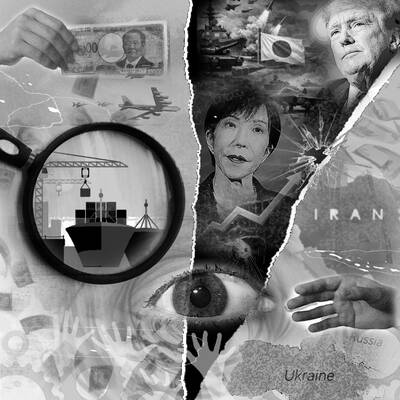
Japan’s imminent easing of arms export rules has sparked strong interest from Warsaw to Manila, Reuters reporting found, as US President Donald Trump wavers on security commitments to allies, and the wars in Iran and Ukraine strain US weapons supplies. Japanese Prime Minister Sanae Takaichi’s ruling party approved the changes this week as she tries to invigorate the pacifist country’s military industrial base. Her government would formally adopt the new rules as soon as this month, three Japanese government officials told Reuters. Despite largely isolating itself from global arms markets since World War II, Japan spends enough on its own
On March 31, the South Korean Ministry of Foreign Affairs released declassified diplomatic records from 1995 that drew wide domestic media attention. One revelation stood out: North Korea had once raised the possibility of diplomatic relations with Taiwan. In a meeting with visiting Chinese officials in May 1995, as then-Chinese president Jiang Zemin (江澤民) prepared for a visit to South Korea, North Korean officials objected to Beijing’s growing ties with Seoul and raised Taiwan directly. According to the newly released records, North Korean officials asked why Pyongyang should refrain from developing relations with Taiwan while China and South Korea were expanding high-level


 RSS
RSS