


Democratic Progressive Party (DPP) Chairperson Tsai Ing-wen (蔡英文) seems to have thrown the towel in the political boxing ring when it comes to opposing economic integration with China.
In the months before the Chinese Nationalist Party (KMT)-dominated government signed the Economic Cooperation Framework Agreement (ECFA) with China, Tsai was a loud voice of opposition to the trade pact. She rightfully stated that the agreement — the same as the Closer Economic Partnership Agreement between China and Hong Kong in all but name — would likely lead to economic unification with China, but she has since fallen silent.
The ECFA has been signed, it is coming into force, economic integration is speeding up and Taiwan is likely to be engulfed by its behemoth neighbor one corporation, one firm, one consumer at a time. After its economy has been swallowed, the country will find itself unable to claim that it is anything but a renegade province of China, something Beijing has been claiming for the past 60 years.
However, just because that is the most likely scenario, should the opposition keep silent? Should Tsai give up because she has lost the battle? Should she stop being the voice for rights of workers, those workers who will lose their jobs because consumers will inevitably choose cheap Chinese products flooding the market over more expensive, locally made goods? Whatever happened to “when the going gets tough, the tough get going”?
As leader of the largest opposition party, Tsai told her supporters on Wednesday to refrain from protesting during next week’s visit by Association for Relations Across the Taiwan Strait Chairman Chen Yunlin (陳雲林). According to DPP spokesperson Cheng Wen-tsang (鄭文燦), Tsai told party officials that Chen’s visits had become “routine business” and therefore there was no need to stage street protests while he meets with Straits Exchange Foundation officials.
It seems that Tsai is saying that because selling out Taiwan is now routine, there is no need to oppose it anymore.
This is not the first instance that Tsai has shown a weak spine when it comes to the KMT’s breakneck plan to unify with China. In the run-up to the special municipality elections last month, in which she was the DPP’s Sinbei mayoral candidate, Tsai refrained from discussing the ECFA, instead hinting that she would not necessarily push the party to repeal it if the DPP were to win the presidency in 2012. That was shortly after the April 25 debate with President Ma Ying-jeou (馬英九) in which she painted the ECFA as a flimsy cover for unification with China.
Just before her change of course, Tsai had rightly argued that the ECFA would cost jobs and reduce salaries, increase capital outflows, lead to a brain drain to China and cause an influx of white-collar workers from China.
Those arguments are all still true, but who is championing them? The only opposition figure who seems willing to step into the ring to stop Taiwan’s plummet down China’s throat is former president Lee Teng-hui (李登輝), but he is almost 90 years old. Lee already did his part to guarantee Taiwan’s future as a sovereign nation. Why can’t those who follow in his footsteps live up to what he created? Is it that the DPP is so ashamed by the fall of Chen Shui-bian (陳水扁) that it is now unwilling to live up to its own ideals?
Minister of Labor Hung Sun-han (洪申翰) on April 9 said that the first group of Indian workers could arrive as early as this year as part of a memorandum of understanding (MOU) between the Taipei Economic and Cultural Center in India and the India Taipei Association. Signed in February 2024, the MOU stipulates that Taipei would decide the number of migrant workers and which industries would employ them, while New Delhi would manage recruitment and training. Employment would be governed by the laws of both countries. Months after its signing, the two sides agreed that 1,000 migrant workers from India would
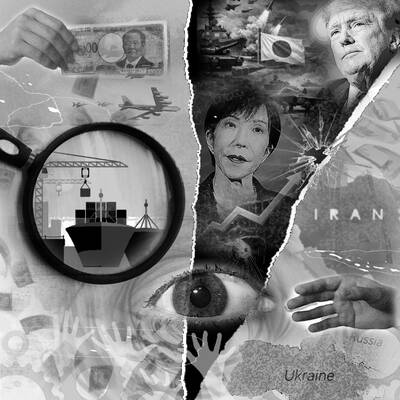
Japan’s imminent easing of arms export rules has sparked strong interest from Warsaw to Manila, Reuters reporting found, as US President Donald Trump wavers on security commitments to allies, and the wars in Iran and Ukraine strain US weapons supplies. Japanese Prime Minister Sanae Takaichi’s ruling party approved the changes this week as she tries to invigorate the pacifist country’s military industrial base. Her government would formally adopt the new rules as soon as this month, three Japanese government officials told Reuters. Despite largely isolating itself from global arms markets since World War II, Japan spends enough on its own
On March 31, the South Korean Ministry of Foreign Affairs released declassified diplomatic records from 1995 that drew wide domestic media attention. One revelation stood out: North Korea had once raised the possibility of diplomatic relations with Taiwan. In a meeting with visiting Chinese officials in May 1995, as then-Chinese president Jiang Zemin (江澤民) prepared for a visit to South Korea, North Korean officials objected to Beijing’s growing ties with Seoul and raised Taiwan directly. According to the newly released records, North Korean officials asked why Pyongyang should refrain from developing relations with Taiwan while China and South Korea were expanding high-level
When 17,000 troops from the US, the Philippines, Australia, Japan, Canada, France and New Zealand spread across the Philippine archipelago for the Balikatan military exercise, running from tomorrow through May 8, the official language would be about interoperability, readiness and regional peace. However, the strategic subtext is becoming harder to ignore: The exercises are increasingly about the military geography around Taiwan. Balikatan has always carried political weight. This year, however, the exercise looks different in ways that matter not only to Manila and Washington, but also to Taipei. What began in 2023 as a shift toward a more serious deterrence posture


 RSS
RSS