


While local media outlets over the past week focused on the controversial bill to reform the premium scale of the National Health Insurance (NHI) scheme in the hopes of rescuing the debt-ridden system, few noticed a number of proposals at the very bottom of the legislature’s agenda — proposals that might have significant symbolic meaning.
Out of the 57 proposals that should have been reviewed over the past week, two were proposed to voice support for human rights, particularly those of jailed Chinese activist Liu Xiaobo (劉曉波), who won this year’s Nobel Peace Prize, and other dissidents in China.
The Chinese Nationalist Party’s (KMT) proposal, if passed, would “urge” China to “be nice to dissidents,” and to let Liu “out of prison as soon as possible.”
The proposal also called on China to ratify the International Covenant on Civil and Political Rights as soon as possible, and to carry out political reforms and democratization.
The proposal, which was initiated by the Democratic Progressive Party (DPP), would require a binding legislative resolution obliging the administration to issue a formal request for the release of Liu and another request for ratification of the international covenant and for “concrete measures” taken by China to improve its human rights conditions.
The fact that legislators were preoccupied with political interests when wrangling over the NHI bill this week, while failing to pass the two proposals before Friday — International Human Rights Day — deserves serious scrutiny.
Neither party put forth any motion to move the two proposals from the very bottom of the agenda to the top.
One can’t help but wonder what could have been their motives.
The proposals, though similar, would have conveyed meanings of different magnitude, if they had cleared the legislative floor in time.
The KMT’s proposal would demonstrate the pubic’s concerns, though it would have been weaker because of its wording — pointing to Liu’s and other Chinese dissidents’ human rights conditions and expressing the public’s hope that China will democratize within a short period of time.
The DPP’s proposal would have symbolized pressure from the general public to compel the KMT government to show support for Liu and other dissenters in formal documents.
Moreover, the DPP’s proposal would have also pressured the government to tell Beijing loudly and clearly that Taiwan would like to see concrete actions taken to protect human rights in China instead of issuing a simple call to set Liu free.
Legislators gave up a very good opportunity to give the two proposals momentum by making them binding legislative resolutions, especially when China blocked Liu or any close family member from receiving the Nobel Peace Prize in Oslo on Friday, as well as blocking 1.3 billion people in China from accessing reports of the award ceremony.
When awarding the Asia Democracy Award to India’s Rescue Foundation on Friday, President Ma Ying-jeou (馬英九) said: “Our concern for human rights transcends nationality and borders.”
What he should have also said was: “Our concern for human rights goes beyond political division” and accounted for the reasons why the two human rights proposals, which stand for a universal value and should not need further debate, were put on hold, buried under piles of bills.
Minister of Labor Hung Sun-han (洪申翰) on April 9 said that the first group of Indian workers could arrive as early as this year as part of a memorandum of understanding (MOU) between the Taipei Economic and Cultural Center in India and the India Taipei Association. Signed in February 2024, the MOU stipulates that Taipei would decide the number of migrant workers and which industries would employ them, while New Delhi would manage recruitment and training. Employment would be governed by the laws of both countries. Months after its signing, the two sides agreed that 1,000 migrant workers from India would
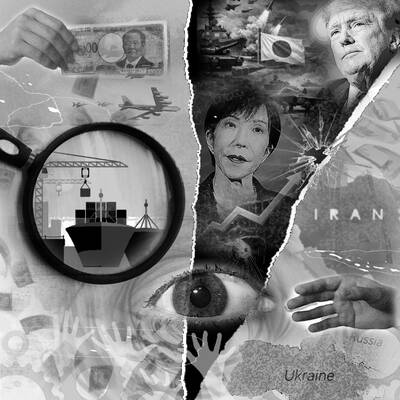
Japan’s imminent easing of arms export rules has sparked strong interest from Warsaw to Manila, Reuters reporting found, as US President Donald Trump wavers on security commitments to allies, and the wars in Iran and Ukraine strain US weapons supplies. Japanese Prime Minister Sanae Takaichi’s ruling party approved the changes this week as she tries to invigorate the pacifist country’s military industrial base. Her government would formally adopt the new rules as soon as this month, three Japanese government officials told Reuters. Despite largely isolating itself from global arms markets since World War II, Japan spends enough on its own
On March 31, the South Korean Ministry of Foreign Affairs released declassified diplomatic records from 1995 that drew wide domestic media attention. One revelation stood out: North Korea had once raised the possibility of diplomatic relations with Taiwan. In a meeting with visiting Chinese officials in May 1995, as then-Chinese president Jiang Zemin (江澤民) prepared for a visit to South Korea, North Korean officials objected to Beijing’s growing ties with Seoul and raised Taiwan directly. According to the newly released records, North Korean officials asked why Pyongyang should refrain from developing relations with Taiwan while China and South Korea were expanding high-level
When 17,000 troops from the US, the Philippines, Australia, Japan, Canada, France and New Zealand spread across the Philippine archipelago for the Balikatan military exercise, running from tomorrow through May 8, the official language would be about interoperability, readiness and regional peace. However, the strategic subtext is becoming harder to ignore: The exercises are increasingly about the military geography around Taiwan. Balikatan has always carried political weight. This year, however, the exercise looks different in ways that matter not only to Manila and Washington, but also to Taipei. What began in 2023 as a shift toward a more serious deterrence posture


 RSS
RSS