


To the excitement of democracies and democracy activists around the world, Liu Xiaobo (劉曉波), the well-known, currently imprisoned Chinese dissident, was awarded the Nobel Peace Prize last week. In democratic Taiwan, however, President Ma Ying-jeou (馬英九) merely offered a hollow statement saying the award was of historic significance.
In contrast to the US president, the German chancellor, the Japanese prime minister and others who called on the Chinese government to free Liu and allow him to receive the prize in person, Ma needed more than 24 hours to consider his response. Not until the evening after the prize was awarded did he issue a statement expressing a “hope that Liu Xiaobo will be released and allowed to regain his freedom as soon as possible.”
He also said: “I believe the Taiwanese public would be highly appreciative of the Chinese initiative” if Liu were to be released.
What he didn’t say in that strange statement was that if Taiwanese were not highly appreciative of such a move, they would probably also be unlikely to accept Ma’s “eventual unification” or to re-elect him in the 2012 presidential election.
Ma’s response has been met with criticism from all quarters and former president Lee Teng-hui (李登輝) called the statement a case of testing the wind because Ma is always sensitive to which way the wind blows for fear of offending his masters in the Chinese Communist Party (CCP). Another of Ma’s sensitive spots is that he is probably angling for the same award. In November last year, Control Yuan President Wang Chien-shien (王建煊) said that if the cross-strait relationship, which has made such improvements under Ma’s leadership, continues to improve, it would just be a matter of time before the Nobel Peace Prize found its way to Taiwan. Of course he was talking about Ma.
With the prize going to Liu this year, Ma’s chances are obviously deteriorating. In addition, he is trying to use the positive fallout from the cross-strait detente to build political momentum toward winning the prize. Unfortunately for Ma, the fact that the committee gave the prize to Liu makes it obvious that they continue to base their decisions on the universal values of liberty, democracy, human rights and the rule of law rather than on the positive fallout from cross-strait detente aimed at surrendering Taiwan to the CCP.
This insight clearly touched another of Ma’s sensitive spots and rendered him incapable of coming up with a quick response. After regaining his balance, Ma hurried to praise Chinese Premier Wen Jiabao (溫家寶) for his comments about political reform, saying he found them “exciting” because they marked an “historical turning point.”
Tellingly, he did not feel that it was “exciting” that Liu was awarded the peace prize. Maybe he was excited because Wen had touched another of his sensitive spots. Many Chinese, however, feel Wen is just a great actor. Closer observation shows that Wen and Ma are quite similar in their adeptness at superficial displays of mild-mannered, respectful and benevolent behavior aimed at covering up their pretentiousness and insincerity.
Because China is blocking out all news about Liu and the peace prize, Chinese Internet users are coming up with ingenious ways to go around their government censors to spread the news. For example, one user said “Liu Xiaobo has won the Oscar Peace Prize,” thus playing on the similarity between the names of Liu Xiaobo and Chinese actress Liu Xiaoqing (劉曉慶) and replacing “Nobel” with “Oscar.”
After Ma’s latest moment of testing the wind, he delivered an example of bold decisiveness by announcing that he was restoring the presidential advisory human rights commission. I say “restore,” because former president Chen Shui-bian (陳水扁) had established such a commission during his presidency, only to have it dismantled by the pan-blue camp in 2006. Now, however, Ma is joining the tribute to human rights because he is trying to accumulate enough political capital to pave the way for his own Nobel Peace Prize.
Given Ma’s concern over Beijing’s reaction, the logical question to ask is whether Ma’s commitment to human rights is merely for show. Liu Xiaobo remains imprisoned and it doesn’t seem as if China is planning to release him any time soon, which is why the Taiwan Youth Anti-Communist Corps has decided to invite another internationally known human rights activist and Nobel Peace Prize nominee, World Uyghur Congress president Rebiya Kadeer, as an observer to the five special municipality elections next month. Taiwan’s road to democracy is of practical value as a reference for the East Turkestan democracy movement. One can only speculate as to whether this is yet another of Ma’s sensitive spots.
Paul Lin is a Taipei-based political commentator.
TRANSLATED BY PERRY SVENSSON
Minister of Labor Hung Sun-han (洪申翰) on April 9 said that the first group of Indian workers could arrive as early as this year as part of a memorandum of understanding (MOU) between the Taipei Economic and Cultural Center in India and the India Taipei Association. Signed in February 2024, the MOU stipulates that Taipei would decide the number of migrant workers and which industries would employ them, while New Delhi would manage recruitment and training. Employment would be governed by the laws of both countries. Months after its signing, the two sides agreed that 1,000 migrant workers from India would
In recent weeks, Taiwan has witnessed a surge of public anxiety over the possible introduction of Indian migrant workers. What began as a policy signal from the Ministry of Labor quickly escalated into a broader controversy. Petitions gathered thousands of signatures within days, political figures issued strong warnings, and social media became saturated with concerns about public safety and social stability. At first glance, this appears to be a straightforward policy question: Should Taiwan introduce Indian migrant workers or not? However, this framing is misleading. The current debate is not fundamentally about India. It is about Taiwan’s labor system, its
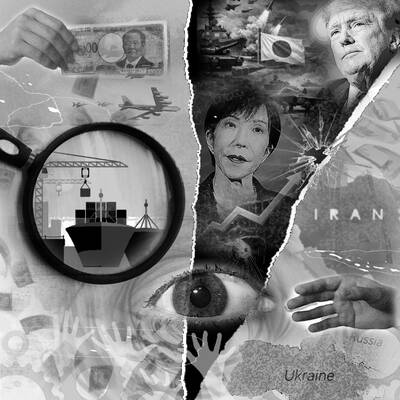
Japan’s imminent easing of arms export rules has sparked strong interest from Warsaw to Manila, Reuters reporting found, as US President Donald Trump wavers on security commitments to allies, and the wars in Iran and Ukraine strain US weapons supplies. Japanese Prime Minister Sanae Takaichi’s ruling party approved the changes this week as she tries to invigorate the pacifist country’s military industrial base. Her government would formally adopt the new rules as soon as this month, three Japanese government officials told Reuters. Despite largely isolating itself from global arms markets since World War II, Japan spends enough on its own
On March 31, the South Korean Ministry of Foreign Affairs released declassified diplomatic records from 1995 that drew wide domestic media attention. One revelation stood out: North Korea had once raised the possibility of diplomatic relations with Taiwan. In a meeting with visiting Chinese officials in May 1995, as then-Chinese president Jiang Zemin (江澤民) prepared for a visit to South Korea, North Korean officials objected to Beijing’s growing ties with Seoul and raised Taiwan directly. According to the newly released records, North Korean officials asked why Pyongyang should refrain from developing relations with Taiwan while China and South Korea were expanding high-level


 RSS
RSS