


Former independent legislator Li Ao (李敖) might have dropped a bombshell when he predicted on Wednesday that the Chinese Nationalist Party (KMT) could lose four out of the five mayoral seats up for grabs in November’s special municipality elections.
Li might be exaggerating the plight of the KMT in a bid to gain more media exposure, but his nightmare scenario could become reality as Taipei Mayor Hau Lung-bin (郝龍斌) struggles on a daily basis to stop the controversy surrounding the procurements of plants, flowers and facilities for the Taipei International Flora Expo and the Xinsheng Overpass from escalating.
Hau probably never anticipated that the flora expo — an event he thought would lift the city’s international profile and serve as a major boost to his re-election bid — could become a roadblock to his ambitions.
While Hau, the Taipei City Government and KMT politicians defended the city’s procurement process, arguing that the unreasonably high prices for the items were actually reasonable because of the species obtained or the aesthetic appeal, they failed to address the core problem behind the controversy.
The shocking discrepancies in the prices exposed city officials’ inability to be responsible caretakers of the public’s interests. The issue was never how much a single sweet potato leaf or cabbage cost, but why the city government allowed the discrepancies to happen in the first place.
Instead of calling a press conference to say that some of the prices for the exposition were incredibly high because the items were being used to create works of art, the city government should have asked itself why it did not purchase more reasonably priced creations from other artists if the procurement was simply meant to showcase local creativity.
The fact that the items might be art does not justify the city government’s obvious over-spending, and its inane defence only demonstrated how obliviousness it is to the public’s feelings.
Taiwan Thinktank’s latest survey showed close to 60 percent of those polled did not accept the city government’s attempt to rationalize the price discrepancies, while up to 86 percent of the respondents believed the flora expo controversy would cost Hau his re-election. In addition, as many as 78 percent of the respondents said Hau’s handling of the crisis showed that the mayor did not understand the feelings of ordinary people.
The Chinese-language China Times’ latest opinion poll also showed that Hau has fallen behind his Democratic Progressive Party rival Su Tseng-chang (蘇貞昌) — for the first time — by 2 percentage points, with the election just 68 days away.
The city government and KMT politicians should have considered these sentiments as warning signals, and instead of accusing the opposition of trying to stir-up trouble, they should have humbly admitted the city government’s negligence and pledged serious reform.
At the end of the day, what matters to residents of the city, and the public at large, is whether Hau, as supervisor of every branch of the city government, and his team care enough to spend every penny of taxpayers’ hard-earned money wisely and on projects that really matter.
The KMT pledged after winning the presidency and a majority of legislative seats in 2008 to be humble and “have empathy for the pain of the people.”
The KMT should never forget that all eyes have been on it since the day it made that promise.
Minister of Labor Hung Sun-han (洪申翰) on April 9 said that the first group of Indian workers could arrive as early as this year as part of a memorandum of understanding (MOU) between the Taipei Economic and Cultural Center in India and the India Taipei Association. Signed in February 2024, the MOU stipulates that Taipei would decide the number of migrant workers and which industries would employ them, while New Delhi would manage recruitment and training. Employment would be governed by the laws of both countries. Months after its signing, the two sides agreed that 1,000 migrant workers from India would
In recent weeks, Taiwan has witnessed a surge of public anxiety over the possible introduction of Indian migrant workers. What began as a policy signal from the Ministry of Labor quickly escalated into a broader controversy. Petitions gathered thousands of signatures within days, political figures issued strong warnings, and social media became saturated with concerns about public safety and social stability. At first glance, this appears to be a straightforward policy question: Should Taiwan introduce Indian migrant workers or not? However, this framing is misleading. The current debate is not fundamentally about India. It is about Taiwan’s labor system, its
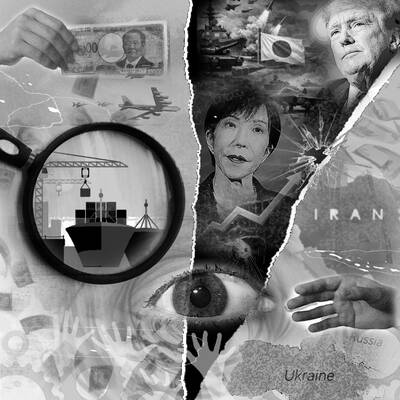
Japan’s imminent easing of arms export rules has sparked strong interest from Warsaw to Manila, Reuters reporting found, as US President Donald Trump wavers on security commitments to allies, and the wars in Iran and Ukraine strain US weapons supplies. Japanese Prime Minister Sanae Takaichi’s ruling party approved the changes this week as she tries to invigorate the pacifist country’s military industrial base. Her government would formally adopt the new rules as soon as this month, three Japanese government officials told Reuters. Despite largely isolating itself from global arms markets since World War II, Japan spends enough on its own
On March 31, the South Korean Ministry of Foreign Affairs released declassified diplomatic records from 1995 that drew wide domestic media attention. One revelation stood out: North Korea had once raised the possibility of diplomatic relations with Taiwan. In a meeting with visiting Chinese officials in May 1995, as then-Chinese president Jiang Zemin (江澤民) prepared for a visit to South Korea, North Korean officials objected to Beijing’s growing ties with Seoul and raised Taiwan directly. According to the newly released records, North Korean officials asked why Pyongyang should refrain from developing relations with Taiwan while China and South Korea were expanding high-level


 RSS
RSS