


The media are increasingly expressing worries about the growing poverty gap in Taiwan. They bemoan the fact that some people are enjoying the fruits of the economic recovery, while others have gained nothing. In contrast to the extravagant lifestyles of the wealthy elite, the poor cannot even afford a nutritious meal for lunch, they say.
Media commentators say one of the main reasons for the growing wealth gap is that triangular trade, in which orders are taken in Taiwan for goods made abroad (mostly in China), does not improve Taiwan’s employment situation or stimulate domestic demand. As companies move their production bases to China, there are fewer and fewer job opportunities for workers in Taiwan. As a result, the poor keep getting poorer, while only a few factory owners and traders reap the profits.
As long ago as 2000, skeptical commentators, such as myself, warned repeatedly that the trend toward taking orders in Taiwan for goods made in China was likely to have damaging economic and social results for Taiwan. However, China-friendly academics and media outlets took a different view, the foremost purveyor being the Chinese-language Commercial Times.
In 2002, the “order from Taiwan, made in China” business model had developed to the extent that 19.28 percent of all production by Taiwanese companies was carried out abroad. The Commercial Times said there was no need to panic, as this was a sign of industrial internationalization and was a good thing. The paper assured its readers that, while some low-added-value processing had moved to China, core management operations would still be carried out in Taiwan.
“Isn’t this exactly the result we wanted?” the paper asked.
Politicians who were convinced by such arguments came up with fantastic schemes like turning Taiwan into a “global logistics hub,” and they proposed offering tax incentives to operations centers. This, of course, amounted to encouraging companies to move their production bases to China.
Since that time, this business model has become even more widespread. Now overseas production accounts for more than 50 percent of the total output of Taiwanese manufacturers, compared with just 13 percent in 2000. Over the same period, real wages have fallen back to the level they were 13 years ago and more than 260,000 people now live below the poverty line.
Now that the harm has been done, the belated show of concern by the Commercial Times is not much help. Let’s hope that from now on they will discard their greater-China ideology and instead focus on Taiwan and its more than 20 million inhabitants.
Ten years ago the paper’s contributors portrayed the order from Taiwan, made in China business model as a wonderful thing. In reality, we have all tasted the bitter fruit of this policy —— climbing unemployment, shrinking pay packets and a floundering economy.
A decade later, history seems to be repeating itself; Taiwan signed the Economic Cooperation Framework Agreement (ECFA) with China in June.
Given the great difference in size between Taiwan’s economy and that of China, this kind of economic integration will obviously make Taiwan into just a Chinese island. Still, those who supported the order from Taiwan, made in China business model now support the ECFA and insist that the pact heralds “a golden decade for Taiwan.”
Will the ECFA really usher in a golden decade for this country? We need only look at what became of those earlier promises to see what the future has in store.
Huang Tien-lin is a former national policy adviser to the president.
TRANSLATED BY JULIAN CLEGG
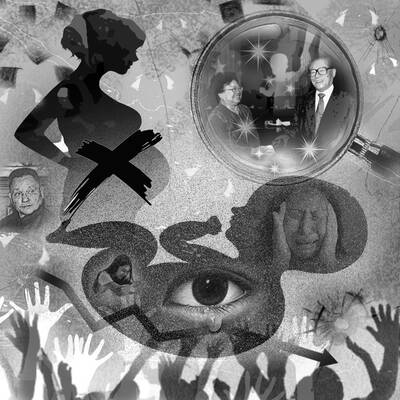
Jan. 1 marks a decade since China repealed its one-child policy. Just 10 days before, Peng Peiyun (彭珮雲), who long oversaw the often-brutal enforcement of China’s family-planning rules, died at the age of 96, having never been held accountable for her actions. Obituaries praised Peng for being “reform-minded,” even though, in practice, she only perpetuated an utterly inhumane policy, whose consequences have barely begun to materialize. It was Vice Premier Chen Muhua (陳慕華) who first proposed the one-child policy in 1979, with the endorsement of China’s then-top leaders, Chen Yun (陳雲) and Deng Xiaoping (鄧小平), as a means of avoiding the
The immediate response in Taiwan to the extraction of Venezuelan President Nicolas Maduro by the US over the weekend was to say that it was an example of violence by a major power against a smaller nation and that, as such, it gave Chinese President Xi Jinping (習近平) carte blanche to invade Taiwan. That assessment is vastly oversimplistic and, on more sober reflection, likely incorrect. Generally speaking, there are three basic interpretations from commentators in Taiwan. The first is that the US is no longer interested in what is happening beyond its own backyard, and no longer preoccupied with regions in other
A recent piece of international news has drawn surprisingly little attention, yet it deserves far closer scrutiny. German industrial heavyweight Siemens Mobility has reportedly outmaneuvered long-entrenched Chinese competitors in Southeast Asian infrastructure to secure a strategic partnership with Vietnam’s largest private conglomerate, Vingroup. The agreement positions Siemens to participate in the construction of a high-speed rail link between Hanoi and Ha Long Bay. German media were blunt in their assessment: This was not merely a commercial win, but has symbolic significance in “reshaping geopolitical influence.” At first glance, this might look like a routine outcome of corporate bidding. However, placed in

The last foreign delegation Nicolas Maduro met before he went to bed Friday night (January 2) was led by China’s top Latin America diplomat. “I had a pleasant meeting with Qiu Xiaoqi (邱小琪), Special Envoy of President Xi Jinping (習近平),” Venezuela’s soon-to-be ex-president tweeted on Telegram, “and we reaffirmed our commitment to the strategic relationship that is progressing and strengthening in various areas for building a multipolar world of development and peace.” Judging by how minutely the Central Intelligence Agency was monitoring Maduro’s every move on Friday, President Trump himself was certainly aware of Maduro’s felicitations to his Chinese guest. Just


 RSS
RSS