


Former president Chen Shui-bian (陳水扁) has recently heard the verdict of his second trial, and despite being found guilty, both he and his wife, Wu Shu-jen (吳淑珍), have now had their life sentences reduced to 20 years. In Chen’s case, the key was the Taiwan High Court’s more forgiving interpretation of his use of state funds. The court ruled that although Chen had spent state funds, and had also used some diplomatic funds earmarked for discretionary use, irregularities in the claims alone did not necessarily constitute embezzlement or corruption. That he did so under false pretenses and under a false name amounted to no more than falsifying documents.
There is a stark contrast between this High Court ruling and the one handed down by the Taipei District Court to President Ma Ying-jeou (馬英九), on trial for the improper use of special expenses when he was Taipei City mayor. At the time, the District Court ruled that Ma had not abused the special expenses fund, despite procedural irregularities for which his then-secretary Yu Wen (余文) was charged with falsifying documents. This High Court ruling has now set a precedent, both for the name of the crime and the maximum punishment applicable that will govern sentencing on thousands of officials, big and small, accused in the future of corruption for abusing special funds. Civil servants get no more than seven years for falsifying documents, so it is quite a leap from this to hand down a life sentence for corruption in the service of the state. This is the reason the High Court reacted to the different treatment given to Ma and Chen.
If you read the actual text of the ruling, both the judges’ reasoning and the evidence backing it up are laid out thoroughly and clearly. At the time, the special prosecutors were under a lot of pressure to get a conviction. The charges read out were moralistic in tone, and there were occasions when the prosecution leaked details to the press, adding pressure to convict.
The defendant had effectively been found guilty in the court of public opinion well before the official verdict was handed down. Somehow we found ourselves in a situation where one defendant, Ma, could be found not guilty, and another, Chen, could be given life, because of different interpretations of how the two men had used state funds.
The special prosecutors had accused Chen of embezzling diplomatic funds intended for discretionary expenses, and tried to establish the fact that tuition fees for his son, Chen Chih-chung (陳致中), had come from those funds. The High Court found, however, that the evidence they provided was full of inconsistencies and without basis. It is no surprise, when the High Court handed down this ruling, that Chen declared his faith in the law had been rekindled.
Although the embezzlement verdict was overruled, the High Court did uphold the original decision on three of the other major convictions for graft, including the Longtan land acquisition and Nangang Exhibition Hall cases, as well as the accusation that he accepted a NT$10 million (US$310,000) bribe from former Taipei Financial Center Corp chairwoman Diana Chen (陳敏薰) to secure her the position of chairwoman of Taipei 101.
There are still many questions surrounding whether or not Diana Chen did bribe her way into her new job, but the other two cases are indeed very damaging to Chen Shui-bian and Wu’s defense, as the people involved have either dropped their appeals or already entered into plea bargaining. In fact, Chen Shui-bian had nothing to do with the Nangang case, and will contest this point in the future, but he is looking at eight years for the Diana Chen bribery case and 12 for the Longtan scandal.
As to whether Chen Shui-bian should remain in custody or be granted bail, political considerations aside, there should not really be any difficulty, at least in terms of due process. There is already a very strict interpretation in place for keeping people accused of serious crimes in custody, and so the seriousness of the crime should not be offered as reason for continued detention.
Also, as this third trial is to be a trial of law as opposed to a trial of fact, there is no reason to take precautions to prevent Chen Shui-bian from trying to collude with others or tamper with the evidence. The sole reason for keeping him in custody would be if he is considered to be a flight risk, something which most people agree upon, regardless of political affiliation.
For one, the court can put him under observation so that he does not try to flee the country, but there is also the fact that he is a well-known figure, and the high-profile nature of his case means that he would have nowhere to hide, anywhere in the world, should he attempt to make a break for it.
There is therefore no reason to keep him locked up. If he did get out, he could focus on preparing his appeal. He has said that he is in cramped quarters, with hardly any room to write his petition against the conviction, while the special prosecutors have huge resources at their disposal to prepare their refutation. In conditions such as these, how is he to have a fair chance when it comes to fighting his case in court?
Now that the verdict of the second trial has been handed down, the Chen Shui-bian case is coming to a close. As far as the political fall-out of the drama is concerned, at least after last year’s county commissioner elections, the scandal is no longer really having any influence on the way people are voting. Voters have moved on, and are now more interested in Ma’s performance, record high unemployment and the question of whether Taiwan is to become further enmeshed in China’s economic sphere.
If Chen Shui-bian is kept behind bars the issue is unlikely to go away, and it could further stoke people’s doubts and suspicions about the judiciary. The Taiwan High Court has already delivered a commendable ruling, and it would make sense to now go further and let him out on bail. This would restore the image of the judiciary, and allow politicians to lay the issue to rest when the final verdict is delivered, regardless of their political hue.
Liang Wen-chieh is editor of the New Society Bi-Monthly.
TRANSLATED BY PAUL COOPER
Minister of Labor Hung Sun-han (洪申翰) on April 9 said that the first group of Indian workers could arrive as early as this year as part of a memorandum of understanding (MOU) between the Taipei Economic and Cultural Center in India and the India Taipei Association. Signed in February 2024, the MOU stipulates that Taipei would decide the number of migrant workers and which industries would employ them, while New Delhi would manage recruitment and training. Employment would be governed by the laws of both countries. Months after its signing, the two sides agreed that 1,000 migrant workers from India would
In recent weeks, Taiwan has witnessed a surge of public anxiety over the possible introduction of Indian migrant workers. What began as a policy signal from the Ministry of Labor quickly escalated into a broader controversy. Petitions gathered thousands of signatures within days, political figures issued strong warnings, and social media became saturated with concerns about public safety and social stability. At first glance, this appears to be a straightforward policy question: Should Taiwan introduce Indian migrant workers or not? However, this framing is misleading. The current debate is not fundamentally about India. It is about Taiwan’s labor system, its
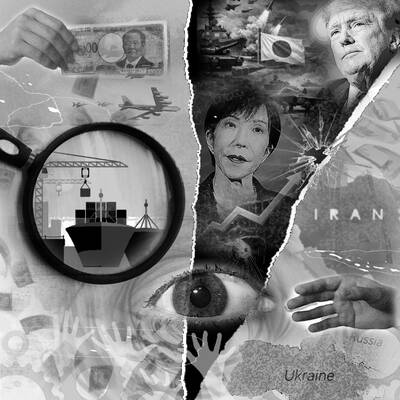
Japan’s imminent easing of arms export rules has sparked strong interest from Warsaw to Manila, Reuters reporting found, as US President Donald Trump wavers on security commitments to allies, and the wars in Iran and Ukraine strain US weapons supplies. Japanese Prime Minister Sanae Takaichi’s ruling party approved the changes this week as she tries to invigorate the pacifist country’s military industrial base. Her government would formally adopt the new rules as soon as this month, three Japanese government officials told Reuters. Despite largely isolating itself from global arms markets since World War II, Japan spends enough on its own
On March 31, the South Korean Ministry of Foreign Affairs released declassified diplomatic records from 1995 that drew wide domestic media attention. One revelation stood out: North Korea had once raised the possibility of diplomatic relations with Taiwan. In a meeting with visiting Chinese officials in May 1995, as then-Chinese president Jiang Zemin (江澤民) prepared for a visit to South Korea, North Korean officials objected to Beijing’s growing ties with Seoul and raised Taiwan directly. According to the newly released records, North Korean officials asked why Pyongyang should refrain from developing relations with Taiwan while China and South Korea were expanding high-level


 RSS
RSS