


On June 1 and June 2, Hong Kong’s Chu Hai College of Higher Education sponsored a conference titled “Cross-Strait and Taiwan-Hong Kong Relations” and invited academics and politicos from Taiwan, China and Hong Kong to attend. There were more than 12 participants from Taiwan — and some were quite critical of China’s cross-strait policy and the intention of the Chinese Nationalist Party (KMT) regime to sign an economic cooperation framework agreement with China.
As a courtesy to the conference participants, the head of the Constitutional and Mainland Affairs Bureau of the Hong Kong Special Administration Region (HKSAR) hosted a welcome luncheon on June 2. Seated next to the bureau chief was Hsu Hsin-liang (許信良), a former chairman of the Democratic Progressive Party (DPP). Ironically, Hsu was interrogated by Hong Kong immigration officers for more than an hour upon his arrival on May 31, despite the fact he was invited as one of the keynote speakers and had a valid visa to enter the territory.
During the conference, a Taiwanese participant used that episode to call attention to the fact that many DPP members who hold elected or official positions remain blacklisted by HKSAR authorities. He suggested Hong Kong officials study Chinese President Hu Jintao’s (胡錦濤) “Six-Point Proposal” on Taiwan and stick to Beijing’s policy guidelines.
It was to be expected that participants from China would parrot the Chinese Communist Party (CCP) line and faithfully defend Beijing’s official position on cross-strait relations. In so doing, however, they directly contradicted and President Ma Ying-jeou’s (馬英九) policy. For instance, a senior researcher from the Shanghai Institutes for International Studies defended the failure of Chen Yunlin (陳雲林), head of the Association of Relations Across the Taiwan Straits, to address Ma as “President Ma” in a meeting in December 2008 by saying “there is only one China, and that is the People’s Republic of China,” while “the government of Taiwan is China’s local government.”
The researcher also stated that the Chinese government has never accepted the so-called “1992 consensus” — coined by former National Security Council secretary-general Su Chi (蘇起) to describe a situation where each side agreed retain its own interpretation of “one China” — thereby negating the basic premise of Ma’s open-door policy of friendship toward China.
In order to placate the Taiwanese public, which has been highly critical of his tilt toward China, Ma claims that his cross-strait policy is based on the guideline of “three noes” — no independence, no unification and no use of force — and that cross-strait interaction is to proceed on the principle of “economics first, politics later.”
Beijing has been very unhappy with this and Chinese officials and experts have openly said so. Several months ago, a Chinese military officer described Ma’s “three noes” as a scheme for “peaceful division,” to perpetuate the status quo.
Academics from the Chinese Academy of Social Sciences complained loudly at the conference that the order of “economics first, politics later” was a ploy by the Ma administration to restrict cross-strait interaction to only economics, thus betraying “its hesitation and fluctuation on the standpoint of national unification.” They used this gathering to urge the KMT government to change “the fixed model of economics first and politics later,” to develop economic and political relations concurrently and actively move toward national unification.
Indeed, Beijing has been pushing Ma to engage in political dialogue and peace talks. At a seminar on cross-strait relations in Taipei in November last year, a high-level Chinese delegation led by Zheng Bijian (鄭必堅), former vice president of the CCP Central Party School, delivered the same message. A retired general in the group dismissed outright a comment from a Taiwanese academic that China should consider withdrawing missiles targeted at Taiwan as “irrelevant” — he said that the issue could be resolved only after negotiation, not before.
Despite this pressure, Ma’s Mainland Affairs Council chief has told the media that “there is no timetable for cross-strait political dialogue.” A Hong Kong academic on Asia-Pacific studies praised Ma for his wisdom and courage “to say no” — a stand that could bolster his position domestically.
Indeed, Ma cannot yield to Beijing any further, as he plans to run for re-election in March 2012 . Does Beijing understand Ma’s political predicament? Could or would Beijing help Ma win re-election? An academic from Taiwan asked in a panel discussion whether Hu would give the go-ahead for US President Barack Obama to invite Ma to attend the APEC summit in Honolulu next year. A Chinese expert on Taiwan sidestepped that sensitive question saying that Taiwan’s elections have their own logic and dynamics and outsiders are in no position to affect the outcome.
Why then is Beijing pushing Ma so hard to move toward political dialogue? In private conversations, Chinese experts concede that Ma is in deep political trouble and could be voted out of office in 2012, thus the Chinese leadership is in a hurry to accomplish as much as possible.
Meanwhile, some China watchers speculate that the military has considerable influence on Beijing’s policy toward Taipei and Washington and that quite a few military leaders are impatient with Hu’s “gradualist” approach. Other China experts argue that Hu has to step down from his post as CCP general secretary at the 18th CCP National Congress in October 2012, hence his desire to make progress on national unification.
Parris Chang is a professor emeritus of political science at Pennsylvania State University and the chief executive of Taiwan Institute of Political, Economic and Strategic Studies, an independent research organization.
Minister of Labor Hung Sun-han (洪申翰) on April 9 said that the first group of Indian workers could arrive as early as this year as part of a memorandum of understanding (MOU) between the Taipei Economic and Cultural Center in India and the India Taipei Association. Signed in February 2024, the MOU stipulates that Taipei would decide the number of migrant workers and which industries would employ them, while New Delhi would manage recruitment and training. Employment would be governed by the laws of both countries. Months after its signing, the two sides agreed that 1,000 migrant workers from India would
In recent weeks, Taiwan has witnessed a surge of public anxiety over the possible introduction of Indian migrant workers. What began as a policy signal from the Ministry of Labor quickly escalated into a broader controversy. Petitions gathered thousands of signatures within days, political figures issued strong warnings, and social media became saturated with concerns about public safety and social stability. At first glance, this appears to be a straightforward policy question: Should Taiwan introduce Indian migrant workers or not? However, this framing is misleading. The current debate is not fundamentally about India. It is about Taiwan’s labor system, its
On March 31, the South Korean Ministry of Foreign Affairs released declassified diplomatic records from 1995 that drew wide domestic media attention. One revelation stood out: North Korea had once raised the possibility of diplomatic relations with Taiwan. In a meeting with visiting Chinese officials in May 1995, as then-Chinese president Jiang Zemin (江澤民) prepared for a visit to South Korea, North Korean officials objected to Beijing’s growing ties with Seoul and raised Taiwan directly. According to the newly released records, North Korean officials asked why Pyongyang should refrain from developing relations with Taiwan while China and South Korea were expanding high-level
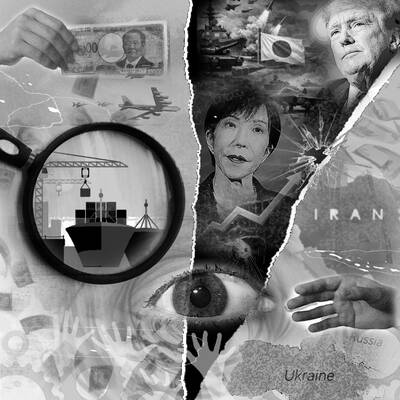
Japan’s imminent easing of arms export rules has sparked strong interest from Warsaw to Manila, Reuters reporting found, as US President Donald Trump wavers on security commitments to allies, and the wars in Iran and Ukraine strain US weapons supplies. Japanese Prime Minister Sanae Takaichi’s ruling party approved the changes this week as she tries to invigorate the pacifist country’s military industrial base. Her government would formally adopt the new rules as soon as this month, three Japanese government officials told Reuters. Despite largely isolating itself from global arms markets since World War II, Japan spends enough on its own


 RSS
RSS