


James Freeman Clarke, a US minister and author, once said: “A politician thinks of the next election. A statesman of the next generation.” Echoing this insight is the recent debate on whether government policies should focus on immediate gain or long-term vision.
The opposition is drafting a 10-year political program, while the government is planning to outline its “2020 national vision and strategy.” Both attempt to claim the mantle of statesman.
The reason lawmakers care so much about the difference between politicians and statesmen is that they crave everlasting victory, not just temporary electoral gain. This is a rule of politics that is as immutable as time itself.
Is our current leader a politician or a statesman? We cannot make a final verdict until the end of his term in office, but it is not difficult to conclude that this government cares most about winning elections and that such an approach has resulted in expediency, populist tendencies and a lack of political ideals and values.
One example is the question of whether Taiwan should retain or abolish capital punishment. This a very serious issue closely related to the preservation of social order and human rights. To come to a conclusion not only requires extensive public debate to forge a consensus, but also improved public education and as few executions as possible. The government also needs to come up with a comprehensive package of supplementary measures.
For years both sides of the capital punishment debate have made vociferous calls to arms and there has been no sign of the two groups moving any closer to each other.
In dealing with such a sensitive and developing public policy, a mature government would consider the concerns of each side and promote rational public dialogue. In contrast, faced with the controversy of a minister opposed to signing execution orders, President Ma Ying Jeou’s (馬英九) government only made a bad situation worse.
At first the government hesitated and avoided the issue out of concern for its human rights reputation, but after a well known TV entertainer — who had had a family member murdered — threatened a no-vote protest, the government changed its mind overnight and the justice minister was forced to resign. The new justice minister then hastily carried out four executions, raising difficult questions about how the four death row inmates in question were chosen. The government’s response drew strong criticism, accusations of political manipulation and condemnation from the EU.
Throughout this whole process, there was nothing to imply that Ma was following any kind of conviction or thought-out political view. First he appointed a justice minister who was clearly in favor of abolishing capital punishment and declined to interfere with her decision not to carry out death sentences as required by law. Then, to calm voters, he publicly praised Wang Wen-hsieh (王文燮) for developing the silencer used with rifles during executions when serving as commander-in-chief of the Combined Logistics Command during Ma’s tenure as justice minister in the mid-1990s.
Taiwan has long had clear laws stipulating the conditions required for the government to pay national compensation — including a detailed application process and rules on how compensation is paid. However, after the recent landslide on National Freeway No. 3 that resulted in the deaths of four people, Ma’s promises to “assist” victims applying for national compensation caused a backlash. This happened because such words immediately brought to mind earlier promises he made to victims of the collapses of the Fengciuming Tunnel in Nantou County, Shuangyuan Bridge on Highway 17 which connects Kaohsiung and Pingtung counties, Provincial Highway 16 during Typhoon Morakot and a makeshift road in Siaolin Village (小林) in Kaohsiung County. When the victims of those disasters applied for national compensation, they were turned down despite initial promises of compensation made by politicians.
This resulted in a public outcry that only died down when the Ministry of Transportation and Communications caved and promised to reopen the procedure for national compensation. In light of such flip-flopping, some are now arguing that the government’s credibility, law enforcement standards and the code of conduct that supposedly guides the system have vanished. Why? The answer again is that political hacks value votes above all else.
A plan to assign 25 hectares of land at the 202 Munitions Works in Taipei City’s Nangang district (南港) to Academia Sinica for the development of a national biotechnology development park has attracted a lot of attention recently, as has the plan to use the site’s remaining 144 hectares as a special industrial zone for Hon Hai Group and other large companies.
These plans were already subject to the urban development review process, but when well-known author and Ma supporter Chang Hsiao-feng (張曉風) kneeled and begged him to stop the plan on national television, it seemed to scare our political leaders, with their overriding concern for image. In point of fact, opposition legislators and city councilors have been questioning the complex corporate interest, environmental and urban space issues involved in the development of the site for more than a year.
The situation would have been resolved a long time ago if those in power had listened, but the KMT, with its big majority, ignored all protests. When a cultural personality who supports Ma spoke up, however, an inspection tour of the area was immediately organized for Chang, as if such a show were sufficient to cover up the back door nature of the decision making process. This shows how the vulgarization of our democratic system has really been pushed to new extremes.
With May 20 just around the corner, Ma has reached the mid-point of his term in office. Most people probably have their own opinion as to the balance between political hack and statesman he has exhibited so far. Given this situation, Ma would do well to think hard about what he hopes to achieve over the next two years instead of bragging about how he will create another “golden decade” for Taiwan.
Unfortunately, time is running out. Over the course of the next 22 months, three major politician-distracting elections are scheduled. Can one really believe that Ma will stop focusing all his energy on elections and instead show concern for the well-being of future generations?
TRANSLATED BY TAIJING WU AND DREW CAMERON
Minister of Labor Hung Sun-han (洪申翰) on April 9 said that the first group of Indian workers could arrive as early as this year as part of a memorandum of understanding (MOU) between the Taipei Economic and Cultural Center in India and the India Taipei Association. Signed in February 2024, the MOU stipulates that Taipei would decide the number of migrant workers and which industries would employ them, while New Delhi would manage recruitment and training. Employment would be governed by the laws of both countries. Months after its signing, the two sides agreed that 1,000 migrant workers from India would
In recent weeks, Taiwan has witnessed a surge of public anxiety over the possible introduction of Indian migrant workers. What began as a policy signal from the Ministry of Labor quickly escalated into a broader controversy. Petitions gathered thousands of signatures within days, political figures issued strong warnings, and social media became saturated with concerns about public safety and social stability. At first glance, this appears to be a straightforward policy question: Should Taiwan introduce Indian migrant workers or not? However, this framing is misleading. The current debate is not fundamentally about India. It is about Taiwan’s labor system, its
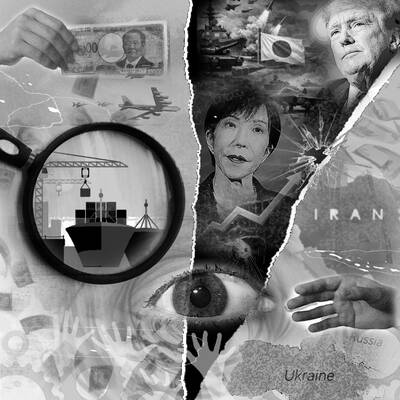
Japan’s imminent easing of arms export rules has sparked strong interest from Warsaw to Manila, Reuters reporting found, as US President Donald Trump wavers on security commitments to allies, and the wars in Iran and Ukraine strain US weapons supplies. Japanese Prime Minister Sanae Takaichi’s ruling party approved the changes this week as she tries to invigorate the pacifist country’s military industrial base. Her government would formally adopt the new rules as soon as this month, three Japanese government officials told Reuters. Despite largely isolating itself from global arms markets since World War II, Japan spends enough on its own
On March 31, the South Korean Ministry of Foreign Affairs released declassified diplomatic records from 1995 that drew wide domestic media attention. One revelation stood out: North Korea had once raised the possibility of diplomatic relations with Taiwan. In a meeting with visiting Chinese officials in May 1995, as then-Chinese president Jiang Zemin (江澤民) prepared for a visit to South Korea, North Korean officials objected to Beijing’s growing ties with Seoul and raised Taiwan directly. According to the newly released records, North Korean officials asked why Pyongyang should refrain from developing relations with Taiwan while China and South Korea were expanding high-level


 RSS
RSS