


“We should establish a ‘Bridle Ma Society’ and then use those bridles to rein in President Ma Ying-jeou (馬英九) so that he doesn’t run to his own death. We have already spoiled one president in Chen Shui-bian (陳水扁), are we now going to spoil Ma as well?”
You might think this sounds like something an emotional pro-green supporter would say, but you would be wrong. These are the words of Chang Hsiao-feng (張曉風), a well-known author generally revered by the pan-blue camp.
To protect the “lungs” of Taipei City, the wetlands on the site of the 202 Munitions Works in the city’s Nangang District, Chang has written to Ma and even knelt down in an appeal for Taipei’s environment. Ma nevertheless announced that the construction of the planned biotechnology park would begin on June 1.
The president of Academia Sinica, the interior minister and the director of the General Information Office took Chang on a tour of the site in an attempt to persuade her to abandon her opposition, but she would not be moved.
Regardless of how much the opposition criticizes the government, such criticism can always be deflected by claiming that it is ideologically motivated political posturing, but when Chang knelt down in a plea for the environment, it was an attack on Ma that will soil his image and may even have implications for the year-end special municipality elections. The impact reaches far beyond anything the opposition could come up with.
The main point highlighted by the conflict is that the government is losing its grip on its democratic credentials as it drifts further and further away from mainstream public opinion.
The same phenomenon can be seen in the government’s push for an economic cooperation framework agreement (ECFA) with China, completely disregarding public concerns and the survival of small and medium-sized enterprises.
Although negotiations are not going smoothly at the moment, Premier Wu Den-yih (吳敦義) has announced that the agreement will be signed next month, which makes it clear that the government’s promotion of the agreement and the public hearings currently under way are for cosmetic purposes only — no amount of opposition will be able to change the fact that the agreement will be signed.
Although Wu keeps talking about the virtues of his “grassroots economy,” he is not very friendly when he encounters opposition.
In response to opposition to the development of the 202 Munitions Works site, he asked, “How are we going to develop the economy if we are saving every wetland in Taiwan?”
It often sounds as if government officials have forgotten that they are elected by voters to act in their interests as their public servants.
The corrupting influence of power has resulted in government greed and authoritarian decisionmaking.
The government has repeatedly shown contempt for public opinion and Chang’s letter and appeal on her knees were in vain. To prevent flawed decisionmaking from becoming even worse than corruption, it is now time for the public to issue an even stronger warning to the government.
On the second anniversary of Ma’s inauguration, people should demonstrate to the government that they don’t want an ECFA.
If the public’s anger fails to alert the government to the fact that it must put the reins on Ma, then a resounding “no” in a referendum on the ECFA is the only way to save Taiwan from an irreversible disaster.
Minister of Labor Hung Sun-han (洪申翰) on April 9 said that the first group of Indian workers could arrive as early as this year as part of a memorandum of understanding (MOU) between the Taipei Economic and Cultural Center in India and the India Taipei Association. Signed in February 2024, the MOU stipulates that Taipei would decide the number of migrant workers and which industries would employ them, while New Delhi would manage recruitment and training. Employment would be governed by the laws of both countries. Months after its signing, the two sides agreed that 1,000 migrant workers from India would
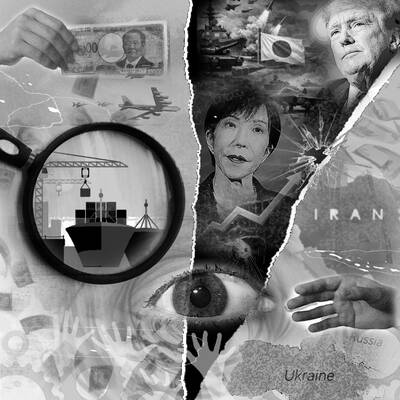
Japan’s imminent easing of arms export rules has sparked strong interest from Warsaw to Manila, Reuters reporting found, as US President Donald Trump wavers on security commitments to allies, and the wars in Iran and Ukraine strain US weapons supplies. Japanese Prime Minister Sanae Takaichi’s ruling party approved the changes this week as she tries to invigorate the pacifist country’s military industrial base. Her government would formally adopt the new rules as soon as this month, three Japanese government officials told Reuters. Despite largely isolating itself from global arms markets since World War II, Japan spends enough on its own
On March 31, the South Korean Ministry of Foreign Affairs released declassified diplomatic records from 1995 that drew wide domestic media attention. One revelation stood out: North Korea had once raised the possibility of diplomatic relations with Taiwan. In a meeting with visiting Chinese officials in May 1995, as then-Chinese president Jiang Zemin (江澤民) prepared for a visit to South Korea, North Korean officials objected to Beijing’s growing ties with Seoul and raised Taiwan directly. According to the newly released records, North Korean officials asked why Pyongyang should refrain from developing relations with Taiwan while China and South Korea were expanding high-level
When 17,000 troops from the US, the Philippines, Australia, Japan, Canada, France and New Zealand spread across the Philippine archipelago for the Balikatan military exercise, running from tomorrow through May 8, the official language would be about interoperability, readiness and regional peace. However, the strategic subtext is becoming harder to ignore: The exercises are increasingly about the military geography around Taiwan. Balikatan has always carried political weight. This year, however, the exercise looks different in ways that matter not only to Manila and Washington, but also to Taipei. What began in 2023 as a shift toward a more serious deterrence posture


 RSS
RSS