


It isn’t hard for the public to pick up on one noticeable trend on the nation’s political scene: Frequent visits by Chinese officials.
Currently visiting Taiwan is a 2,000-strong delegation led by the governor of Fujian Province, Huang Xiaojing (黃小晶). Prior to Huang, there were also visits made by the Chinese Communist Party’s (CCP) Hubei Provincial Committee Secretary Luo Qingquan (羅清泉) and the CCP’s Jiangsu Provincial Committee Secretary Liang Baohua (梁保華).
The Chinese delegations are usually characterized by a large number of delegates, billions of dollars in investments and various cooperation proposals they reportedly pledge to local businesses.
According to a report by the Central News Agency, visits by Chinese officials will soon enter the high season with Zhejiang Province Governor Lu Zushan (呂祖善), the CCP’s secretary for Guangxi Zhuang Autonomous Region, Guo Shengkun (郭聲琨), and Shannxi Province Governor Yuan Chunqing (袁純清) leading delegations to Taiwan in the coming months.
While some may wonder why there has been a sudden frenzy of Chinese officials visiting Taiwan, the answer is simple: Why not? Indeed, riding high on the Chinese Nationalist Party (KMT) government’s eagerness to tout itself as a peacemaker in efforts to improve cross-strait relations, any Chinese official — regardless of ranking or level — can easily count on being thrown into the media limelight and treated to lavish welcomes arranged by KMT officials. After all, there’s no faster way to garner media exposure — or the chance to raise their profile in the eyes of the higher-ups in Beijing — than to make a trip to Taiwan and be the center of attention, all while surrounded by KMT heavyweights.
Chinese officials are more than welcome to visit Taiwan, as the visits help promote mutual understanding and allow them to experience Taiwan’s vibrant democracy first-hand.
It is a different matter, however, when the Chinese officials return Taiwan’s hospitality and friendliness with dubious promises and unsubstantiated declarations of large investments.
Following rampant local media coverage on the slew of procurements promised by the Chinese delegations, a question has been raised in many people’s minds: How many of the various grand business and investment proposals pledged by the visiting Chinese delegations actually materialize?
Even the Mainland Affairs Council, in response to inquiries from the press, readily acknowledged that it could not substantiate the veracity of investments proclaimed by Chinese delegations.
In view of this, one can’t help but recall the promise made by Association for Relations Across the Taiwan Strait Chairman Chen Yunlin (陳雲林) during his visit to Taiwan in November 2008 that China would purchase tonnes of oranges from Taiwan. Later, however, it turned out that Taiwanese orange farmers ended up losing money selling their goods to China.
Against the backdrop of the KMT government’s all-out campaign to promote an economic cooperation framework agreement (ECFA) with China, the huge purchasing deals declared by visiting Chinese delegations work to the government’s liking.
President Ma Ying-jeou (馬英九), however, is well advised to make sure that his government acts responsibly and debunks any of the promises made by the Chinese delegations if they are found to be little more than hot air.
It would be truly irresponsible on the part of the Ma government to play along with the Chinese delegations and construct a false impression that the visitors are like Santa, spreading gifts to Taiwanese businesses, when in fact they leave the latter nothing to look forward to but empty promises.
Minister of Labor Hung Sun-han (洪申翰) on April 9 said that the first group of Indian workers could arrive as early as this year as part of a memorandum of understanding (MOU) between the Taipei Economic and Cultural Center in India and the India Taipei Association. Signed in February 2024, the MOU stipulates that Taipei would decide the number of migrant workers and which industries would employ them, while New Delhi would manage recruitment and training. Employment would be governed by the laws of both countries. Months after its signing, the two sides agreed that 1,000 migrant workers from India would
In recent weeks, Taiwan has witnessed a surge of public anxiety over the possible introduction of Indian migrant workers. What began as a policy signal from the Ministry of Labor quickly escalated into a broader controversy. Petitions gathered thousands of signatures within days, political figures issued strong warnings, and social media became saturated with concerns about public safety and social stability. At first glance, this appears to be a straightforward policy question: Should Taiwan introduce Indian migrant workers or not? However, this framing is misleading. The current debate is not fundamentally about India. It is about Taiwan’s labor system, its
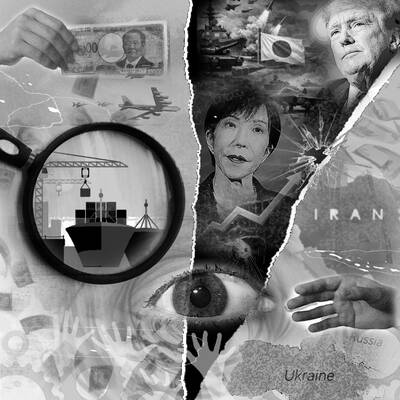
Japan’s imminent easing of arms export rules has sparked strong interest from Warsaw to Manila, Reuters reporting found, as US President Donald Trump wavers on security commitments to allies, and the wars in Iran and Ukraine strain US weapons supplies. Japanese Prime Minister Sanae Takaichi’s ruling party approved the changes this week as she tries to invigorate the pacifist country’s military industrial base. Her government would formally adopt the new rules as soon as this month, three Japanese government officials told Reuters. Despite largely isolating itself from global arms markets since World War II, Japan spends enough on its own
On March 31, the South Korean Ministry of Foreign Affairs released declassified diplomatic records from 1995 that drew wide domestic media attention. One revelation stood out: North Korea had once raised the possibility of diplomatic relations with Taiwan. In a meeting with visiting Chinese officials in May 1995, as then-Chinese president Jiang Zemin (江澤民) prepared for a visit to South Korea, North Korean officials objected to Beijing’s growing ties with Seoul and raised Taiwan directly. According to the newly released records, North Korean officials asked why Pyongyang should refrain from developing relations with Taiwan while China and South Korea were expanding high-level


 RSS
RSS