


Since President Ma Ying-jeou (馬英九) took office, there have been visible developments in cross-strait relations — direct transport links, Chinese tourists, and soon, students, and a number of agreements leading toward a planned economic cooperation framework agreement (ECFA).
An ECFA is widely viewed as a big move toward cross-strait economic integration. There are many views about what political effects these developments will have. One assumption shared by both supporters and opponents of the government’s course is that cross-strait economic integration establishes the conditions for future political integration and, in particular, political identification, as there are now voices calling for “re-sinicization.” In other words, the process is expected to develop from the economic to the political sphere, with people identifying themselves less as Taiwanese and “learning to be Chinese.” That would comply with Ma’s stated intention to create conditions for unification.
This has happened before in Taiwan’s history. Before the Japanese army occupied Taipei in 1895 there was a short-lived Republic of Formosa, but everyone involved, from the republic’s president Tang Ching-sung (唐景崧) down to its common soldiers, saw themselves as abandoned subjects of the Qing empire. Until the end of World War II, Taiwanese were busy learning to be Japanese.
Although Taiwan-centric consciousness burgeoned during the terms of former presidents Lee Teng-hui (李登輝) and Chen Shui-bian (陳水扁), both the Chinese Nationalist Party (KMT) and the Chinese Communist Party view things in terms of economic determinism. If Taiwan’s economy becomes more dependent on China, the country will have nowhere to run, they think, and they assume a wave of “re-sinicization” will be inevitable.
Despite all kinds of appeals to Chinese nationalism, from the Beijing Olympics to the Shanghai World Expo, and with Chinese nationalist sympathies broadcast everywhere, Ma’s public approval ratings have not improved.
Why does the number of people identifying themselves as Taiwanese and support for independence keep going up? Even after the ECFA debate between Ma and DPP Chairperson Tsai Ing-wen (蔡英文), support for an ECFA referendum has not fallen. Setting aside doubts some may have as to the accuracy of such survey results, what scientific explanation can there be?
Could it be a time lag between cause and effect? Or maybe the political effects of cross-strait economic integration have been misconstrued. Instead of boosting the number of people identifying with China, it has divided attitudes toward cross-strait relations along class lines, even bringing about a major change in the social basis of Taiwan’s political parties. The most obvious expression of this trend is when KMT bigwigs fall over themselves to treat visiting senior Chinese officials to banquets. Many of the seats at these dinners are occupied by the heads of major corporations. Few outside these circles are seen and positive comments are limited to economic benefits, much of which the media cheerfully reports when covering the winners of economic integration.
Meanwhile, there are also many potential losers: The middle and lower classes; central and southern Taiwan; and small and medium-sized enterprises. When the risks and opportunities arising from cross-strait integration are so unevenly distributed, when all the opportunities are monopolized by a minority group of princelings in Taiwan, the question of independence versus unification is no longer one of political demands for the future, but of a threatened loss of livelihoods — it has become an historic class struggle.
Hsu Yung-ming is an assistant professor of political science at Soochow University.
TRANSLATED BY JULIAN CLEGG
Minister of Labor Hung Sun-han (洪申翰) on April 9 said that the first group of Indian workers could arrive as early as this year as part of a memorandum of understanding (MOU) between the Taipei Economic and Cultural Center in India and the India Taipei Association. Signed in February 2024, the MOU stipulates that Taipei would decide the number of migrant workers and which industries would employ them, while New Delhi would manage recruitment and training. Employment would be governed by the laws of both countries. Months after its signing, the two sides agreed that 1,000 migrant workers from India would
In recent weeks, Taiwan has witnessed a surge of public anxiety over the possible introduction of Indian migrant workers. What began as a policy signal from the Ministry of Labor quickly escalated into a broader controversy. Petitions gathered thousands of signatures within days, political figures issued strong warnings, and social media became saturated with concerns about public safety and social stability. At first glance, this appears to be a straightforward policy question: Should Taiwan introduce Indian migrant workers or not? However, this framing is misleading. The current debate is not fundamentally about India. It is about Taiwan’s labor system, its
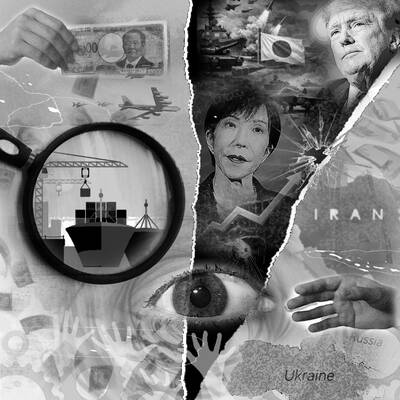
Japan’s imminent easing of arms export rules has sparked strong interest from Warsaw to Manila, Reuters reporting found, as US President Donald Trump wavers on security commitments to allies, and the wars in Iran and Ukraine strain US weapons supplies. Japanese Prime Minister Sanae Takaichi’s ruling party approved the changes this week as she tries to invigorate the pacifist country’s military industrial base. Her government would formally adopt the new rules as soon as this month, three Japanese government officials told Reuters. Despite largely isolating itself from global arms markets since World War II, Japan spends enough on its own
On March 31, the South Korean Ministry of Foreign Affairs released declassified diplomatic records from 1995 that drew wide domestic media attention. One revelation stood out: North Korea had once raised the possibility of diplomatic relations with Taiwan. In a meeting with visiting Chinese officials in May 1995, as then-Chinese president Jiang Zemin (江澤民) prepared for a visit to South Korea, North Korean officials objected to Beijing’s growing ties with Seoul and raised Taiwan directly. According to the newly released records, North Korean officials asked why Pyongyang should refrain from developing relations with Taiwan while China and South Korea were expanding high-level


 RSS
RSS