


On Dec. 21, Taiwan Semiconductor Manufacturing Co (TSMC) chairman Morris Chang (張忠謀) announced a new compensation system for the chipmaker’s employees next year, including a 15 percent increase in base salaries beginning on Jan. 1.
In a video message, Chang told employees that the hike in base salaries was part of structural changes to the company’s compensation system. But the move also showed that TSMC is working to attract and retain employees amid intensifying competition.
Following a series of actions to cut or freeze salaries beginning late last year to cope with the global financial crisis, several Taiwanese technology companies have now announced — or are considering — upward adjustments in employee paychecks.
According to various reports, Acer Inc, Compal Electronics Inc, AU Optronics Corp and MediaTek Inc are among the iconic tech firms likely to raise employee salaries next year. Companies in the real estate sector such as Sinyi Realty Co, Farglory Land Development Co and Chong Hong Construction Co are also reportedly planning salary hikes.
Even so, it is too early to say the economy is on a firm footing and growing across the board. Last week, a local job bank’s poll showed that 37 percent of local firms have considered raising employee salaries next year, while 58 percent had not.
The truth is that many Taiwanese companies are still fighting to stay in business and are hesitant to hire for want of solid signs of recovery. That’s why the nation’s unemployment rate fell only to 5.86 percent last month from 5.96 percent the previous month — meaning there are still 645,000 people out of work.
The national statistics bureau said 150,000 jobs would need to be added to the market before the headline jobless rate can fall below 5 percent. That is a very challenging goal, though it should be noted that the Council for Economic Planning and Development last week unveiled targets for next year that include an unemployment rate of 4.9 percent.
But a serious problem remains: The number of people who have been unemployed for more than one year — whom statistics officials refer to as “long-term unemployed” in their surveys — totaled 112,000 last month, up 4,000 from the previous month and marking the highest monthly level since January 2004.
In addition, the number of unemployed middle-aged and elderly people reached 141,000 last month, up 3,000 from the previous month and the highest in three months.
The problem facing people in these categories is that they face more obstacles in getting back into the workforce than any other category of jobseeker. This predicament poses a potential threat to the finances and stability of a large number of families in the long term.
Another concern relating to the strength of economic recovery is the continuing decline in wages in the industrial and services sectors, which in turn hurts companies and discourages consumer spending.
The decision by some companies to raise employee salaries next year is welcome news as it points to recovery in their sectors.
However, even though economic growth is likely to be registered next year, uncertainties remain in the labor market and a noticeable increase in household income is not likely to emerge anytime soon.
Minister of Labor Hung Sun-han (洪申翰) on April 9 said that the first group of Indian workers could arrive as early as this year as part of a memorandum of understanding (MOU) between the Taipei Economic and Cultural Center in India and the India Taipei Association. Signed in February 2024, the MOU stipulates that Taipei would decide the number of migrant workers and which industries would employ them, while New Delhi would manage recruitment and training. Employment would be governed by the laws of both countries. Months after its signing, the two sides agreed that 1,000 migrant workers from India would
In recent weeks, Taiwan has witnessed a surge of public anxiety over the possible introduction of Indian migrant workers. What began as a policy signal from the Ministry of Labor quickly escalated into a broader controversy. Petitions gathered thousands of signatures within days, political figures issued strong warnings, and social media became saturated with concerns about public safety and social stability. At first glance, this appears to be a straightforward policy question: Should Taiwan introduce Indian migrant workers or not? However, this framing is misleading. The current debate is not fundamentally about India. It is about Taiwan’s labor system, its
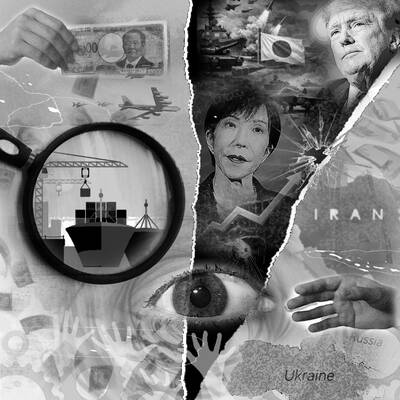
Japan’s imminent easing of arms export rules has sparked strong interest from Warsaw to Manila, Reuters reporting found, as US President Donald Trump wavers on security commitments to allies, and the wars in Iran and Ukraine strain US weapons supplies. Japanese Prime Minister Sanae Takaichi’s ruling party approved the changes this week as she tries to invigorate the pacifist country’s military industrial base. Her government would formally adopt the new rules as soon as this month, three Japanese government officials told Reuters. Despite largely isolating itself from global arms markets since World War II, Japan spends enough on its own
On March 31, the South Korean Ministry of Foreign Affairs released declassified diplomatic records from 1995 that drew wide domestic media attention. One revelation stood out: North Korea had once raised the possibility of diplomatic relations with Taiwan. In a meeting with visiting Chinese officials in May 1995, as then-Chinese president Jiang Zemin (江澤民) prepared for a visit to South Korea, North Korean officials objected to Beijing’s growing ties with Seoul and raised Taiwan directly. According to the newly released records, North Korean officials asked why Pyongyang should refrain from developing relations with Taiwan while China and South Korea were expanding high-level


 RSS
RSS