


The government’s undertaking to block World Uyghur Congress president Rebiya Kadeer from entering the country — if, as promised, she applies for a visa — should hardly come as a surprise. What is notable about Minister of the Interior Jiang Yi-huah’s (江宜樺) declaration in the legislature yesterday is the speed with which the government has drawn its line in the sand: It will not be portrayed as provoking Beijing, and certainly not a week out from China’s National Day.
The government is well within its legal rights to deny Kadeer entry, however obsequious its motivation. Regardless of the merits of the applicant, few governments would deny other governments’ fundamental right to call the shots at ports of call. For his part, Jiang may cite the national interest and the public interest until he is blue in the face, but he can be comfortable in the knowledge that this is unnecessary; in most democratic states the distinction between these interests and the interests of the government of the day is blurred.
The recent granting of a visa to the Dalai Lama, a similarly controversial figure for Beijing, was likely forced by a combination of the Dalai Lama’s stated wish to comfort victims of Typhoon Morakot and the government’s embarrassment over its appalling response to the storm, as well as the general respect with which the Dalai Lama is held in this theologically eclectic society.
Kadeer, a Muslim but not a religious figure, can claim no such sympathy or camaraderie among Taiwanese, despite the worthiness of her cause. The government’s refusal to allow her into the country will thus suffer little backlash — even among grassroots supporters of the opposition Democratic Progressive Party (DPP), many of whom have much more pressing issues with which to concern themselves.
Turning its back on Kadeer, however, places the Chinese Nationalist Party (KMT) government in an interesting, and possibly theoretically vexing, position. The challenge for the DPP is to make hay out of this issue in a way that does not bore the public or distract it from the core of the problem.
This is the problem: When Jiang unctuously associated Kadeer with terrorist activity in Xinjiang, he effectively invited sober observers to ask what policy the KMT has on Chinese affairs other than reaping the immediate benefits of an economic cooperation framework agreement (ECFA).
We have observed previously that the KMT’s ideology has hollowed out so dramatically that even its chairman and top party official on “mainland” affairs have demonstrated that they have absolutely no idea — or interest in — what is going on in China in terms of political dissidence and instability, let alone intellectual and ideological debate.
The KMT, once a party with a grand vision, if poorly realized, is now a party with no vision other than denying Taiwan self-determination.
But the government’s speed in dumping Kadeer and the cause of mistreated Uighurs in general in the too-hard basket drags out a paradox that DPP thinkers must exploit: By refusing to engage crucial issues and closing its eyes to the mounting difficulties facing China — whether or not minorities are involved — the KMT buys into the Chinese Communist Party’s bankrupt approach to governance, thus rendering itself irrelevant to the solving of China’s problems and its complex process of transformation.
Minister of Labor Hung Sun-han (洪申翰) on April 9 said that the first group of Indian workers could arrive as early as this year as part of a memorandum of understanding (MOU) between the Taipei Economic and Cultural Center in India and the India Taipei Association. Signed in February 2024, the MOU stipulates that Taipei would decide the number of migrant workers and which industries would employ them, while New Delhi would manage recruitment and training. Employment would be governed by the laws of both countries. Months after its signing, the two sides agreed that 1,000 migrant workers from India would
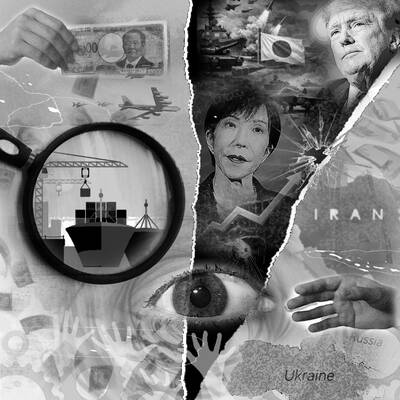
Japan’s imminent easing of arms export rules has sparked strong interest from Warsaw to Manila, Reuters reporting found, as US President Donald Trump wavers on security commitments to allies, and the wars in Iran and Ukraine strain US weapons supplies. Japanese Prime Minister Sanae Takaichi’s ruling party approved the changes this week as she tries to invigorate the pacifist country’s military industrial base. Her government would formally adopt the new rules as soon as this month, three Japanese government officials told Reuters. Despite largely isolating itself from global arms markets since World War II, Japan spends enough on its own
On March 31, the South Korean Ministry of Foreign Affairs released declassified diplomatic records from 1995 that drew wide domestic media attention. One revelation stood out: North Korea had once raised the possibility of diplomatic relations with Taiwan. In a meeting with visiting Chinese officials in May 1995, as then-Chinese president Jiang Zemin (江澤民) prepared for a visit to South Korea, North Korean officials objected to Beijing’s growing ties with Seoul and raised Taiwan directly. According to the newly released records, North Korean officials asked why Pyongyang should refrain from developing relations with Taiwan while China and South Korea were expanding high-level
When 17,000 troops from the US, the Philippines, Australia, Japan, Canada, France and New Zealand spread across the Philippine archipelago for the Balikatan military exercise, running from tomorrow through May 8, the official language would be about interoperability, readiness and regional peace. However, the strategic subtext is becoming harder to ignore: The exercises are increasingly about the military geography around Taiwan. Balikatan has always carried political weight. This year, however, the exercise looks different in ways that matter not only to Manila and Washington, but also to Taipei. What began in 2023 as a shift toward a more serious deterrence posture


 RSS
RSS